“Be master of your petty annoyances and conserve your energies for the big, worthwhile things.
It isn’t the mountain ahead that wears you out—it’s the grain of sand in your shoe.”
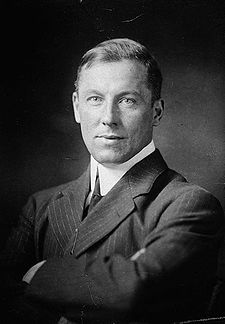
The blog of Alun Rees, The Dental Business Coach
“Be master of your petty annoyances and conserve your energies for the big, worthwhile things.
It isn’t the mountain ahead that wears you out—it’s the grain of sand in your shoe.”
The four weekly ezine from financial planners Ray Prince and Graham Urwin is a good read and full of sense. Here’s a section from the latest one and an offer to obtain The Investment Answer.
When we look back over the seven and a half years that we’ve been writing articles on the do’s and don’ts of investing, certain subjects are bound to repeat themselves.
So we thought we’d take a look back and highlight some of the most important topics:
Overview
Risk & Return Are Related
Performance
On these last two points, in a previous article we quoted Erik Davidson, Managing Director of investments for Wells Fargo Private Bank who said:
“In all other areas of life, we want to buy more if prices go down. With investments, people buy when prices go up.”
Trying To Time the Market
Again, in a previous post we used figures from Dimensional Fund Advisers who showed that in being out of the market, the risk is that the investor will miss the big rises that really boost performance.
As an example of how important this is, if you take the years January 1986 to December 2010, here are the annualised rates of return based on missing certain periods:
Totally invested – 10.18%
Missed best 5 days – 8.54%
Missed best 15 days – 6.46%
Missed best 25 days – 4.75%
Costs
Whereas we haven’t a clue as to future performance, what we do know is the costs of the portfolio, which act as a drag on performance.
Therefore:
Tax
Accessibilty
Then we come to a subject which confuses some investors…
Diversification
Spreading an investment portfolio across the different asset classes is paramount when creating a truly meaningful balanced portfolio.
The basic asset classes are:
No one can accurately and certainly not consistently predict which of these asset classes will perform best in a given year.
So this being the case, and each asset class having their own risk & return characteristics, creating a portfolio is all about the proportion of one asset class to the other. This ‘meld’ is then your asset class portfolio, and off you go.
However, sometimes when we discuss this with a new client, they will say that yes they definitely have diversification as their adviser has put them in lots of Managed Funds!
This is understandable, however it’s a major mistake.
Quite simply what this achieves is not diversification between the asset classes, but a concentration of the same type of equities!
Most Managed Funds are mostly invested in equities, and do not have a significant holding of the other asset classes.
For example, U.S. stock-market researcher Larry Swedroe found that investors mistakenly believe that it’s the number of different mutual funds they own that defines how diversified their investments are.
On the contrary, he shows that owning 10 actively managed funds that all (for example) focus on U.S. large-cap stocks, will commonly give you the same stock market exposure as a single low-cost index fund – all while incurring much higher costs!
These mistakes can really cost an investor, and it brings home the importance of investors educating themselves.
Fancy Marketing
It’s really important that all investors see beyond what we would call ‘fancy marketing’. That is, companies who may sell their offering on styleather than substance.
Yes, whilst it’s important to know that the company (whether the company is a fund management company or an adviser firm) you are dealing with is professional, make sure you take the time to dig beneath the surface so that you can do your due diligence.
Action Point
One of the most recommended courses of action for all investors is to get educated as much as possible as this should enable you to make better decisions.
The book ‘The Investment Answer’ can really help here and we’d like to offer you a pdf copy free of charge.
It covers:
Chapter 1 – The Do-It-Yourself Decision
Chapter 2 – The Asset Allocation Decision
Chapter 3 – The Diversification Decision
Chapter 4 – The Active versus Passive Decision
Chapter 5 – The Rebalancing Decision
Chapter 6 – Compared to What?
Chapter 7 – What About Alternatives?
Chapter 8 – Everyone Can Succeed
It’s an easy read and you should be able to get through the book in 90 minutes or so.
If you’d like a copy, please go to the web version of this.
Probably not the ideal book for the beach or poolside but well worth the time it will take to read and digest – I’m half way through reading it for the second time so that I can assimilate and enjoy the message.
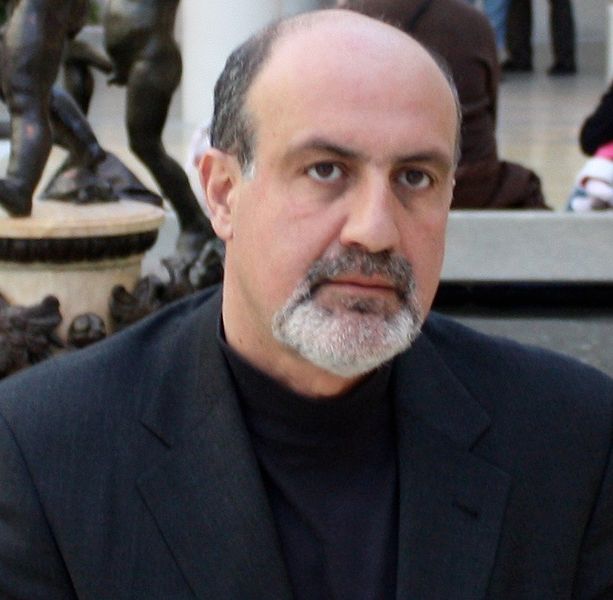
In his first book Fooled by Randomness Taleb explored the randomness of success and how we need to understand luck and our perception of luck. He followed that with The Black Swan which showed that highly improbable and unpredictable events underlie almost everything about our world. In this book he says that uncertainty is the necessary and even desirable. The antifragile is beyond the robust or the resilient. The resilient resists shock and stays the same the antifragile gets better and better.
Do a google search for far more eloquent reviews than mine – I make no claim to be a book reviewer – then read the book.
Available from our Amazon store

I wrote in February this year “As Nigel Lawson said in his memoirs, the NHS is the closest thing that the English have to a religion and to criticise any part of it from altar boy to archbishop is tantamount to sacrilege. The Olympic opening hype didn’t help. I grew up having fear but little respect for the Roman Catholic clergy – many years later I was shown to be right to have had suspicions of the organisational denial of the church.”
The choice of people who should know better to ignore what is happening is yet another example of “wilful blindness”.
A letter from today’s Daily Telegraph tells the story from within better than I.
Our outdated and inflexible system was not able to manage my cancer properly.
One year on from London 2012 and there is justifiable pride in our achievements at the Olympics and Paralympics, and enormous pleasure in looking back at triumphs both on and off the field. For me, however, one element continues to rankle. Indeed, I know of no doctor who found the celebration of the NHS during the opening ceremony anything other than crass, politicising nonsense.
Nurturing belief in the NHS is important, for as Nigel Lawson once said, the NHS is the closest thing we have to a national religion. It is not just a religion, though. It is a social construct, the glue that makes us all feel better, hence its inclusion in Danny Boyle’s extravaganza. It is a key part of being British.
But just like the lovely starched white aprons worn by the dancing nurses, that aspect of the NHS went west years ago, along with a lot of what is now called caring. Since the Olympics, we’ve been challenged by a series of stories that do not fit the accepted narrative of the greatness of the NHS: the A&E crisis; the 111 phone line fiasco; the hundreds of needless deaths at Mid Staffs; and the abuse of the Liverpool Care Pathway designed to improve end-of-life care (having seen the latter at work in my brother’s case, it should perhaps be more aptly termed the Liverpool Lack of Care Pathway).
An undercurrent goes with these stories, a suggestion that those who criticise the NHS are attacking a sacred institution. Take the case of Julie Bailey. It was she who started the process that exposed the disgrace of Mid Staffs Hospital. As a result, she received death threats.
Why? Because she highlighted just how bad the good old NHS can be.
I know something about this – as a former NHS consultant, and more recently as a patient. In 2007, at the age of 48, I was diagnosed with a malignant pleural mesothelioma, a form of lung cancer caused by exposure to asbestos. It seems that, while at medical school, I was exposed to asbestos fibres in some part of the hospital (four other doctors and dentists from my era developed the disease; I am the only one surviving). As a result, I have experienced care in the NHS and in the private sector as well as taking part in a trial in the US.
I’m still alive six years on, the average time before death being 12-14 months, but there is nothing I received that couldn’t be offered to any NHS patient if only the system were more flexible. Unfortunately, it isn’t. It does not routinely move patients from unit to unit, it does not routinely tell cancer patients of trials taking place here and overseas, and it discourages accessing other opinions.
I was fortunate because I had insured myself years ago, long before my diagnosis, after being told that private patients had access to some anti-cancer drugs that NHS patients did not. So I was able to use my insurance to be operated on by a surgeon I chose. It was also my decision to go to the US to take part in a trial, but access to the trial was available to anyone if only they had been told about it. The $20,000 trial drugs were free. This, of course, was easy for me – I knew where to look and who to ask. It was clear to me that most NHS patients were simply not told about such trials.
I was also given a drug, at my request because I’d researched it, which may well have delayed my tumour’s growth. Bisphosphonate is used extensively for other reasons, is readily available and not expensive, yet I know of patients who have asked for it on the NHS to treat their mesothelioma, but been refused on the grounds of lack of evidence. Others have been given it when they asked. There is early evidence that it can be effective, and everyone who works in the field knows about this, but it’s not yet officially approved by the National Institute for Health and Care Excellence (Nice).
How has what I’ve seen impacted on my wider concerns? The NHS is not a philosophical concept or an instrument of social cohesion. It may produce the latter but this is not its primary purpose. The NHS is just a health delivery system, one of many around the world. I have had great treatment from the doctors and nurses who were employed by the NHS, but the NHS did not treat me. Those same doctors and nurses might give me the same care if employed by any other organisation.
However, a national mindset that puts this type of religious belief in the NHS above all else enables people to ignore such hard facts. Somehow, because we have universal free access to health care – and are therefore “better” than the Americans with whom we always compare ourselves – we have convinced ourselves that the bad bits of the NHS are OK.
This belief system surrounding the NHS also blinds ministers and MPs (who, of course, will never experience anything but the best NHS care because they get special treatment if they are ever in hospital) to fundamental problems. And, politically, it’s always preferable to focus on the good narrative, and never admit that we are not doing as well as we might and that things might need to change.
Yet this wealthy advanced economy of ours has cancer survival rates almost at the bottom of the Organisation for Economic Cooperation and Development (OECD) league tables. When this fact was published a few years ago, it was deemed less newsworthy than a telephone survey in seven advanced countries (the Commonwealth Fund Report of 2010), which showed that the NHS was the most efficient health system in the world. No matter that the report did not look at outcome data, expenditure, distribution of health care resources and a wealth of other factors. It told us what we wanted to hear and was therefore given prominence.
More recent cancer survival data still shows us lagging behind the OECD average. To tackle that, radical change is required, a fact self-evident to those who work in the NHS. Yet attempting real reform runs up against the brick wall of politics. Encouraged by the politicians who don’t dare to think and certainly not say otherwise, the public’s belief in the NHS continues to be fostered and is complemented by a conviction that any change will always be for the worse.
We know that postcode lotteries exist when it comes to care. The existence of “bad” hospitals and poor areas for health care has been common knowledge for decades. Say, for example, you have cancer of the ovary and a secondary in your liver. In two or three hospitals in England you might be offered a resection of the liver tumour and chemotherapy, which might buy you many more years. In others, you will only be offered palliative chemotherapy, which means you will die sooner. In all probability, you will not be told of the other treatments. How is this fair or equitable? How is this a truly national health service?
To begin to improve matters, the existence of such inequality has to be acknowledged, and addressed openly. That includes being clear that everything cannot be provided everywhere. Real centres of excellence need to concentrate resources and draw their patients from a much wider catchment area, even if that means some people will have to travel further.
Blindly continuing with an NHS formula laid down in 1948, which envisaged falling health costs, did not consider the problems generated by a rapidly increasing, ageing population and did not define what the state should and would provide, is no longer an option. If we have a health service, shouldn’t we have some specific idea of what it is there for?
Clinging to a model of health care that has its roots in the 19th century is ridiculous. This physician-led and disease-focused approach no longer works now that the demography of health has changed.
We continue to make all health-related problems the responsibility of the NHS and ensure that no one is individually responsible. This is simply unsustainable. An ever-expanding commitment by the NHS to all health-related issues was never what was intended, nor is it economically viable.
Instead of just handing the chequebook over to someone else, government should be seeking to restructure health-care provision in keeping with the new demography of health. Much can be done outside hospital: hospital stays can be reduced following surgery, and much can be done in chronic and primary-care provision by nurses, which has the potential to reduce costs. This will inevitably involve closing hospitals, refashioning emergency services and depoliticising the system.
But it won’t come about until politicians confront the population and ask them what they are prepared to do about their own health. We must aggressively challenge lifestyle choices that entail serious health consequences and accept that the state/NHS has limitations. To take just one example: in the past 10 years, the level of obesity-related admissions to hospital has risen 11-fold. The Olympics opening ceremony might have been more accurate if it had featured morbidly obese people jumping up and down on their NHS beds, and breaking them.
It’s not a political change that is needed; it’s an ethical one, in which politicians must start to take the lead. And if we, the public, want our wishes and autonomy respected, then we must to start taking more responsibility for our health.
“If you see a fraud and do not say fraud, you are a fraud.”
Nassim Nicolas Taleb’s First Ethical Rule in Antifragile
Reports in two of the UK national dailies of research from UCLAN linking Alzheimers disease with poor oral hygiene.
The Independent – Poor dental health and gum disease may be linked to Alzheimer’s disease, a study suggests.
Brains of dementia patients were found to contain Porphyromonas gingivalis, the bug responsible for unhealthy gums. Scientists believe that when the bacteria reach the brain they trigger an immune response leading to the death of neurons. This could help drive the changes typical of Alzheimer’s.
The findings by a team at the University of Central Lancashire are reported in the Journal of Alzheimer’s Disease.
The team has also confirmed in animals that P. gingivalis in the mouth finds its way to the brain.
The Telegraph – A study of brain samples from deceased dementia patients found that they contained unusually high levels of Porphyromonas gingivalis, a type of bacteria which causes gum disease.
Although the bacteria live in the mouth, they can enter the bloodstream during eating, chewing, tooth brushing or dental surgery, and potentially reach the brain, experts explained.
Inflammation caused by gum disease-related bacteria has already been linked to various health problems including diabetes, heart disease and stroke.
Their arrival in the brain could prompt the immune system to release chemicals which kill brain cells, resulting in the type of changes seen in the brains of Alzheimer’s patients and causing symptoms like memory loss and confusion, experts said.
The new findings, by researchers from the University of Central Lancashire (UCLan), back up a previous study by US researchers which showed that failing to brush your teeth at least daily significantly increases the risk of dementia.Dr Sim Singhrao, one of the authors of the study published in the Journal of Alzheimer’s Disease, said: “We are working on the theory that when the brain is repeatedly exposed to bacteria and/or their debris from our gums, subsequent immune responses may lead to nerve cell death and possibly memory loss.
“Thus, continued visits to dental hygiene professionals throughout one’s life may be more important than currently envisaged with inferences for health outside of the mouth only.”
Prof StJohn Crean, dean of the school of medicine and dentistry at UCLan, added: “Our hypothesis is that this is a chronic assault. It is not happening overnight, it is a build-up over years.
“But all we have shown so far is that bacteria from the gum region get into the brain. We haven’t proven that they cause Alzheimer’s disease.”
The researchers studied brain tissue from ten deceased dementia patients, and compared them against samples from ten patients who died without dementia.
Significant signs of the gum disease virus were found in the dementia patients’ brains but not the controls, the researchers reported.
Previous studies had linked dementia to other bacteria and viruses, such as the Herpes simplex virus type 1, but the new study is the first to identify Porphyromonas gingivalis in the brains of dementia patients.
Dr Simon Ridley, of Alzheimer’s Research UK, said: “We don’t know whether the presence of these bacteria in the brain contributes to the disease and further research will be needed to investigate this.
“We know that there are likely to be many risk factors for Alzheimer’s and we need to investigate these in more detail to help develop new preventions or treatments.”
Dreadful photo illustrating the Telegraph piece but the “below the line” writing ie the comments are worth a look.
For the history of this “TGBSL” series read here
My thanks to Alexander Hall from Meade King LLP for sharing this.
At paragraph 28 under the sub-heading “Transitional arrangements 2013/14 only” it has confirmed:
“As this is the first year of the policy it has been agreed that there will be transitional arrangements in place for 2013/14 only. This will allow contractors to become familiar with the new arrangements and ensure that no one is disadvantaged or businesses destabilised.”
The policy goes on to confirm at paragraph 29 that in 2013/14 “No breach notices will be issued for under-delivery”, though it does confirm that despite that, it will “financially recover all monies to 100% where a contractor has delivered less than 96% of the contractual UDAs”.
This is an enlightened approach and a national published formal stance that should be kept in mind.
It is clear already that not all Area Teams are enforcing the new policies consistently or at all in some cases, so it would not be unexpected for some to receive a breach notice in breach of the policy. For those who do, there is a good argument that the notice should be withdrawn.
Paragraph 30 onwards discusses the policy from 2014/15 and speaks of “re-basing” or contract reduction. The fact that it is not mentioned in the transitional year paragraph suggests implicitly that re-basing will not be considered this year either (or it could certainly be argued that way).
It is also of note that NHS England seems to recognise that the service of breach notices can disadvantage or destabilise businesses. Certainly it can introduce uncertainty and cause certain specific problems for those who are trying to sell their practices. If destabilisation is a risk, perhaps this may be used in the future to convince NHS England not to serve a notice (carefully avoiding the suggestion that the practice may fall into financial danger entitling NHS England to consider termination so as to protect its financial interests).
The policy can be found at the NHS England website.
Alexander Hall
Partner – Healthcare & Dentists
Meade King LLP
DDI: 0117 9234050
Mobile: 07960 177 337
Tel: 0117 9264121
Email: ajh@meadeking.co.uk
The Government has confirmed that from today, claimants will have to pay a fee if they want to take their employer to employment tribunal. Currently, it costs nothing for a claimant to make a claim. However, in a bid to weed out the weak and vexatious attempts by the claimant to have their day in court, a two stage fee will be charged. If the fee is not paid, or the claimant does not apply for ‘remission’, the claim will not be
considered.
Claimants will be required to pay an initial fee (the ‘issue fee’) at the issue of a claim, and a further fee (a ‘hearing fee) 4 – 6 weeks before the tribunal hearing.
The amount of the fee will depend on the type of claim being made. To bring a Type A claim, the claimant must pay a £160 issue fee, and then a ‘hearing fee’ of £230. Type A claims include unlawful deductions, failure to pay redundancy pay; failure to provide statement of terms and conditions; failure of employer to allow worker to take or be paid for annual leave etc.
To bring a Type B claim, the issue fee is £250 and the hearing fee is £950. Type B claims include unfair dismissal, discrimination, failure to comply with rest break rules, failure to allow certain types of time off etc.
The cost to make a claim to Employment Appeal Tribunal will be a £400 issue fee and a £1200 hearing fee.
Fees will also apply to other procedural elements of the tribunal system e.g. £100 for an application for a review.
The tribunal will have the power to order that fees paid by the successful party be reimbursed by the unsuccessful party, though this will not be an automatic occurrence.
A remission system will be in place for those who cannot afford to pay the fees, and upon evidence of this, either the whole or part of the fee will be waived.
From Peninsula who have added this clarification
The introduction of paying fees to make a tribunal claim is here.
In Scotland, an interim interdict (which would have meant that fees could not be charged from 29th July 2013) was refused. However, a full judicial review will be held later on in the year. If the decision is that fees should not be introduced, all fees paid until that time will be refunded.
Whilst in England, trade union Unison has also tried to block the fees. We will watch this space.
In the meantime, the Government provided some clarification on details. Firstly, it admitted there had been a drafting error in the legislation when the fee for equal pay claims was set in the higher tier (total fee £1250). It should have been set at the lower fee figure (total £390) and legislation will be changed to reflect this.
It was also confirmed that preliminary hearings at tribunal will not attract a hearing fee, and multiple Employment Appeal Tribunal claims will only attract one single fee.
Peninsula’s MD Peter Done wrote in yesterday’s the Sunday Times.
“One had to cram all this stuff into one’s mind for the examinations, whether one liked it or not.
This coercion had such a deterring effect on me that, after I had passed the final examination, I found the consideration of any scientific problems distasteful to me for an entire year.”
– Albert Einstein
Dental professionals are being urged to add their names to a petition that calls for robust action to address child oral health inequalities.
The petition has been launched as part of the BDA’s recently-announced Make a meal of it campaign. The campaign aims to tackle the damage being done to children’s teeth by sugary and acidic food and drink, particularly when consumed outside normal meal times. It seeks restrictions on the advertising and display of harmful products and a tax on sugary, carbonated drinks.
The petition can be signed here.
 The campaign also encourages dentists to get involved by identifying examples of shops that display harmful products at checkouts to appeal to children, hospitals and sports centres that host vending machines stuffed full of such products, and cinemas that sell only unhealthy alternatives. Find out more on the campaign web page.
Launching the campaign BDA Scientific Adviser Damien Walmsley said:
“Despite a steady improvement to oral health in recent years an unacceptable number of children in the UK still suffer with tooth decay. Regrettably, some retailers insist on putting profits before health, disregarding the potential ill effects of their products and dangling temptation in front of children. A more responsible approach must be adopted by such organisations to help address the poor oral health that dentists see in communities across the UK. I urge all members of the dental community to get behind this campaign.”
 The Incisal Edge