“Most of what we call management consists of making it difficult for people to get their work done.”

The blog of Alun Rees, The Dental Business Coach
“Most of what we call management consists of making it difficult for people to get their work done.”
Do we have to pander? (link to Seth’s Blog here)
The road to the bottom is paved with good intentions, or at the very least, clever rationalizations.
National Geographic goes into a cable TV partnership and ends up broadcasting shameless (shameful? same thing) reality shows, then justifies it as a way to make money to pay for the good stuff.
Restaurants serve chicken fingers to their guests’ kids, because it’s the only thing they’ll eat.
Some comedians give up their best work in exchange for jokes that everyone will get.
Brands extend their products or dumb down their offerings or slap their brands on inferior substitutes all in the name of reaching the masses.
And that’s the problem with the shortcut. You trade in your reputation (another word for brand) in exchange for a short-term boost of awareness or profit, but then you have neither. Yes, you can have a blog that follows every rule of blogging and seo, but no, it won’t be a blog we’ll miss if it’s gone.
Should Harley Davidson make a scooter?
Yes, you can pander, and if you’re a public company and have promised an infinite growth curve, you may very well have to. But if you want to build a reputation that lasts, if you want to be the voice that some (not all!) in the market seek out, this is nothing but a trap, a test to see if you can resist short-term greed long enough to build something that matters.
“Don’t Eat Fortune’s Cookie”
Michael Lewis (Princeton University’s 2012 Baccalaureate Remarks)
Thank you. President Tilghman. Trustees and Friends. Parents of the Class of 2012. Above all, Members of the Princeton Class of 2012. Give yourself a round of applause. The next time you look around a church and see everyone dressed in black it’ll be awkward to cheer. Enjoy the moment.
Thirty years ago I sat where you sat. I must have listened to some older person share his life experience. But I don’t remember a word of it. I can’t even tell you who spoke. What I do remember, vividly, is graduation. I’m told you’re meant to be excited, perhaps even relieved, and maybe all of you are. I wasn’t. I was totally outraged. Here I’d gone and given them four of the best years of my life and this is how they thanked me for it. By kicking me out.
At that moment I was sure of only one thing: I was of no possible economic value to the outside world. I’d majored in art history, for a start. Even then this was regarded as an act of insanity. I was almost certainly less prepared for the marketplace than most of you. Yet somehow I have wound up rich and famous. Well, sort of. I’m going to explain, briefly, how that happened. I want you to understand just how mysterious careers can be, before you go out and have one yourself.
I graduated from Princeton without ever having published a word of anything, anywhere. I didn’t write for the Prince, or for anyone else. But at Princeton, studying art history, I felt the first twinge of literary ambition. It happened while working on my senior thesis. My adviser was a truly gifted professor, an archaeologist named William Childs. The thesis tried to explain how the Italian sculptor Donatello used Greek and Roman sculpture — which is actually totally beside the point, but I’ve always wanted to tell someone. God knows what Professor Childs actually thought of it, but he helped me to become engrossed. More than engrossed: obsessed. When I handed it in I knew what I wanted to do for the rest of my life: to write senior theses. Or, to put it differently: to write books.
Then I went to my thesis defense. It was just a few yards from here, in McCormick Hall. I listened and waited for Professor Childs to say how well written my thesis was. He didn’t. And so after about 45 minutes I finally said, “So. What did you think of the writing?”
“Put it this way” he said. “Never try to make a living at it.”
And I didn’t — not really. I did what everyone does who has no idea what to do with themselves: I went to graduate school. I wrote at nights, without much effect, mainly because I hadn’t the first clue what I should write about. One night I was invited to a dinner, where I sat next to the wife of a big shot at a giant Wall Street investment bank, called Salomon Brothers. She more or less forced her husband to give me a job. I knew next to nothing about Salomon Brothers. But Salomon Brothers happened to be where Wall Street was being reinvented—into the place we have all come to know and love. When I got there I was assigned, almost arbitrarily, to the very best job in which to observe the growing madness: they turned me into the house expert on derivatives. A year and a half later Salomon Brothers was handing me a check for hundreds of thousands of dollars to give advice about derivatives to professional investors.
Now I had something to write about: Salomon Brothers. Wall Street had become so unhinged that it was paying recent Princeton graduates who knew nothing about money small fortunes to pretend to be experts about money. I’d stumbled into my next senior thesis.
I called up my father. I told him I was going to quit this job that now promised me millions of dollars to write a book for an advance of 40 grand. There was a long pause on the other end of the line. “You might just want to think about that,” he said.
“Why?”
“Stay at Salomon Brothers 10 years, make your fortune, and then write your books,” he said.
I didn’t need to think about it. I knew what intellectual passion felt like — because I’d felt it here, at Princeton — and I wanted to feel it again. I was 26 years old. Had I waited until I was 36, I would never have done it. I would have forgotten the feeling.
The book I wrote was called “Liar’s Poker.” It sold a million copies. I was 28 years old. I had a career, a little fame, a small fortune and a new life narrative. All of a sudden people were telling me I was born to be a writer. This was absurd. Even I could see there was another, truer narrative, with luck as its theme. What were the odds of being seated at that dinner next to that Salomon Brothers lady? Of landing inside the best Wall Street firm from which to write the story of an age? Of landing in the seat with the best view of the business? Of having parents who didn’t disinherit me but instead sighed and said “do it if you must?” Of having had that sense of must kindled inside me by a professor of art history at Princeton? Of having been let into Princeton in the first place?
This isn’t just false humility. It’s false humility with a point. My case illustrates how success is always rationalized. People really don’t like to hear success explained away as luck — especially successful people. As they age, and succeed, people feel their success was somehow inevitable. They don’t want to acknowledge the role played by accident in their lives. There is a reason for this: the world does not want to acknowledge it either.
I wrote a book about this, called “Moneyball.” It was ostensibly about baseball but was in fact about something else. There are poor teams and rich teams in professional baseball, and they spend radically different sums of money on their players. When I wrote my book the richest team in professional baseball, the New York Yankees, was then spending about $120 million on its 25 players. The poorest team, the Oakland A’s, was spending about $30 million. And yet the Oakland team was winning as many games as the Yankees — and more than all the other richer teams.
This isn’t supposed to happen. In theory, the rich teams should buy the best players and win all the time. But the Oakland team had figured something out: the rich teams didn’t really understand who the best baseball players were. The players were misvalued. And the biggest single reason they were misvalued was that the experts did not pay sufficient attention to the role of luck in baseball success. Players got given credit for things they did that depended on the performance of others: pitchers got paid for winning games, hitters got paid for knocking in runners on base. Players got blamed and credited for events beyond their control. Where balls that got hit happened to land on the field, for example.
Forget baseball, forget sports. Here you had these corporate employees, paid millions of dollars a year. They were doing exactly the same job that people in their business had been doing forever. In front of millions of people, who evaluate their every move. They had statistics attached to everything they did. And yet they were misvalued — because the wider world was blind to their luck.
This had been going on for a century. Right under all of our noses. And no one noticed — until it paid a poor team so well to notice that they could not afford not to notice. And you have to ask: if a professional athlete paid millions of dollars can be misvalued who can’t be? If the supposedly pure meritocracy of professional sports can’t distinguish between lucky and good, who can?
The “Moneyball” story has practical implications. If you use better data, you can find better values; there are always market inefficiencies to exploit, and so on. But it has a broader and less practical message: don’t be deceived by life’s outcomes. Life’s outcomes, while not entirely random, have a huge amount of luck baked into them. Above all, recognize that if you have had success, you have also had luck — and with luck comes obligation. You owe a debt, and not just to your Gods. You owe a debt to the unlucky.
I make this point because — along with this speech — it is something that will be easy for you to forget.
I now live in Berkeley, California. A few years ago, just a few blocks from my home, a pair of researchers in the Cal psychology department staged an experiment. They began by grabbing students, as lab rats. Then they broke the students into teams, segregated by sex. Three men, or three women, per team. Then they put these teams of three into a room, and arbitrarily assigned one of the three to act as leader. Then they gave them some complicated moral problem to solve: say what should be done about academic cheating, or how to regulate drinking on campus.
Exactly 30 minutes into the problem-solving the researchers interrupted each group. They entered the room bearing a plate of cookies. Four cookies. The team consisted of three people, but there were these four cookies. Every team member obviously got one cookie, but that left a fourth cookie, just sitting there. It should have been awkward. But it wasn’t. With incredible consistency the person arbitrarily appointed leader of the group grabbed the fourth cookie, and ate it. Not only ate it, but ate it with gusto: lips smacking, mouth open, drool at the corners of their mouths. In the end all that was left of the extra cookie were crumbs on the leader’s shirt.
This leader had performed no special task. He had no special virtue. He’d been chosen at random, 30 minutes earlier. His status was nothing but luck. But it still left him with the sense that the cookie should be his.
This experiment helps to explain Wall Street bonuses and CEO pay, and I’m sure lots of other human behavior. But it also is relevant to new graduates of Princeton University. In a general sort of way you have been appointed the leader of the group. Your appointment may not be entirely arbitrary. But you must sense its arbitrary aspect: you are the lucky few. Lucky in your parents, lucky in your country, lucky that a place like Princeton exists that can take in lucky people, introduce them to other lucky people, and increase their chances of becoming even luckier. Lucky that you live in the richest society the world has ever seen, in a time when no one actually expects you to sacrifice your interests to anything.
All of you have been faced with the extra cookie. All of you will be faced with many more of them. In time you will find it easy to assume that you deserve the extra cookie. For all I know, you may. But you’ll be happier, and the world will be better off, if you at least pretend that you don’t.
Never forget: In the nation’s service. In the service of all nations.
Thank you.
And good luck.
“Not everything that counts can be counted,
and not everything that can be counted counts.”
Albert Einstein
“Nothing in this world can take the place of persistence.
Talent will not; nothing is more common than unsuccessful people with talent.
Genius will not; unrewarded genius is almost a proverb.
Education will not; the world is full of educated derelicts.
Persistence and determination are omnipotent.
The slogan “press on” has solved and always will solve the problems of the human race.”
– Calvin Coolidge, United States President

From the newsletter of my old university, Newcastle upon Tyne or Newcastle University as it has been re-branded. When I was a student periodontology (study and treatment of gum disease) was poorly taught and it took me nearly 10 years to realise the importance of gums to both dental and general health. I’m pleased to see that this system is being trialled and I hope that it will be successful.
I do find it sad that Prof Preshaw says that, “it could save the NHS millions of pounds as well as helping the health of millions of people.” I was taught to put helping the health of the population before financial considerations and with patients making large contributions to their care whether under NHS or private contract I feel that the emphasis on NHS millions prolongs the big lie of NHS dentistry. I suppose that if you get research funding from a government backed organisation then you have to allow them to call the tune.
A North East team who have developed a device which will help monitor gum disease have been awarded more than £1,000,000 of government funding.
Scientists at Newcastle University, working with biotechnology companies OJ-Bio Ltd and Orla Protein Technologies, are developing a novel device which has great potential in rapidly detecting the early signs of gum disease and monitoring improvement as the condition is treated. The government-backed Technology Strategy Board and the Engineering and Physical Sciences Research Council (EPSRC) have awarded the grant funding to the £1.3m project to help the consortium develop the prototype into a commercial product.
The project will deliver a device that will enable patients and dentists to monitor gum disease accurately, simply and cost effectively, by identifying signs of the disease in saliva.
Gum or periodontal disease is a major healthcare problem in the western world and has been linked with an increased risk of diabetes and other medical problems. It also has a huge economic impact, with an estimated annual cost to the UK economy of £2.78 billion.
The funding allows OJ-Bio and Orla to work with leading scientists Dr John Taylor and Professor Philip Preshaw, from the Institute of Cellular Medicine (ICM) & Centre for Oral Health Research (COHR) at Newcastle University.
The principal investigator Dr Taylor said: ‘We are delighted to obtain the funding for this project which is an exciting combination of laboratory and clinical investigations building on our existing strengths in biomarker research. This is an excellent example of translational biomedical research which will not only deliver new technology for patient benefit, but will also generate important information about the molecular biological processes which underpin chronic inflammatory diseases.’
Professor Preshaw, director of the Clinical Research Facility at the Newcastle Dental Hospital, said: ‘We will test the device in real-life situations – it will be used by dentists, but also by patients. Our objective is to detect gum disease, but also monitor improvement of the condition as we treat it. If we can detect gum disease early, it could save the NHS millions of pounds as well as helping the health of millions of people.’
OJ-Bio was created to develop a new generation of hand-held, real-time diagnostic devices that combine biotechnology processes with electronics manufacturing. The company is a joint venture between UK biotechnology company Orla Protein Technologies and the major electronics company Japan Radio Co. Ltd (JRC).
OJ-Bio had already performed an initial study for the Technology Strategy Board, which demonstrated the feasibility of a nanobiosensor device for the detection of proteins called matrix metalloproteinases, which are involved in a variety of diseases.
Dr. Dale Athey, CEO of OJ-Bio, said: ‘This funding is a great boost for the development of our technology in new application areas; it allows us to work with key experts in the field in an area of compelling need. As well as gum disease, we are also developing products to detect respiratory viruses such as flu, and markers of other diseases.’
The project brings together a multi-disciplinary effort of UK excellence in nanoscale science: electronic biosensor company, OJ-Bio Ltd, nanobiotechnology company, Orla Protein Technologies Ltd, and excellence in molecular biology and clinical research at Newcastle University.
The £1.3 million project, part of a government-funded programme of business-led nanoscience research and development, will allow the consortium to develop this further into a simple, easy-to-use device for use in real-life situations.
published on: 6th June 2012
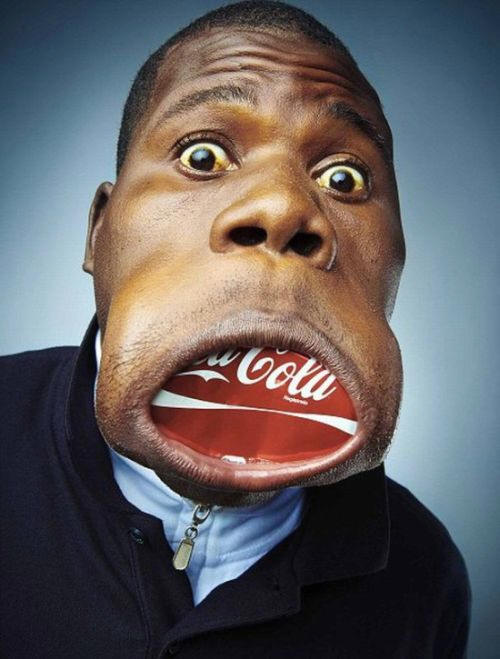
It’s the second public holiday celebrating the Queen’s Diamond Jubilee here in the UK, I thought the photos of this chap might raise a smile from all the dentists who struggle with access day in day out.
From slightlywarped.com via stumbleupon

“It was pitiful for a person born in a wholesome free atmosphere to listen to their humble and hearty outpourings of loyalty toward their king and Church and nobility; as if they had any more occasion to love and honor king and Church and noble than a slave has to love and honor the lash, or a dog has to love and honor the stranger that kicks him! Why, dear me, ANY kind of royalty, howsoever modified, ANY kind of aristocracy, howsoever pruned, is rightly an insult; but if you are born and brought up under that sort of arrangement you probably never find it out for yourself, and don’t believe it when somebody else tells you. It is enough to make a body ashamed of his race to think of the sort of froth that has always occupied its thrones without shadow of right or reason, and the seventh-rate people that have always figured as its aristocracies — a company of monarchs and nobles who, as a rule, would have achieved only poverty and obscurity if left, like their betters, to their own exertions…
The truth was, the nation as a body was in the world for one object, and one only: to grovel before king and Church and noble; to slave for them, sweat blood for them, starve that they might be fed, work that they might play, drink misery to the dregs that they might be happy, go naked that they might wear silks and jewels, pay taxes that they might be spared from paying them, be familiar all their lives with the degrading language and postures of adulation that they might walk in pride and think themselves the gods of this world.
And for all this, the thanks they got were cuffs and contempt; and so poor-spirited were they that they took even this sort of attention as an honor.”
― Mark Twain

How dare Premiership Rugby criticise London Welsh and deny them right to play in top flight? It is gross hypocrisy.
Brendan Gallagher, Daily Telegraph
Right, time for a few painful home truths about clubs I otherwise admire and love but who now stand accused of gross hypocrisy over the London Welsh promotion issue.
Make no mistake, it is Premiership Rugby, and the clubs therein, that are making life nigh on impossible for those clubs wishing to better themselves. The compliant RFU are in effect the policemen, but Premiership Rugby have laid down the ridiculous regulations.
How dare Premiership Rugby get all precious over London Welsh, and indeed Cornish Pirates. They have had 17 years to sort themselves out and are still, in many cases, a complete mess groundwise. Up to this point I have judged them purely on their rugby, but they started this nonsense so here goes.
For years now I have sat in what amounts to a bomb site in the “press area” in the condemned stand at Vicarage Road. You can see 50 per cent of the game at best because your sightlines are ruined by huge pillars – most of the time you have to train your binoculars on the TV screen over 100 yards away.
For the best part of a decade Sarries have been telling us they will be moving to another ground, but nothing happens. Match day at Saracens Road in the middle of winter is among the most depressing sporting experiences of all time, but we stick with it because they are a fine club and an excellent team, populated by individuals we admire and respect. The Kassam Stadium would be absolute Rugby heaven in comparison.
Sarries, remember, were born of the parkfield that was Bramley Road, where players and spectators alike had to pick their way through dog excretia or worse. They are a product of the system that they are now helping to destroy.
It goes on. Edgley Park was right up there with Vicarage Road in the horror of its facilities, while Bath have got away with murder ever since professionalism started because we love the Recreation Ground.
Ahh, the Recreation Ground. Yes I do have a soft spot for the place but our patience is running very thin, it doesn’t meet Premiership Rugby’s own ground criteria, there is no parking worth mentioning, the majority of spectators are housed on a curious ad hoc structure in the middle of the cricket pitch and, unless you can bag a seat in the front row of their suspended press box, you have no chance of viewing the game.
How dare they criticise London Welsh. Who do Premiership Rugby think they are? Have they completely forgotten recent history? At various times Harlequins and Northampton have rightly been relegated to Division One but prospered massively from the experience and bounced back as model teams.
How dare Premiership Rugby, via the RFU, attempt to deny that to other equally ambitious rugby clubs. How dare they be judge and jury when the only people benefitting is their self-appointed elite. It is so against everything Rugby Union stands for as to be laughable, which they will quickly discover if this London Welsh situation is allowed to go any further.
A natural process of promotion and relegation should always decide who the elite are. Two years ago, Exeter’s promotion was greeted with guffaws around the League, and predictions of their instant relegation and humiliation. Well how wrong were Premiership Rugby on that.
Exeter are a model club in all respects, full of Championship Rugby virtues, and have raised the standards in the Premiership. We need more like Exeter, not less. We need a more dynamic self-satisfied League structure and we need much less of this nonsense.
It’s the creeping duplicity I dislike. If Premiership Rugby want a self-enclosed, self-perpetuating elite like the Super 15, the NBA, the NFL then they should come clean, put their proposal on the table and the game will vote Yes or No. But this big, bullying approach is going to lose them a lot of friends – as they will discover in the weeks ahead if it continues.
The glory of English rugby, so we are always told, is the numbers game, the million-plus people who play. If that is ever going to be translated into a consistently successful national team the way forward has to be via two top professional leagues, with free passage between the two via promotion and relegation. Make the numbers work for you.
It’s quite evident, however, that such a scenario is the last thing Premiership Rugby want while the RFU’s mystifying failure to find a sponsor for the Championship sends out the same message.
For the second time in less than a decade the Office of Fair Trading has investigated the Dental Market, their report was released today; the press release is below, I find it interesting that the press release is far more dramatic in it’s summary than the report itself, but that’s government spinners for you:
OFT calls for greater patient choice and competition in dentistry market.
The OFT today called for major changes to the £5.73bn UK dentistry market after a market study found that it is not always working in the best interests of patients.
The OFT study found that patients have insufficient information to make informed decisions about their choice of dentist and the dental treatments they receive. Alongside this, a new survey conducted as part of the study suggests that each year around 500,000 patients may be provided with inaccurate information by dentists regarding their entitlement to receive particular dental treatments on the NHS, and as a result they may pay more to receive private dental treatment.
The report also raises concerns about continued restrictions preventing patients from directly accessing dental care professionals, such as hygienists, without a referral from a dentist. The OFT considers these restrictions to be unjustified and likely to reduce patient choice and dampen competition.
The OFT also highlights concerns with the current NHS dental contracts in England. As the majority of these contracts are not time-limited, and only a small volume of new contracts are put out to tender each year, it is extremely difficult for new dental practices to be established, and successful dental practices which offer a higher quality of service to NHS patients are prevented from expanding.
Other issues of concern highlighted in the report include the complexity of the complaints process for patients and instances of potential pressure selling by dentists of dental payment plans.
The OFT has identified a wide-ranging package of recommendations to address these concerns, which includes:
John Fingleton, OFT Chief Executive said:
‘Our study has raised significant concerns about the UK dentistry market which need to be tackled quickly in the interest of patients. All too often patients lack access to the information they need, for example when choosing a dentist or when getting dental treatment. We also unearthed evidence that some patients may be receiving deliberately inaccurate information about their entitlement to NHS dental treatment, and we expect to see robust action taken against such potential misconduct by dentists.
‘This study has also highlighted that the current NHS dental contract in England may well not be working in the best interests of patients, (my bold) and that regulations unjustifiably restrict patients from getting direct access to dental care professionals like hygienists. Reform in both these areas is needed without delay.’
NOTES
Now compare with their conclusions in 2003.
Purpose of the study
To address competition concerns and concerns regarding levels of consumer protection in the market.
To investigate transparency of prices, the level of competition and the way complaints are handled and redress offered. To look at access to dental services and patient guidance before treatment.
Findings
The findings of the study showed:
Recommendations
The recommendations of the study were to:
Action following market study
All the OFT recommendations were accepted.
My thoughts
 The Incisal Edge