“Don’t wish it was easier; wish you were better.
Don’t wish for fewer problems; wish for more skills.
Don’t wish for fewer challenges; wish for more wisdom.”
Thanks to Joanna Taylor for sending this one.
The blog of Alun Rees, The Dental Business Coach
“Don’t wish it was easier; wish you were better.
Don’t wish for fewer problems; wish for more skills.
Don’t wish for fewer challenges; wish for more wisdom.”
Thanks to Joanna Taylor for sending this one.
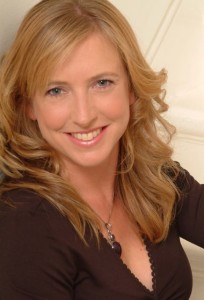 I have mentioned Roz Savage in this place before I even made her last book Rowing The Atlantic my weekend read.
Quick update – Roz turned her back on a “conventional” life as a management consultant and is now described as an ocean rower, author, motivational speaker and environmental speaker. She is currently closeted somewhere in South West England writing her book about rowing the Pacific Ocean. You can read more about on her website and I am sure you will be impressed by both her achievements and her plans which include rowing solo across the Indian Ocean in 2011 and finally the Atlantic (West to East this time) in 2012.
The purpose of this posting is to encourage you to vote for Roz to make her National Geographic’s “Adventurer of the Year”. I’ll let her tell you about it herself:
BTW, car going great guns. Was so impressed that I hadn’t used it for 2 weeks, not having ventured far from home while busy writing book, and it still started first time. GREAT car!
Anyway, onto the main story…..
I’ve got some really exciting news to share! It has just been officially announced that I have been selected as an “Adventurer of the Year” by National Geographic. Obviously, I’m completely over the moon about this – it’s a great honour!
I’d like to thank you for your support, which has undoubtedly contributed to my receiving this wonderful accolade. My boat and I may be the most visible part of the picture, but I couldn’t do what I do without the ocean of support from you and others like you, and so this title belongs as much to you as to me.
I see this as a vindication of the course that I plotted 6 years ago, when I chose to abandon my creature comforts to row across oceans, using my adventures to spread the message that we have to look after this Earth if we want it to look after us. When I look back over the years since I first set out across the Atlantic in 2005 as a nervous novice ocean rower, I am overwhelmed with gratitude for the people and places and incredible life experiences that have enriched my life while I have worked incessantly to make my vision a reality.
I have a favour to ask you – would you please vote for me? Out of the ten of us who have been chosen as “Adventurers of the Year”, one will be voted the “People’s Choice Adventurer”. Between now and January 15, people will be voting at http://adventure.nationalgeographic.com/adventure/adventurers-of-the-year/vote/ for their favourite adventurer.
It would really be the icing on the cake if I won this additional title as well. Besides the prestige, it would give a real boost to my efforts to raise profile and funds as I prepare for the last two years of my ocean-rowing career: the Indian Ocean in 2011 and the North Atlantic in 2012.
The Indian Ocean – dubbed “EAT, PRAY, ROW” – starts around 31st March next year. I’ll need $50,000 to complete the row and am asking people to sponsor $10 per mile of the 5,000 mile trip. There’s more about this campaign at http://www.rozsavage.com/eat-pray-row/.
My final “Homecoming Row” is in 2012, launching from New York, heading out past the Statue of Liberty and heading for London, ideally arriving just before the 2012 Olympics. More info at http://www.rozsavage.com/homecoming-row/.
I want to leverage these expeditions to the max, reaching as many people as possible with my environmental message. The more resources I have at my disposal, in terms of (wo)manpower, budget, and media exposure, the more effective I will be in my mission.
I would be really grateful for your vote, AND for you to forward this message to your network of friends, family, colleagues, newsletters – whatever connections you have at your disposal. Please take a moment to think of as many people that you know who are interested in adventure, athletic endeavour, environmental issues, personal growth, rowing, or simply enjoy an inspiring success story – and ask them to vote for me.
Ask them to vote by going to http://adventure.nationalgeographic.com/adventure/adventurers-of-the-year/roz-savage-2010/ and click on the “Vote for Roz Savage” link at the bottom.
Many thanks!
And warmest green wishes
Roz
In these days where many dentists offer “Botox” as part of their Aesthetic Dental Menu, a profitable procedure with the benefit to the provider that it needs to be “topped up” so there is the potential for plenty of repeat business. Perhaps we should pause and give thanks the late John Lee whose obituary was in The Daily Telegraph last week. An ophthalmic surgeon Mr Lee was the first person in the UK to use Botox for clinical reasons.
John Lee
John Lee, who died on October 8 aged 63, was one of the world’s most eminent ophthalmologists and the first person to bring pharmaceutical Botox (botulinum toxin) into Britain for clinical use.
Lee, who worked as a consultant ophthalmic surgeon at Moorfields Eye Hospital from 1984, brought the toxin in his hand luggage on a plane from the United States in 1982, following a trip to meet Alan Scott, the San Francisco ophthalmologist who first developed botulinum toxin therapy in the early 1970s to treat strabismus (“crossed eyes”) and blepharospasm (uncontrollable blinking).
Lee became a leader in the field of adult strabismus, botulinum toxin therapy as well as paediatric eye conditions, and was the first European to be invited to join the Association for Research in Strabismus (also known as the “Squint Club”). His patients ranged from senior politicians to slum-dwellers in Bangladesh.
The oldest of 11 children of first generation Irish immigrants from Connemara, John Lee was born on October 25 1946 at Kingston-upon-Thames, Surrey. Both his parents were teachers.
A bright child, he sent his spare time reading in the local library and came top in the country in the 11-plus, despite taking the exam a year early, winning a place at St George’s College, Weybridge. As family resources were strained, he worked in a garage to pay for his school uniform. He also worked as a babysitter in order to afford a subscription to a record club, through which he developed a love of classical music.
At the age of 17 Lee won a place to read Medicine at University College, Oxford, after securing five A-levels. There, to help pay for his studies, he worked as a psychiatric nurse during vacations.
After completing his clinical training at Westminster Medical School, Lee did ophthalmology residency training at the Oxford Eye Hospital, and at Moorfields Eye Hospital from 1973 to 1979, and won a fellowship in Paediatric Ophthalmology and Neuro-ophthalmology at the Bascom Palmer Eye Institute, Miami, Florida in the early 1980s.
In 1984 he was appointed to a consultant post at Moorfields eye Hospital, where he became director of the Strabismus and Neuro-ophthalmology Service and raised money for the hospital in charitable donations from private patients. He was also honorary consultant at Great Ormond Street Hospital for Children and the Royal London Hospital
Internationally renowned both for his clinical and his research work, Lee was the author of 115 papers in peer-reviewed journals. He served as president of the International Strabismus Association; vice-president of the European Strabismus Association; president of the ophthalmology section of the Royal Society of Medicine; and president of the Royal College of Ophthalmologists.
Lee was a keen cyclist and would always ride to work from his home in Camberwell. He also had a passion for fishing and a great fondness for the west of Ireland.
He married, in 1971, Arabella Rose, who survives him with two sons.
Here’s some more about the history of the use of Botulinum toxin from October 2007
Ever wonder how Botox evolved from toxin to the antidote for aging?
In her interesting article for MSNBC, Diane Mapes charts the history of Botox from sausages to frozen faces.
Its ability to inject a wonderfully paralyzing and youthful appearance into scores of celebrity and non–celebrity faces was discovered 15 years ago, Mapes writes. But it wasn’t until five years ago that Botox received FDA approval. Take a trip back in time to see how Botox evolved to be the poison of all poisons and the prettiest one.
It all began with the sausage in the 1820’s when Dr. Justinus Kerner conducted case studies and experiments to learn what was behind the deaths of some Germans who had consumed sausage. Turns out it was food–borne botulism. Thanks to Dr. Kerner, we found out more about this poison, including its neurological symptoms—from droopy eyelids to respiratory failure—and using it therapeutically. Then in the 1890’s Dr. Emile Pierre van Ermengem from Belgium identified strains A through G of botulinum toxin, four of which—A, B, E and F—can make us humans sick.
Then in the 1940’s it was time to get creative and use the poison for bad. According to a 2004 article published in the journal Clinical Medicine, during WWII, there was a plan for Chinese prostitutes to plant capsules with botulinum toxin inside the food and drinks of high–ranking Japanese officials. But the poisonous plan never went through.
The 1950’s and 60’s welcomed the good side of botulinum. During these years, Dr. Edward J. Schantz and others purified botulinum toxin type A into crystalline form. Dr. Vernon Brooks discovered that small doses of botulinum relax the muscle temporarily. And ophthalmologist Dr. Alan B. Scott began injecting monkeys with the toxin believing it could help with crossed eyes.
Animal subjects were then replaced with humans in the next decade when Dr. Scott received government approval to use human participants in his scientific work. Results revealed that botulinum toxin type A was a safe and effective treatment for crossed eyes. Other research showed botulinum toxin was helpful in relieving all kinds of spasms from facial to vocal cord spasms. In 1989—a year after Allergen bought the distribution rights to the toxin—the FDA approved botulinum toxin type A for treating crossed eyes and spasms in the eye muscle. Soon Allergen went further and bought Dr. Scott’s company and “Botox” was born!
As more research was conducted, it was uncovered that Botox temporarily cured excessive sweating and cerebral palsy in the 1990’s. Then a serendipitous event occurred when ophthalmologist Dr. Jean Carruthers noticed her patients were looking fabulously wrinkle–free. After Dr. Carruthers and her husband’s (a dermatologist) study on Botox’s ability to decrease frown lines was published, Botox took off—so much so that we actually ran out of it in the late 90’s, but luckily only for a very short time.
With Botox Cosmetic officially approved in 2002 for fixing frown lines and then two years later for excessive underarm sweating, Allergen’s lucrative business has been booming with sales exceeding $1 billion in 2006.
Mapes also writes about a recent backlash with negative portrayals of Botox showing up in several television shows along with concerns about its misuse and the experience and professionalism of those doing the shooting, growing.
I have quite forgotten to mention this great initiative from the innovative people at Bridge2Aid which was launched at Dental Showcase.
In an age where potential patients / customers / clients look at every element of your business before committing, evidence of your involvement with an organisation that reflects your values and your concern for social responsibility can be important. That aside the chance to do something so worthwhile for Bridge2Aid is a reward in itself.
From the Bridge2Aid Unity Partnership Website
The Unity Partnership involves a select group of dental practices and businesses recognised by Bridge2Aid for their support of the emergency dental training of a Tanzanian Clinical Officer.
Being a Unity Partner helps the partners stand out from the competition, and we support them in maximising the PR opportunities which stem from their involvement in the Partnership.
Unity Partners sponsor the training for an initial £2,500 followed by an annual contribution of £250 for three years. The Clinical Officer goes on to work in their local community treating thousands of people who would otherwise have no access to dental care, providing vital relief from pain.
To find out more, have a look around our site or contact our Unity Partnership Co-ordinator via the ‘Becoming a Partner’ page.
So what’s stopping you?
“When you wish to achieve results that have not been achieved before, it is an unwise fancy to think that they can be achieved by using methods that have been used before”
From R.A. Mashelkar – Breakthrough designs for ultra low-cost products. TED
I wonder how many “at last an end to tooth decay” articles I have seen over the past 30 years.
Ever the optimist here’s some recent research. From Medical News Today
The Groningen professors Bauke Dijkstra and Lubbert Dijkhuizen have deciphered the structure and functional mechanism of the glucansucrase enzyme that is responsible for dental plaque sticking to teeth. This knowledge will stimulate the identification of substances that inhibit the enzyme. Just add that substance to toothpaste, or even sweets, and caries will be a thing of the past. The results of the research have been published this week in the journal Proceedings of the National Academy of Sciences (PNAS).
The University of Groningen researchers analysed glucansucrase from the lactic acid bacterium Lactobacillus reuteri, which is present in the human mouth and digestive tract. The bacteria use the glucansucrase enzyme to convert sugar from food into long, sticky sugar chains. They use this glue to attach themselves to tooth enamel. The main cause of tooth decay, the bacterium Streptococcus mutans, also uses this enzyme. Once attached to tooth enamel, these bacteria ferment sugars releasing acids that dissolve the calcium in teeth. This is how caries develops.
Three dimensional structure
Using protein crystallography, the researchers were able to elucidate the three dimensional (3D) structure of the enzyme. The Groningen researchers are the first to succeed in crystallizing glucansucrase. The crystal structure has revealed that the folding mechanism of the protein is unique. The various domains of the enzyme are not formed from a single, linear amino acid chain but from two parts that assemble via a U-shaped structure of the chain; this is the first report on such a folding mechanism in the literature.
Functional mechanism
The unravelling of the 3D structure provided the researchers with detailed insight into the functional mechanism of the enzyme. The enzyme splits sucrose into fructose and glucose and then adds the glucose molecule to a growing sugar chain. Thus far the scientific community assumed that both processes were performed by different parts of the enzyme. However, the model created by the Groningen researchers has revealed that both activities occur in the same active site of the enzyme.
Inhibitors
Dijkhuizen expects that specific inhibitors for the glucansucrase enzyme may help to prevent attachment of the bacteria to the tooth enamel. Information about the structure and functional mechanism of the enzyme is crucial for developing such inhibitors. Thus far, such research has not been successful, states Dijkhuizen: ‘The various inhibitors studied not only blocked the glucansucrase, but also the digestive enzyme amylase in our saliva, which is needed to degrade starch.’
Evolution
The crystal structure also provides an explanation for this double inhibition. The data published by the Groningen scientists shows that glucansucrase proteins most likely evolved from amylase enzymes that degrade starch. ‘We already knew that the two enzymes were similar’, says Dijkhuizen, ‘but the crystal structure revealed that the active sites are virtually identical. Future inhibitors thus need to be directed towards very specific targets because both enzymes are evolutionary closely related.’
Toothpaste and sweets
Dijkhuizen points out that in future glucansucrase inhibitors may be added to toothpaste and mouthwash. ‘But it may even be possible to add them to sweets’, he suggests. ‘An inhibitor might prevent that sugars released in the mouth cause damage.’ However, Dijkhuizen doesn’t expect that toothbrushes have had their day: ‘it will always be necessary to clean your teeth.’
Sources: University of Groningen, AlphaGalileo Foundation
I have been asked why I called my business “The Professional Coach”, the truth is pretty prosaic, I wanted something that “said what it did on the tin” rather than trying to be over clever (at that time in my life I was clevered out). So – I coach professionals for a living therefore I am etc..
I came across this today as the preface to a collection of Thomas Leonard’s writings and it pretty well answers the question “what do you do then?”
The Professional Coach is…..
And most importantly.
Now do you want to know more?
“Some folks go through life pleased that the glass if half full.
Others spend a lifetime lamenting that it’s half-empty.
The truth is: There is a glass with a certain volume of liquid in it.
From there, it’s up to you!”
Dr James S. Vuocolo
 The Incisal Edge
