Jargon busting

Tech Terms to Avoid

 David Pogue writes for the New York Times on computers and has also written several useable books on the Apple Mac. This is from a recent blog and deals with those people who I love to hate, the purveyors of technospeak. We have all met them using a language of their own to impose a sense of inferiority and insecurity on we mere mortals who just use the kit and have no desire to get our fingers oily beneath the bonnet.

pogue.blogs.nytimes.com/2008/10/16/tech-terms-to-avoid/

Selfless Selling

This is from the excellent Robert Middleton www.actionplan.com

It’s a good alternative to all the “ethical selling for professionals” courses.

The Spirit of Selfless Selling

The words “sell, sales and selling” may be the most misunderstood in the English language.

 We see selling as a necessary evil, something to be avoided at all costs, an undertaking that’s rather unsavory, maybe even unethical, and certainly beneath the dignity of a professional service business owner. 

Over the years I’ve asked this question of thousands of people: 

“When you think of selling, what is it that the sterotypical salesperson sells?” The answer is always the same: “Used Cars!”

 We equate selling with selling used cars. And because we see it that way, the negative associations are very strong. 

 In the InfoGuru Manual I make a distinction between two very different kinds of selling – Selfish Selling and Selfless Selling. 

We tend to put most selling into the Selfish Selling category.

Selfish Selling includes these attributes: The focus is primarily on making the sale, not serving the customer; the attitude is primarily self-serving; the agenda is some level of deception, and the perspective is that of “win-lose.”

If we think that this is what selling is about, of course we wouldn’t want to associate ourselves with that activity.

Selfless Selling includes these attributes: The focus is primarily on serving the customer; the attitude is one of generosity; the agenda is to educate and inform, and the perspective is that of “win-win.”

When we encounter a sales person with this perspective, we don’t even think it’s selling. It feels more like natural communication. 

The experience is of being educated and assisted in making the right decision. There is no pressure, only possibility. 

Well, Selfless Selling is REAL selling. And Selfish Selling is just a kind of manipulation. It has nothing to do with real selling. 

When you see this, selling becomes more approachable, more interesting, more fun, more fulfilling and also more successful.

When you are doing Selfless Selling, you are serving the prospect, working with them to discover their aspirations and dreams, uncovering challenges and offering powerful solutions. 

To discover the spirit of Selfless Selling inside you, here are some questions to ask yourself in any selling situation:

 – How can I be of service? 

– What do I need to know to help this person? 

– What is their current situation and what is their biggest challenge? 

– What information would be most valuable to provide? 

– What stories would be most useful to share? 

– How can I be clearer and demonstrate the value and the benefits? 

– How can I make the choice easier?

When you discover this spirit or mindset of Selfless Selling you don’t have to worry so much about sales and closing techniques, you make such a powerful connection with the buyer that the sale happens so naturally that it doesn’t feel like selling. 

The More Clients Bottom Line: Real selling is Selfless Selling. It isn’t about manipulation and it certainly isn’t about techniques. It’s about connecting authentically with another human being and discovering how you can work together creatively. 


The Monday Morning Quote #14

If you don’t love yourself, you cannot love others.You will not be able to love others.

If you have no compassion for yourself then you are not able of developing compassion for others.”

The Dalai Lama

News of The Week

The biggest news of the week has to be the election of a new American President.

This series of 80 or so photographs are excellent for their simplicity and truth. I felt like I was looking at somebody’s family album.

Watch them here

and here’s John Naughton’s eloquent take on them from his blog Memex

& did the West Wing predict this?


The Weekend Read 10 – The Artist’s Way by Julia Cameron

OK I admit it, this is more than just a weekend read but you need a place to start.

Subtitled as: ‘A Course in Discovering and Recovering Your Creative Self’ we’re obviously back in tree hugging territory here, a place of which I’m very fond. I enjoy the nitty gritty of spreadsheets, cash flows and management structures or even (occasionally) the cavity shapes, physical properties and biological responses of dentistry. On the other hand, I feel that unless we acknowledge and harness our own creativity there will be dissonance in our thoughts and actions.

This book provides a 12-week step-by-step course in recovering your creative self. Fundamental to this are two tools. Firstly the ‘Morning Pages’ comprising three pages of longhand writing stream-of-consciousness which are not meant to be art or even ‘writing’ as such but merely provide a means of reconnecting with ourselves they lead us along a pathway out of despair and into solutions.

Second tool is the ‘Artist’s Date’, this is a block of time put aside and committed to nurturing your creative side, this might be as simple as acknowledging nature and enjoying a sunset or a dawn or perhaps enjoying a work or collection of art in a commercial set up. There’s a great line in the book about making this date and then watching the killjoy side trying to wriggle out of it as if there is a fear of self-intimacy.

My review doesn’t do this book justice. I have to admit to doubts from my most cynical depths but I was committed to a ‘try any and everything’ period of my life, my coach had asked that I give it a go so I did and never looked back. When I lapse from the exercises I dry up and then have to rediscover them.

The book is available from my Amazon page.

Have a great weekend.

The Surgeon’s Gap

My first awareness of Dan Sullivan was 6 or 7 years ago when a friend returned from a session with Dan in Toronto and gave me a copy of a presentation called “The Gap”. I have recently listened to the tape again and this time it clicked with me. Is it that I’m just a slow learner?

In this presentation Dan draws a metaphor with the horizon. You can always see it but try as you might you will never reach it. Nobody suggests that the horizon does exist, it’s a concept, something that we understand. That doesn’t mean that the horizon isn’t real, but we don’t get frustrated because we can’t reach it.

Similarly there is the ideal which is a mental construct like the horizon. It is not achievable and the gap is the space between what is reachable and the ideal. It helps us to establish goals, to motivate us and to withstand the disappointments along the path. Goals are achievable and need to be stated in real terms so that progress can be measured.

He differentiates goals from ideals and helps you come to grips with the gap between performance, goals and ideals in order to appreciate the success you achieve. The trick is to measure your progress from where you started (Dan refers this as Actual A1) to where you are now (which he calls Actual A2), measure backward never forward so that you can see the distance moved towards your goal. The gap is the difference between the achievement and the ideal.

Unfortunately we humans don’t always measure ourselves the same way when we get to A2. Those who measure themselves against the gap end up frustrated and disappointed because it never reduces, they always feel like failures. They may achieve great things but they never feel the benefit, never feel that they can reward themselves for their progress.

Those who measure from A1 (the start point) can always see how they have progressed. They experience satisfaction and a sense of optimism.

It’s a difficulty I have always had and still have when wearing my dentist’s hat. Having studied with some of the best clinicians I knew what was ideal but I was always plagued by inability to achieve it, it was one of the main reasons that led to my reducing my clinical commitment. The Gap was a source of constant unhappiness, frustration, and dissatisfaction. I couldn’t accept that all the patients who had been treated to stability and health and who had learned to control their disease was progress. I could only see the ones that we hadn’t influenced, who had not understood or even rejected our message.

It makes no sense to measure yourself against the Ideal. You cannot see progress even when it is great. You do not get any of the emotional or psychological benefits of your activities. It results in discouragement and unhappiness. Use the Ideal for inspiration and motivation in setting your goals, but measure your progress based on Actual 1, where you were when you started.

Dan Sullivan calls the 2 ways of living the Negative Zone and the Positive Zone. Some people live parts of their life in one zone and parts in the other, but usually by a certain age we pick one or the other as our primary mode of dealing with things. If they choose the Negative Zone (and this is not a conscious choice — such a negative choice is not possible if one is conscious), in addition to the negative consequences  described above, they also become very discouraging to other people. They become the kind of person who, when another achieves something, points out how much better it could have been. “You got 88% in your test? Why didn’t you get 95%?” Whenever something good happens, they always look to the deficiency. We all know people like this.

Those in the Positive Zone, however, in addition to creating their own happiness and inspiration, also inspire and motivate others by pointing out how much progress they have made (and also helping the other person to choose to live in the Positive Zone). Those in the Positive Zone live with constant self-acknowledgement, constant progress, and a sense of continuing growth. The Positive Zone is one of fulfillment and well-being, and I highly recommend it.

Knowing what you know at this point about the Gap, it is very important that you take inventory of yourself on this crucial issue. What do you measure yourself against? If it is the Ideal, you need to learn how to measure yourself against Actual 1 — or, be willing to pay the price.

The Monday Morning Quote #13

“There is nothing in the world that some man cannot make a little worse and sell a little cheaper,

and he who considers price only is that man’s lawful prey.”

Another quote from Ruskin to mark my return to work after a great holiday. It’s eyes down for the next 7 weeks, when I reflect in 50 days I want to have spent my time well.


The Wisdom of John Ruskin – The Common Law of Business Balance.

I refer all my clients to this quotation from John Ruskin, it is particularly useful when converting from the NHS with its promotion of pile high, sell cheap.

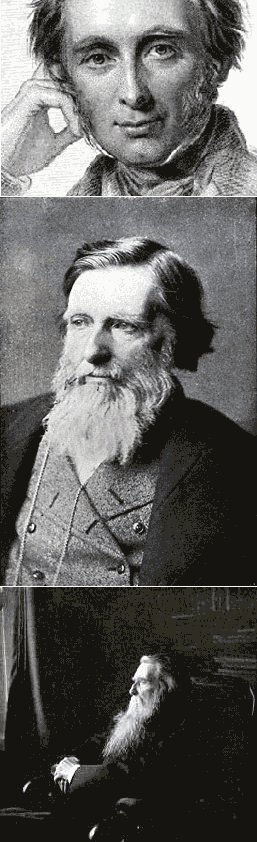
Ruskin was a fascinating man, a real polymath. Here’s a link to a Wikipedia page.

Why not have it printed and framed to hang in your reception area or include it in your literature.

It’s called the Common Law of Business Balance.

It is unwise to pay too much but it’s unwise to pay too little.

When you pay too much you lose a little money that is all.

When you pay too little, you sometimes lose everything, because the thing you bought was not capable of doing the thing you bought it to do.

The common law of business prohibits paying a little and getting a lot.

It can’t be done.

If you deal with the lowest bidder it is well to add something for the risk you run.

And if you do that you will have enough to pay for something better!”

Holiday

I’m away for a week, and while there may be the occasional post from Cork, normal service will resume on November 3rd.

I know that it’s school half-term in a lot of the country so if you get a chance to rest do take it, you’ll need your energy for the months ahead.Fahouragh evening

Geoff Burch – All Over The Shop

7.30pm is not a great TV time for me but thanks to the wonder that is the BBC iPlayer I was able to catch the first episode of Geoff Burch’s show.

I have seen Geoff speak on a couple of occasions and enjoyed his presentation style and always learned something from him. This series on retailing should be compulsory for every small business owner especially dentists. It’s easy to watch and 30 minutes well spent.

Catch it on the web here.