impact is not easily measurable on short time scales

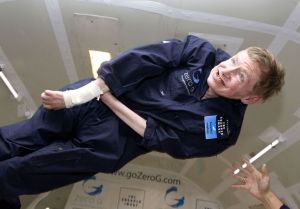
“There is currently pressure on academics to demonstrate the immediate impact of their research on society. It is perhaps worth reflecting that impact is not easily measurable on short time scales. Hawking’s was truly blue-sky research – and yet it has fascinated millions, attracting many into scientific careers. His academic legacy is not just the remarkable science he produced, but the generations of minds he shaped.”

Marika Taylor writing about Stephen Hawking in The Conversation


The Monday Morning Quote #474

“When I was 17, I read a quote that went something like, “If you live each day as if it were your last, someday you’ll most certainly be right.”

It made an impression on me… and since then, for the past 33 years I have looked in the mirror every morning and asked myself, “If today were the last day of my life, would I want to do what I’m about to do today.”

And whenever the answer has been, “no” for too many days in a row, I know I need to change something.”

Steve Jobs

From his 2005 Stanford Commencement address which is always worth (re)watching.

Birthday words

Wise words. Not mine but those of Professor Stephen Hawking and well worth repeating.

Today is my birthday. They are all of equal importance but this one used to have far more significance. (The clue is in the second suggestion.)

“One, remember to look up at the stars and not down at your feet.

Two, never give up work. Work gives you meaning and purpose and life is empty without it. 

Three, if you are lucky enough to find love, remember it is there and don’t throw it away.”


Why I’m glad my son doesn’t play the game that I love.

As the 6 Nations reaches its climax it’s time to look hard at the real problem of head injuries.

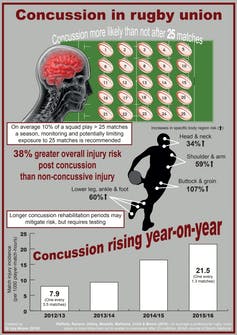
Rugby players more likely than not to sustain a concussion after 25 matches in a season.

Concussion is one of the biggest problems facing both rugby union and league. Rates of the traumatic brain injury in rugby union have been rising since the 2012/13 season, going from one concussion every 3.2 matches, to one concussion every 1.2 matches in the 2015/16 season.

It has become such a problem that we have now found players are more likely than not to sustain a concussion after 25 matches in a single season. This rate – which came from an analysis of the 2015/16 rugby union data – was three times higher than the second most frequent injury, thigh haematoma (“dead leg”).

Full article HERE


“this torrent of idiocy and self-indulgence gets to one”

“In the end, this torrent of idiocy and self-indulgence gets to one, which is why I have morphed from being someone who always monitored Twitter into someone who only occasionally checks it.”

John Naughton in The Observer

Yes indeed.

The Monday Morning Quote #473

“We can ignore reality,

but we cannot ignore the consequences of ignoring reality.”

Ayn Rand


The Incisal Edge Podcast – Facebook Advertising for Dentists with Chris Baker

In this episode of the Incisal Edge Podcast Alun Rees talks to Chris Baker about Facebook Advertising.

The third of our interviews with Chris Baker from Corona Dental Marketing

www.coronadental.co.uk

Roger Bannister RIP

I grew up listening to my parents talk of the legends that lit up the austerity of post-war Britain, two names that stood out because of the sheer magnitude of their achievements were Edmund Hillary and Roger Bannister. The latter died last weekend and is of course remembered for running the mile in less than four minutes. Instead of monetising the success, he retired from competitive athletics “to do something serious”, he had got what would have been called a proper job.

“Now that I am taking up a hospital appointment I shall have to give up international athletics. I shall not have sufficient time to put up a first-class performance. There would be little satisfaction for me in a second-rate performance, and it would be wrong to give one when representing my country.

He worked as a neurologist for the rest of his practicing life.

How times change.

Inspired by John Naughton

We can still admire his landmark run in May 1954.

…we pay for the product or content, and surrender our data.

Good, thought provoking piece by Jean-Louis Gassée which concludes:

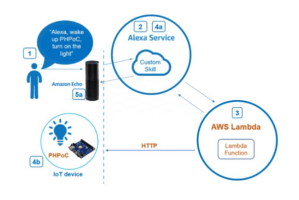
The not-so-good news is the flow of “domestic data” that we unwittingly offer up to Amazon’s sophisticated Machine Learning citadel. In an admirable and to-be-feared sense, Amazon has the upper hand on Google and Apple. With Google, we don’t pay for the product, We Are The Product and we pay with our data. With Apple, we pay for the product and get to keep our data. Now, with Amazon, we pay for the product or content, and surrender our data.

Chapeau bas, hats off to the AmazonNet of Things!

What will happen next won’t be boring, either on account of security accidents, or because we start asking questions.

Full article HERE

If you think “this has nothing to do with me”, think again.

The snowflake economy

If your business depends upon discretionary spending take note:
Buy now, pay later. The retail sector has had a tough start to the year with some big names heading into administration. Last week’s snow will have made things even worse as shoppers stayed away from the high street. So it is unfortunate timing that January’s lending data showed even more spending is occurring on credit. Credit card balances rose at almost 10%, suggesting consumers are still keen to buy now and pay later. Whether this is from renewed confidence in their future finances or because the cash ran out over Christmas remains to be seen but will have big consequences for future growth.
Turning tide. Consumer credit might be threatening double digit growth, but companies are being much more cautious with their finances. Borrowing in January by UK businesses was only 1% higher than a year ago. That’s quite a slowdown given that growth of 2-3% was typical through most of last year. Even more striking is the behaviour of different sized firms. Broadly speaking, large companies are still borrowing, but SMEs now owe no more than they did in January 2017. Is this Brexit uncertainty finally beginning to bite, or a gradual response to the Bank of England’s message that we should expect rates to rise? Either way, the contrast to the behaviour of households is stark.
and if you’re in your 40s and feeling chipper you’re bucking the trend.
Happiness. Like Churchill on democracy, GDP is the worst way to measure an economy, apart from all the others. One criticism is GDP fails to measure the things that matter, like happiness or anxiety. So the ONS produces a ‘personal wellbeing index’. The good news is that we were slightly chirpier in 2017 than in 2016 – and we’ve getting steadily more perky since the index began in 2012. Women tend to feel happier, more worthwhile and yet also more anxious than men. Oh, and we’re most happy in our 60s and 70s, least happy in our 40s. Sounds about right.