You have to build for the reality we live in, not the one we hope to create.

I have been travelling and choosing to ignore Facebook for a few days, I am starting (probably too late) to actively resent its insidious ubiquity. For someone who is known as, a “hail fellow well met, first to the bar, last to leave, loves a party” person I enjoy my own company, my books, silence & contemplation and try to choose with whom I spend my time. So when read this piece via Dave Pell’s Newsletter  I thought it had enough in it to be worth sharing.

“The problem with connecting everyone on the planet is that a lot of people are assholes. The issue with giving just anyone the ability to live broadcast to a billion people is that someone will use it to shoot up a school. You have to plan for these things. You have to build for the reality we live in, not the one we hope to create.”

Climbing Out Of Facebook’s Reality Hole

With its new camera platform, Facebook is busy augmenting reality. Perhaps it should pay a bit more attention to the hard truths of the world in which we currently live.

Full article HERE


Playing the “What If” game.

I delivered my presentation, “Is Dentistry Making You Sick?” in Gloucestershire a couple of days ago and introduced a game that I suggest participants play with their teams and partners. It’s called “What If” and the rules are simple in the extreme, you come up with the most unlikely thing that you can imagine and make plans on how you will deal with it on a personal and business level. Then move on to the second most unlikely and so on – I think you get the drift.

Visualise scenarios, research, plan and rehearse.

The example I used was of the owner of a 95% NHS dental practice who had been planning for the new NHS contract to replace the shameful 2006 edition, it has been promised over and over by successive governments. The contract will emphasise prevention and have a level of capitation payments. It will have been trialled and tested and approved by the BDA.

The What If game when played on Monday at 9am would have had them wake up one day and discover that the government had called a general election in order to concentrate on Brexit. The side effects of the likely victory would be to railroad their austerity programme through until 2022 and also enable them to kick any positive change in the dental contract into the the longest of long grass until who knows when.

Now what would you do if that happened – apart from ringing Lily Head?

What If – what’s next?

“Jeff, what does Day 2 look like?”

Another post via the essential Benedict Evans’ Newsletter. This is from Jeff Bezos‘ (Amazon founder & CEO) annual shareholder letter: “managing Amazon and change in a large company”. Well worth a read.
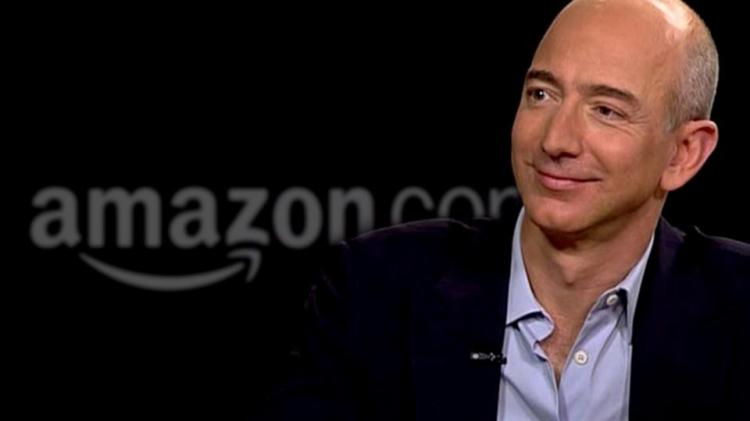
“Jeff, what does Day 2 look like?”

That’s a question I just got at our most recent all-hands meeting. I’ve been reminding people that it’s Day 1 for a couple of decades. I work in an Amazon building named Day 1, and when I moved buildings, I took the name with me. I spend time thinking about this topic.

“Day 2 is stasis. Followed by irrelevance. Followed by excruciating, painful decline. Followed by death. And that is why it is always Day 1.”

To be sure, this kind of decline would happen in extreme slow motion. An established company might harvest Day 2 for decades, but the final result would still come.

I’m interested in the question, how do you fend off Day 2? What are the techniques and tactics? How do you keep the vitality of Day 1, even inside a large organization?

Such a question can’t have a simple answer. There will be many elements, multiple paths, and many traps. I don’t know the whole answer, but I may know bits of it. Here’s a starter pack of essentials for Day 1 defense: customer obsession, a skeptical view of proxies, the eager adoption of external trends, and high-velocity decision making.

True Customer Obsession

There are many ways to center a business. You can be competitor focused, you can be product focused, you can be technology focused, you can be business model focused, and there are more. But in my view, obsessive customer focus is by far the most protective of Day 1 vitality.

Why? There are many advantages to a customer-centric approach, but here’s the big one: customers are always beautifully, wonderfully dissatisfied, even when they report being happy and business is great. Even when they don’t yet know it, customers want something better, and your desire to delight customers will drive you to invent on their behalf. No customer ever asked Amazon to create the Prime membership program, but it sure turns out they wanted it, and I could give you many such examples.

Staying in Day 1 requires you to experiment patiently, accept failures, plant seeds, protect saplings, and double down when you see customer delight. A customer-obsessed culture best creates the conditions where all of that can happen.

Resist Proxies

As companies get larger and more complex, there’s a tendency to manage to proxies. This comes in many shapes and sizes, and it’s dangerous, subtle, and very Day 2.

A common example is process as proxy. Good process serves you so you can serve customers. But if you’re not watchful, the process can become the thing. This can happen very easily in large organizations. The process becomes the proxy for the result you want. You stop looking at outcomes and just make sure you’re doing the process right. Gulp. It’s not that rare to hear a junior leader defend a bad outcome with something like, “Well, we followed the process.” A more experienced leader will use it as an opportunity to investigate and improve the process. The process is not the thing. It’s always worth asking, do we own the process or does the process own us? In a Day 2 company, you might find it’s the second.

Another example: market research and customer surveys can become proxies for customers – something that’s especially dangerous when you’re inventing and designing products. “Fifty-five percent of beta testers report being satisfied with this feature. That is up from 47% in the first survey.” That’s hard to interpret and could unintentionally mislead…….

……..Good inventors and designers deeply understand their customer. They spend tremendous energy developing that intuition. They study and understand many anecdotes rather than only the averages you’ll find on surveys. They live with the design.

I’m not against beta testing or surveys. But you, the product or service owner, must understand the customer, have a vision, and love the offering. Then, beta testing and research can help you find your blind spots. A remarkable customer experience starts with heart, intuition, curiosity, play, guts, taste. You won’t find any of it in a survey.

In full HERE take the time and read the 1997 letter which follows it – makes interesting reading.

The Periodontist, deep pockets in LA.

from the Lefsetz Letter…

“I don’t want to be the bearer of bad news.”

Huh?

I thought the hygienist cleaned and the dentist evaluated.

But not at this joint.

My old dentist had a love affair with Alaska. For three months every summer he took his boat up north and regaled me with incredible tales thereafter. The only problem was if you had a crisis during those three months.

I did.

So I went to see his old associate, the one who bailed when the seaman wouldn’t cough up his practice as promised. This young man said the tooth in question was unsavable and would have to be extracted and replaced with an implant.

But then I called Irving. Medical consigliere to the stars.

Irving had been imploring me to see his guy for years. And Irving’s track record is impeccable. He always hooks me up with the top guys, with an appointment right away, oftentimes outside scheduled business hours, with no wait. And if you don’t think that’s important, if you don’t think that’s an asset…

You just haven’t been broke down and busted on the side of the road, with no direction home, wondering how you’re going to escape this pain.

So I got an appointment.

But just before I went, Irving said he’d forgotten to tell me this was the most expensive dentist in the world.

And he is. He’s 50% more expensive than any dentist I’ve ever seen. Assuming you need serious work. Cleanings? Routine stuff? That’s all reasonable. But if you need a crown…

You’re gonna pay $1500 more than anywhere else, but this dentist has his own lab and there’s no waiting, from drilling to replacement it’s two, maybe three days.

And he saved the tooth.

So, ultimately I saved money. Instead of paying for an implant, for half the price I continued to use my own tooth, which is always preferable.

The next time the crack was below the gum line. I had to go for an emergency root canal, on my birthday no less. The endodontist, another Beverly Hills bigwig, told me there was no way the dentist could save the tooth, that an implant would be necessary. But this guy, my guy, Irving’s guy, said “I’m gonna work my magic.” And he did, he put on a crown.

And it’s been an endless series of crowns. Is it my age? My affinity for trail mix stirred up in Dannon coffee yogurt? I don’t know, but I’ve given up the trail mix, it’s just too expensive and aggravating in the long run.

Worth reading to the end HERE

They shopped until they dropped and then they stopped….

On the very rare occasions I am in large shopping “malls” (usually visiting a John Lewis – predictable I know) I wonder, “how do these places make any money”?

Interesting article in the New York Times about the changes in US retail via Benedict Evans’ Newsletter where he says:

Is American retail at a tipping point? (Arguably, it passed one several years ago). The USA has 2-3x more retail square footage per capita than other developed countries, and that may now be starting to collapse, driving (sic) by commerce but also lots of other factors.

Worth a read HERE.

The Monday Morning Quote #415

“Life is a long preparation for something that never happens.”

William Butler Yeats

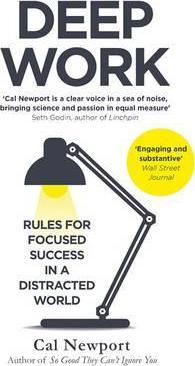
The Weekend Read – Deep Work by Cal Newport

This is a “must read” for anyone who feels they are getting overwhelmed or even too distracted by 21st century life. Subtitled, “Rules for focus success in a distracted world” it does exactly what it says on the cover. I regularly hear complaints from my clients that they are having problems focussing on the most important things in their life, that their surgery or office door is opened too often, that they feel the need to deal with emails, phone calls and social media as soon as they are aware of them. If your appointment book is ruling your life and you are having problems finding space & time in your life then do yourself a favour and read this.

Newport defines Deep Work as “Professional activities performed in a state of distraction-free concentration that push your cognitive capabilities to their limit. Their efforts create new value, improve your skill, and are hard to replicate.”

He contrasts Shallow Work as, “Noncognitively demanding, logistical-style tasks, often performed while distracted. These efforts tend to not create much value in the world and are easy to replicate.”

In the first half of the book the writer explains his hypothesis, which is, “The ability to perform deep work is becoming increasingly rare at exactly the same time it is becoming increasingly valuable in our economy. As a consequence, the few who cultivate this skill, and then make it the core of their working life, will thrive.” He then describes examples of Deep Work from a variety of walks of life and how it has helped individuals to success.

In the second half of the book he lays down The Rules for Deep Work, which are:

  • Work Deeply – Remove distractions.
  • Embrace Boredom – Schedule the occasional break from focus for distraction.
  • Quit Social Media – Initially off putting but his argument is cogent and correct.
  • Drain The Shallows – To eliminate the amount of time for shallow work aggressively schedule your entire day and quantify every activity.

Essential.

Available from The Book Depository HERE


The second life begins…when the drill is hung up.


I encountered this quote from Confucius in the FT, coincidentally in the week where I was reading The Path an interesting book on Chinese Philosophy and whilst still coming to terms with the fact that since March 18th I can no longer sing the Beatles’ song which starts, “When I get older losing my hair” in the future tense.

“A man has two lives. The second life begins when he realises he only has one.”

The article in the FT was about Charles Eugster who forsook his ” middle aged, self satisfied lump of lard” and took up competitive rowing at 63. Dissatisfied with falling muscle tone and wanting a beach body he started body building aged 87.  The next challenge was competition needing coordination and performance, this led to an interest in sprinting and long jumping and his setting world records for his age group at 97.

Read the whole piece HERE it’s fascinating and inspiring if one retired dentist can do it why not others? I wonder when he’ll consider golf?


Now that’s one way to ask for feedback


I love reading reviews on Amazon, the 4 & 5 stars tell me something but the 1 star reviews sometimes make me fear for the survival of the human species, “couldn’t get the lid off, “arrived without batteries”, etc. I often wonder where the gap between expectations and reality started as they are so far apart and how there can be such diverse opinions on the same things.

The coffee shop on the ground floor of the House of Fraser store in Princes Street, Edinburgh is a regular stop for a pot of green tea. During a recent visit I was forced to think about why so many of us are happy to give feedback either via Trip Adviser, Amazon, Goodreads, or the dreadful NHS “Friends & Family” or less formally, but more usefully, by sharing opinions with friends, family, colleagues and so on and how much use that feedback really is.

The one thing that we rarely do is to make our case directly with the person, business or system with which we have dealt. That may well be due to our reluctance to face up to another human being and deliver both positive and  negative feedback, and to both commend and recommend. More likely is that very few of us welcome feedback, interpreting it as direct criticism, nor do we have systems in our business where we encourage direct, honest but non-confrontational, sharing of how someone’s experience was for them. 

In most face to face professional situations – especially dentistry – we ought to be able feel how the experience is for someone so that it can modified and dealt with as you are progressing so that the right support can be given. Whilst that is true, or sadly, not true for clinicians are our support staff wired in the same way, are they taught to seek and expect responses? Do we take the time to fine tune their antennae? Do we select for empathy or efficiency? Or both? Or as I all too often find, neither?

Just thinking.


The Monday Morning Quote #414

“If A is success in life, then A = x + y + z.

Work is x, play is y, and z is keeping your mouth shut.”

Albert Einstein.