Kolbe – My Decade of Success – What’s Your Kolbe?

WebIt’s nearly ten years since I completed my Kolbe Accreditation, since then I have shared the my knowledge with hundreds of individuals and helped many teams understand how instinct is so important in knowing themselves and their teams. So over the next few weeks I am revisiting some articles that I wrote back then.

What’s Your KOLBE™?

One of the biggest challenges to any clinician and small business owner is the blending of individuals together to make a team.

These are the same challenges that can afflict larger businesses and corporations too.

  • Do you recruit people then find they aren’t quite what you thought?
  • Are you beset with problems retaining staff?
  • Do have difficulties integrating the individuals into a team?
  • Is your hygienist outside the wire?
  • Do your associates fail to embrace your vision for the future?

The KOLBE Wisdom™

  • Identifies the striving instincts that drive natural behaviours.
  • Focuses on the strengths of your team.

The KOLBE A Index is a 36-question survey that reveals the individual mix of striving instincts; it measures individual energies in:

  • Fact Finder – Gathering and sharing of information.
  • Follow through – Sorting and Storing Information.
  • Quick Start – Dealing with risk and uncertainty.
  • Implementation – Handling space and intangibles.

The results are a serious of ‘scores’. Mine for instance is 6/3/8/3, this isn’t the place to give full analysis, my PA’s is 8/8/1/4 which means we work together well.

Hence the question: What’s your KOLBE?

Some background. Kathy Kolbe is a well-known and highly honoured author and theorist who has been working in the field of human behaviour for nearly 40 years. Following on from her scientific studies of learning differences between children she devised The Kolbe Wisdom™, which has been used by such businesses as Kodak, IBM and Xerox and many others around the world. It is now available for use with smaller teams.

The Kolbe Wisdom™ is based on the concept that creative instincts are the source of the mental energy that drives people to take specific actions. This mental drive is separate and distinct from passive feelings and thoughts. Creative instincts are manifested in an innate pattern (modus operandi, or MO) that determines each person’s best efforts.

These conative or instinctive traits are what make us get things done. They should be differentiated from the cognitive (knowledge) or the affective (feelings). As Kathy Kolbe has written, “The conative is the clincher in the decision making hierarchy. Intelligence helps you determine a wise choice, emotions dictate what you’d like to buy, but until the conative kicks in, you don’t make a deal – you don’t put your money where your mouth is.”

Conation doesn’t define what you can or can’t do, rather what you will and won’t do.

A person’s MO is quantifiable and observable, yet functions at the subconscious level. MOs vary across the general population with no gender, age or racial bias.

An individual’s MO governs actions, reactions and interactions. The MO also determines a person’s use of time and his or her natural form of communication. Exercising control over this mental resource gives people the freedom to be their authentic selves.

Any interference with the use of this energy reduces a person’s effectiveness and the joy of accomplishment. Stress inevitably results from the prolonged disruption of the flow of this energy. Others can nurture this natural ability but block it by attempting to alter it.

Individual performance can be predicted with great accuracy by comparing instinctive realities, self-expectations and requirements. It will fluctuate based on the appropriateness of expectations and requirements.

When groups of people with the right mix of MOs function interactively, the combined mental energy produces synergy. Such a team can perform at a higher level than is possible for the same group functioning independently.

Team performance is accurately predicted by a set of algorithms that determine the appropriate balance and make up of MOs.

Leaders can optimise individual and group performance by:

  • Giving people the freedom to be themselves.
  • Assigning jobs suited to individual strengths.
  • Building synergistic teams.
  • Reducing obstacles that cause debilitating stress.
  • Rewarding committed use of instinctive energy.
  • Allowing for the appropriate use of time.
  • Communicating in ways that trigger the effective use of the natural, universal and unbiased energy of creative instincts.

Any  team is as good as:

  • The conative fit each individual has with his or her individual role.
  • The members are, in accurately predicting the differences between each other.
  • The management of the team is, in using the talent available.

In dentistry the use of Kolbe does not only help build the right teams. When the concepts are understood and applied to clinical situations or ones of patient choice and treatment planning then resistance can be handled and the correct way of presentation used.

There are only two fully trained and currently accredited KOLBE Consultants in the UK.

There is only one experienced in working with Dentists and their teams. 

Take YOUR Kolbe A analysis here

If you would like to find out more about using these fantastic tools in your practice or if you would be interested in a presentation to your study group or society get in touch via the contact form below or call me on 0044 7778 148583.

Go back

Your message has been sent

Warning
Warning
Warning

Warning.

The Monday Morning Quote #408

“Productivity isn’t  everything but in the long run it is almost everything”.

Paul Krugman (Nobel prize winning economist)

imgres

The Monday Morning Quote #407

“It took me a year to make peace with myself,”

“You learn to adapt and accept. You have a choice: are you going to lie down and die or are you going to live your last few months? Life is joyous.

“In the beginning you go through all the emotions. You start to ask yourself, ‘Why me?’ It’s quite simple: why not me? I have to go through this to help future generations. There is a reason for it, and we don’t have to know why.”

Joost van der Westhuizen

Born this day 1971. Died February 6th 2016

1800

The Monday Morning Quote #406

“There is no passion to be found playing small – in settling for a life that is less than the one you are capable of living.”

Nelson Mandela

Nelson Mandela was released from captivity on February 11th 1990 (27 years ago) after 27 years of imprisonment.

nelson-mandela

NHS urged to share data so patients can be deported

If an NHS doctor divulged personal information about a patient, they could be struck off. But the government pays the NHS to do just this. A patient’s name, date of birth and address are among the data which are passed on to the Home Office. If you are in the UK illegally, they can find you and force you onto a secret chartered plane before your lawyer has even had breakfast.

Buried in the recent constitutional uproar over the triggering of Article 50 and President Donald Trump’s flurry of objectionable executive orders, was the news that the NHS has been passing on data to the Home Office so it can track down people who are living in the country illegally and deport them.

From The Conversation Continues here

I am reminded of Martin Niemöller’s words which start, “First they came for…”


In case you missed TGBSL #25

Research

“TGBSL” explained here

1) Dental implant with slow-release drug reservoir reduces infection risk

Scientists have developed a dental implant containing a reservoir for the slow release of drugs. Laboratory tests in which the reservoir slowly released a strong antimicrobial agent showed that the new implant can prevent and eliminate bacterial biofilms – a major cause of infection associated with dental implants.

Continues here

2) Chewing your food could protect against infection

Researchers have found that chewing food prompts the release of an immune cell that can protect against infection.

Continues here

3) Fluoride Rinse and Varnish Equally Effective

Fluoride varnish and fluoride mouthwash appear equally effective in a head-to-head trial and in a review of the literature. The finding shows that practitioners have options in finding the best way to deliver the caries-fighting mineral to patients at high risk for the condition. Although the efficacy of fluoride is well established, much remains unknown about the relative merits of various application methods.

Continues here

The Monday Morning Quote #405

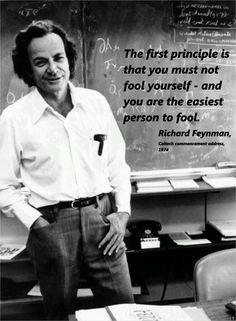
‘The first principle is you must not fool yourself and you are the easiest person to fool.’

Richard Feynman.

a60071af2c91e131cbec4bb8d36d0755

David Hepworth on Trump. “He has no principles. Therefore he has nothing to hide.”

trump_flicker_face_yess


I know that the 45th President is a very easy target but that shouldn’t diminish this elegant, excellent piece by David Hepworth.

Full piece here

It concludes:

This is not a man that anybody looks at and thinks, “he represents my values or my country”.

Nobody would lend him their lawnmower.

He’s a television personality. To twist an old Tom Stoppard line, he’s the opposite of a person.

What he’s doing at the moment is “Larping”. Live Action Role Playing.

He has no principles. Therefore he has nothing to hide.

TV has a lot of answer for. This is the person the TV industry has been building towards since the middle 1950s. Nothing on the surface and nothing underneath either.


The Monday Morning Quote #404

“Increasingly, we become so secure in our bubbles that we accept only information, whether true or not, that fits our opinions, instead of basing our opinions on the evidence that’s out there.”

Barack Obama in his farewell speech, Chicago, 10 January 2017.

(via John Naughton)

220px-president_barack_obama

The Weekend Read – What they don’t teach you at Harvard Business School by Mark H McCormack

9781781253397First published in 1984, I see that it is still one of the top sellers in the Business sections of airport book shops. Its very longevity proves that it either must have something going for it or because it has always been popular it must be good. Well you pays your money and you takes your choice. I find it a well written, easily digestible book with plenty to offer anyone in any business.

I read it when it was first released by Collins in 1984 (so yet another thank you to my Dad)  thinking that the lessons of “big business” which at the time were a million miles away from my life as a peripatetic associate in dental practices would not apply to my life. In this as in many other things I was wrong – the fundamentals of business large or small are the same. I have re-read it a couple of times since and although the landscape may have changed the fundamentals have not – nor will they.

The book is split into three sections People, Sales & Negotiations, and Running a Business. The opening four chapters should be compulsory reading for all new dental graduates including as they do with getting on with people, making an impression and getting ahead. The Sales and Negotiations isn’t as high blown as you may think and has plenty of nitty gritty advice.

The last four chapters on running a business are invaluable to anyone thinking about getting into business on their own or wanting to be a first class employee. There is a lot of B***S*** spoken these days about being an entrepreneur; those people who say they want to be an entrepreneur, especially in dentistry, would do well to read the last chapter of the book where he states that 99% of people should work for somebody. Start by examining your motives and if they are dreams, if you are running away from things or you ‘want to make a lot of money’ then McCormack writes, “forget it”.

In case you don’t know who Mark McCormack was (he died in 2003) here’s the blurb, “dubbed ‘the most powerful man in sport’, founded IMG (International Management Group) on a handshake. It was the first and is the most successful sports management company in the world, becoming a multi-million dollar, worldwide corporation whose activities in the business and marketing spheres are so diverse as to defy classification. Here, Mark McCormack reveals the secret of his success to key business issues such as analysing yourself and others, sales, negotiation, time management, decision-making and communication. What They Don’t Teach You at Harvard Business School fills the gaps between a business school education and the street knowledge that comes from the day-to-day experience of running a business and managing people. It shares the business skills, techniques and wisdom gleaned from twenty-five years of experience.”

Available from The Book Depository.