“The people who fail try just as hard” – David Hepworth on Henry Worsley

The sad story of the demise of Henry Worsley  passed me by – I was probably too wrapped up in something oh so important.

Here’s David Hepworth’s take on things from his blog whatsheonaboutnow.blogspot.co.uk

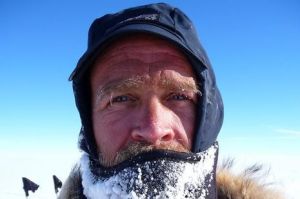
Henry Worsley’s last message is a rare episode in the narrative of human accomplishment. It’s not often we get to hear the sound of somebody failing. But, as he says, the same thing happened to Ernest Shackleton. He shot his bolt. He came up short.

The same thing happens to most people who try difficult things. They fail. All political careers end in failure. The team trudging off the pitch disconsolate and empty-handed at the end of the big final tried just as hard as the team dancing with joy for the cameras.

Because we can’t face this truth we always tell ourselves that the winners – whether explorers, athletes, politicians, actors or scientists – won through because they tried harder and longer than anyone else. They didn’t. The only difference between the winners and the losers is this. They won.

and here is Henry’s last message, so dignified, so brave.

http---coresites-cdn.factorymedia.com-mpora_new-wp-content-uploads-2016-01-Henry-Worsley


2016 #

The Monday Morning Quote #353

“I don’t have any regrets at all.

I tell my daughters that all the time –

‘don’t look back. You’ll only trip over’.”

Sir Michael Caine

What Makes Happiness? Guest Blog by Joanna Taylor

“A happy person is not a person in a certain set of circumstances, but rather a person with a certain set of attitudes.” – Hugh Downs

HOW OFTEN do you hear somebody say, “I’ll be happy when I have lost weight/won the lottery/moved house/found a new job/partner” or whatever?

We all have friends who have a bad situation in their life – maybe they are in a job they hate or they never have any money.  How often does that happen to them?  Have they moved jobs four or five times, only to find themselves in the same situation, or something very similar, each time?  Each time this happens, they think, “that’s it – I can’t cope with this job any more; I have to get out”, but each time once they make that new start, they end up right back where they were before and start looking for something new once again.

When we are looking for something new in our lives, it is not necessarily the thing or the goal itself that we want – we want it for a particular purpose; how it will make us feel.  People often employ the following somewhat unuseful strategy in an attempt to find happiness:  being unhappy in the moment; going after something which they believe will make them happy, and being unhappy in the process of not having it.  If they do actually achieve it then they are happy for a short while before repeating the strategy over again.

Happiness is actually a state of mind, rather than a goal in itself.  Believe it or not, we do actually have a conscious control over our own state of mind; you can choose to be happy right now, in this moment – that is your decision.  No person or event actually has the power to “make” you feel any particular way – we react to situations because of the way we perceive them – and in that moment, there is always a choice of how we react; it is our choices that show who we truly are.

There is a lovely story which a friend sent me on e-mail recently which illustrates this perfectly.  (I’m afraid I don’t know the original source, so I have changed some of the detail – if anybody does know then I’d be delighted to hear from them so I can accredit it correctly!)

Stephen is the principal of a dental practice in the north of England.  He’s from Australia, and he’s always in a good mood. When someone would ask him how he was doing, he would always reply:  “If I were any better, I would be twins!”

Many of the staff at his previous practice left their jobs when he bought his own practice, so that they could come to work for him, because Stephen was a natural motivator.  If one of his staff was having a bad day, Stephen was always there, telling them how to look on the positive side of the situation.

When asked about his attitude to life and how he managed to maintain his positivity, Stephen replied, “Every morning I wake up and say to myself, I have two choices today.  I can choose to be in a good mood or I can choose to be in a bad mood; I always choose to be in a good mood.  If something bad happens, I can choose to be a victim or I can choose to learn from it.  I always choose to learn from it.   Every time someone comes to me complaining, I can choose to accept their complaining or I can point out the positive side of the situation.  I always choose to see the positive side of life.”

Because life is all about choices.  Basically, every situation is a choice; you choose how you react to everything.  You choose how people will affect your mood.  You choose to be in a good mood or a bad mood; it’s your choice how you live your life.

A few years later, Stephen was in a bad car accident; he’d swerved to avoid a deer on a wet road, lost control of his car and hit a telegraph pole.  Luckily, he was found quickly and rushed to the hospital by Air Ambulance.  After weeks of intensive care, Stephen was released from the hospital and eventually made it back to work.

Stephen was at a conference about six months after his accident and when asked how he was, he replied, “If I were any better, I’d be twins.”  He was then asked what had gone through his mind when he had the accident and Stephen replied, “As they were cutting me out of the car, I remembered that I had two choices: I could choose to live or I could choose to die.  I chose to live.”  Stephen continued, “The paramedics were great; they kept telling me I was going to be fine.  But when they wheeled me into A&E and I saw the expression on the faces of the doctors and nurses, that’s when I got scared.  In their eyes, I read, ‘He’s a dead man’.  I knew I needed to take action.  There was a big nurse shouting questions at me,” said Stephen.  “She asked if I was allergic to anything.  ‘Yes, to telegraph poles,’ I replied.  Over their laughter, I told them, ‘I am choosing to live.  Please operate on me as if I am alive, not dead.’”

Stephen lived thanks to the skill of his doctors, and also because of his amazing attitude.  We can learn from his story that every day we have the choice to either enjoy life or to hate it.

The only thing that is truly ours – that no one can control or take from us – is our attitude and our state of mind.  Once we can learn to control that for ourselves then just imagine what might become possible…

Most of the time the things we are choosing to feel unhappy about are either events from our past or worries and anxieties about our future.  If we stop and consider where we are right now, in this moment, then this is the only time it is actually possible to feel happiness (or indeed any emotion!).  Now truly is all we have; the past is gone and the future will never arrive.

When we think about the past we are putting our own particular spin on it – seeing it through our own personal set of filters in the shape of our memories, beliefs and values.  We delete, distort and generalise the “facts” so that our memory of a particular event may actually bear very little resemblance to another person’s memory of exactly the same event.

The future is merely our own projection of possible events, and we are doing that in the moment.  When you remind yourself that it is only possible to be in the now, you release yourself from much of the anxiety and worry.

We can only ever take action in the now; now is the only place where we have the power to act and the only place where we can find fulfilment and joy.

Joanna Taylor is an Accredited Clinical Hypnotherapist, Neurolinguistic Psychotherapist and Certified Trainer of NLP. She provides courses and in-house training in wellbeing, communication skills, stress management and hypnosis for the dental team in addition to psychotherapeutic coaching and therapy.
 
Contact details: joanna@joanna-taylor.co.uk
01723 859147
www.joanna-taylor.co.uk

2016 #29
Getting Started in Facial Aesthetics – Guest Blog from Harry Singh

Getting Started in Facial Aesthetics

Although frown lines and crow’s feet are natural signs of ageing, some patients may want to eradicate them. With this in mind, this piece will consider the role of wrinkle relaxing injections, describing their benefits and presenting an overview of their clinical use.

dermal-fillers-workshop-e1453464963739‘What do you think I need, Doctor?’ By far and away this is the most commonest question I get asked by my facial aesthetics patients. My standard response for the past few years has been, ‘No one needs wrinkle relaxing injections, its all about what you want’.

Wrinkle relaxing injections is a wants based treatment. No one needs it, no one is going to get ill from not having it and certainly no one will die if they don’t undertake it.

Wrinkle relaxing injections work on motion lines, these are lines that worsen or appear when the patient contracts the muscle. Generally speaking, we are dealing with the upper third of the face, but I do use wrinkle relaxing injections in the lower face area (smokers lines, chins, gummy smile, Massetter, corners of the mouth). If lines/folds are present at rest and do not worsen when the muscles are contracted, then fillers will need to be considered.

There is the Glogau Classification of Photoaging. This was developed to objectively measure the severity of photoaging and especially wrinkles. It helps practitioners pick the best procedures to treat photoaging. There are 4 groups that a patient will all under:

Group 1 – Mild,  typical age – 28-35. No wrinkles. Early Photoaging present: mild pigment changes, no keratosis, minimal wrinkles. This group will not require any wrinkle relaxing injections as they have no wrinkles.

Group 2 – Moderate, typical age – 35-50. Wrinkles in motion. Early to Moderate Photoaging: Early brown spots visible, keratosis palpable but not visible, parallel smile lines begin to appear. This is the best group to treat with wrinkle relaxing injections, since they have no wrinkles at rest and only in motion.

Group 3 – Advanced, typical age – 50-65. Wrinkles at rest
Advanced Photoaging: Obvious discolourations, visible capillaries (telangiectasias), visible keratosis. We can still treat this group with wrinkle relaxing injections, since the wrinkles worsen when they contract their muscles. However we cannot guarantee to either reduce or eliminate any wrinkles they have at rest.

Group 4 – Severe, typical age – 60-75. Only wrinkles. Severe Photoaging: Yellow-grey skin colour, prior skin malignancies, wrinkles throughout – no normal skin, cannot wear makeup because it cakes and cracks. This group cannot be treated with wrinkle relaxing injections as the muscles are not causing any wrinkles.

Once the patient has elected to undergo any form of wrinkle relaxing injection, they, unlike our cousins across the Pond, what to achieve a natural result and not the frozen ‘I’ve been botoxed’ look. What does this natural look entail. In my eyes and my patients eyes, this natural look with wrinkle relaxing injections is achieved by the patient still being able to express themselves using the facial musculature without the appearance of, or at least the reduction of wrinkles on the treated areas.

The main benefits of wrinkle relaxing injections are based on the temporary nature of its effects. The toxin used will work at the neuro muscular junction to inhibit the neuro muscular messenger acetylcholine (a neurotransmitter) sending a signal to the muscle to contract. However after a few months (anything between 3 and 6) new nerve terminals reestablish connection with the muscles, allowing it to contract again. This gives our patients the confidence to try the treatment and if for any reason they don’t want to continue, they are restored back to their original appearance.

Patients also love that fact that the duration of treatment is very short and associated with this, the downtime is very minimal. On average the treatment of the upper third of the face should take no longer than a couple of minutes. Immediately after the procedure, the patient will have areas of swelling, but this should last no longer than 20minutes. This is where the media have latched on the phrase ‘lunchtime miracle cure’.

As we can see the main benefit of wrinkle relaxing injections is to smooth out wrinkles, however it has numerous medical benefits such as stopping excessive sweat, reduce/eliminate migraines, use in arthritis pain, blepharospasm, cervical dystonia and bladder control.

Considering whether to start a patient on wrinkle relaxing injections depends on balancing the risks of treatment against the potential improvements. Potential risks associated with this procedure can include, but are not limited to: swelling, bruising, headaches, flu like symptoms, ptosis of eyebrow or eyelid, non responsiveness.

As with all clinical procedures correct assessment, a detailed examination, informed consent obtained with an explanation of the realistic results expected are all mandatory.

Wrinkle relaxing injections when used on the correct patient will leave the patient more confident, looking fresher and appreciative of your work.

harry-picDr Harry Singh BChD MFGDP has been carrying out facial aesthetics since 2002 and has treated over 3,000 cases. In his last dental practice (focused on aesthetics) he ended up performing more facial aesthetic treatments than dental treatments. Due to the very high profit margins associated with facial aesthetics, he decided to concentrate on facial aesthetics and currently has over 700 facial aesthetic patients. He has published numerous articles on the clinical and non-clinical aspects of facial aesthetics, and spoken at dental and facial aesthetics conferences on these topics. Harry was shortlisted at the Private Dentistry Awards in 2012 and 2013 in the Best Facial Aesthetics Clinic category and was a finalist in 2012 at the MyFaceMyBody awards for the Best Aesthetics Clinic.

For further information on Harry’s courses and to download a video ‘Getting Started in Facial Aesthetics’ free of charge, please visit www.botoxtrainingclub.co.uk

2016 #27

RyanAir why do you choose to be like this?

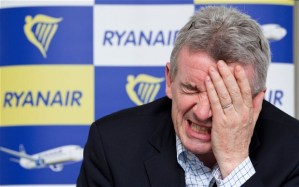
oleary_2357534bAnother 90 minutes spent wrestling with the “new, improved” RyanAir website and the strictly script controlled “online chat” operatives have led me to think once again about the company.

It’s too easy to just pillory them because of Fascinating Aida’s brilliant and accurate skit – go on watch it again it’s at the bottom of the post, it’s worth it. I know they’re the cheap airline and that has done a lots of good for those of us who fly regularly. This flight is for a holiday, was booked through an agent who admittedly  gave us plenty of warnings about ensuring we checked in online, so it feels a bit different from the 6.20am hop from Cork to Stansted.

What got me thinking was the corporate attitude, if you like to use the current buzz word then it’s the culture of the business. I was thinking about experiences anybody would have when dealing with the unapproachable wall of RyanAir.

This time I couldn’t check in online. Managed the website entry log-in without problems, then the who’s on the flight bit all fine, put in the passport details – great, now click the button to go to your boarding pass. Nothing, just two horizontal bars, one yellow one empty. Gave it 5 minutes. Nothing. Back a page  and all looked fine. Forward, same two unblinking bars.

Screen Shot 2016-01-26 at 11.19.46There’s a facility to access an online help person so I logged in, name, email address, booking reference. “We have 72 waiting for attention time expected is 14 minutes.” Congrats to RyanAir for managing to introduce stress into accessing an online chat service. Would the browser freeze before there was an answer?  Don’t take your eye off it for too long. At least there was no Vivaldi.

Eventually, after only 9 minutes (under promise etc) I am in touch with someone at the other end of the internet. I state my problem concisely – I have had time to write it out and rehearse. I expected a “there are problems” because of the heavy traffic – the French Air Traffic controllers were playing silly buggers this morning leading to cancellations of RyanAir flights so, subsequently, lots of traffic – understandable, excusable – so a “could you give it an hour or so and try again? err, please” would have been fine with me.

Nope. “It will be a your browser, check that you have got the most recent version of your browser and you are using a private window”

This is it, this where RyanAir blows it every time. This is why they piss people off year in year out. They always take the position of: “It’s not our fault, it’s you, not us.” They remind me of the gaggle of nurses in the corporate practice that when you ask a question, any question that starts, “who…?”  before you have a chance to complete there is a chorus of, “It wasn’t me”.

Why not try, “I’m sorry to hear that, what browser are you using?” Oh Safari, there seem to have been glitches with Safari  recently; do you have Google Chrome?” etc

As it was it took a trip to Google Chrome then a re-consult with the help desk and they dumped me without a solution and then had the nerve to ask for feedback – the feedback form carefully worded so that you couldn’t give anything specific.
Screen Shot 2016-01-26 at 11.18.10
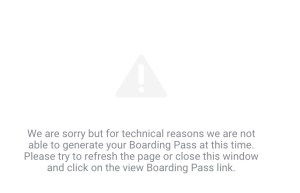
So second attempt to get assistance sought after I got a message that said, “We are sorry (wow!!) but for technical reasons we are not able to generate your Boarding Pass at this time. Please try to refresh the page or close this window and click on the view Boarding Pass link.”

I had been clicking the view Boarding Pass link, other links took me to a page that said, “No resource found” cannot serve request to ‘blah/blah/retrieve my booking’ on this server.

This time the person at the other end of the internet assured me that there was nothing wrong with their computer Screen Shot 2016-01-26 at 11.19.14 copysystem, and that it must be my fault.

To cut to the chase, their system eventually righted itself and our boarding passes were generated and printed. But, why oh bloody why, won’t you move yourself from this position of provocation. It seems that whenever there is an opportunity to irritate, to wind up, to distance yourself you take it. Move closer to your customers, communicate properly with them, talk to them, treat them like human beings and you might be amazed how much goodwill you will generate.

On the other hand why bother? You’re successful at being what you are – the airline that tries to put Cead Mile Failte on its backside.

2016 #26

The Monday Morning Quote #352

“My best friend is the man who in wishing me well wishes it for my sake”

Aristotle

87984-004-5ADE9ACA

2016 #25

What would John Ruskin have said about Groupon in Dentistry?

sad_grouponThe news that a practice in Manchester has gone bust is sad for the patients, the associates and the staff. The fact that this practice had apparently been selling orthodontics via Groupon limits the sympathy that I feel for the owner(s). If anyone has heard me speak in recent months then they will have had no doubt about my feelings regarding the race to the bottom tactics adopted by many “business people” running practices who seem to think that a weekend course or two and a slick marketing allied to a named treatment system is the key to riches.

Here’s a link to the MEN: Angry dental customers left out of pocket after cosmetic firm’s collapse

Of course it’s cases like this that the GDC should be policing and preventing but no amount of CQCs will address it. With Chairman Moyes’ ideas about Dental Care being just a variation on grocery shopping surely the consumers should be protected before the event rather than more ethical colleagues being left to pick up the pieces and restore dentistry’s reputation. No doubt the GDC will chase the associates and the nurses because they are easy meat but the really guilty people will get away with it muttering “Caveat Emptor, don’t you think Dr Bill?”.

What odds on the next good idea to emerge from 37 Wimpole Street being that all dentists who do any private dentistry (and are thus unfaithful to THE brand – NHS) should be forced into an ATOL type of cover so that claims against one dentist can be shared by all. The administration will no doubt come through an arm of the GDC, will be paid for by all registrants who have the temerity to do any private work and will be hailed as a victory for the consumer.

Before this develops into another rant, I’ll share with you the words of John Ruskin which I had typed, framed and hung in my reception area when I turned my back on the NHS in 1992.

  • “It’s unwise to pay too much, but it’s worse to pay too little.
  • When you pay too much, you lose a little money – that’s all.
  • When you pay too little, you sometimes lose everything, because the thing you bought was incapable of doing the thing it was bought to do.
  • The common law of business balance prohibits paying a little and getting a lot – it can’t be done.
  • If you deal with the lowest bidder, it is well to add something for the risk you run, and if you do that you will have enough to pay for something better.”

 and as footnote:

  • There is hardly anything in the world that some man cannot make a little worse and sell a little cheaper, and the people who consider price only are this man’s lawful prey.

It’s all rather sad but predictable.

2016 #24

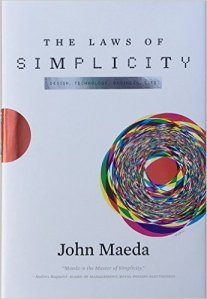
The Weekend Read – The Laws of Simplicity by John Maeda

51NnCABg8nL._SX343_BO1,204,203,200_Ever since I heard Einstein’s saying that, “All things should be made as simple as possible but no simpler”, I have sought,  espoused and taught a philosophy of simplicity. I used Mike Wise’s dictum to make your restorative work recoverable when doing clinical work and applied the same thought to all systems. Now Dr John Maeda has helped me take my thinking to a different level.

Coming in at exactly 100 pages this little book can be read in an evening or (as in my case) a couple of short flights. The advice to “Keep It Simple, Stupid” or the KISS principle is often given but seldom taken Dr Maeda’s book will help you to keep clarity in things.

He spells out in brief chapters his 10 laws for balancing simplicity and complexity in business, technology and design and thus in life itself. The irony is that simplicity is, itself, a highly complex subject so needs a great mind to explain it.

Made is a professor in MIT’s Media Lab and a world-renowned graphic designer and he explores the question of how we can redefine the notion of “improved” so that it doesn’t always mean something more.

His laws are:
Law 1 Reduce – The simplest way to achieve simplicity is through thoughtful reduction.
Law 2 Organise – Organisation makes a system of many appear fewer.
Law 3 Time – Savings intake feels like simplicity.
Law 4 Learn – Knowledge makes everything simpler.
Law 5 Differences – Simplicity and complexity need each other.
Law 6 Context – What lies in the periphery of simplicity is definitely not peripheral.
Law 7 Emotion – More emotions are better than less.
Law 8 Trust – In simplicity we trust.
Law 9 Failure – Some things can never be made simple.
Law 10 The One – Simplicity is about subtracting the obvious, and adding the meaningful.

His Keys are
Key 1 Away – More appears less by simply moving it far away.
Key 2 Open – Openness implies simplicity.
Key 3 Power – Use less, gain more.

Just because something can be made complicated does not mean that it should be. His first example of a DVD player recorder is a good one; how many of us have despaired of it taking a pair of glasses and also the manual to have to do the most basic of functions?

The elegance of this approach is one of the basic foundations of the outlook that has made Apple the success that it has been. Less is not less just for its own sake.

A lovely little book that should make you re-evaluate everything that you do.

Available from The Book Depository.

2016 #23

Two (Senior) Doctors on the Junior Doctors’ Strike

When I was a House Officer and Senior House Officer in Oral Surgery from 1978 – 81, the name Russell Hopkins was mentioned with awe and some trepidation. He was Oral & Maxillofacial Surgery in Cardiff with something of the autonomy of consultants in the post Lancelot Spratt years (without the Roller), his domain was The University Hospital of Wales or “The Heath” as we Cardiffians called it.

Hopkins went into hospital management at the end of his clinical career and became General Manager of The Heath. My father was admitted there several times from 1992-95 with heart problems. His management went along the lines of: crisis, admitted, stabilised, sent back to GP care, this happened five or more times and it seemed that little was done to get his LVF properly sorted. It finally took my brother’s intervention to get an ex-colleague of his (who was thankfully a cardiologist) to go the ward, where our Dad was lying in a bed, and announce, “you are Jonathan Rees’s father and I am taking over your case”. The ward nurses tried to prevent his bed being moved as Dad was supposedly under the “care” of another consultant. I have no doubt that this change and the subsequent  care significantly prolonged his life.

My father had developed pressure sores during one of his admissions, my mother, a retired nurse, who considered such a basic nursing failure to be a sacking offence, took to treating his sores and trying to ensure they didn’t recur.

Hopkins himself was at the wrong end of care at another local hospital, Llandough, after problems during a hip operation in 2013 he said then that the NHS was “a mess”. He had my sympathies, of course, but there was a thought of, “now you know what others went through.”

His view on the junior doctors strike was printed in a letter to the Telegraph:

SIR – In 1998 I was elected a Fellow of the British Medical Association (BMA) in recognition of outstanding service. I had served on the central and subcommittees of the BMA in London and the Welsh equivalents for several years.
In those days, the BMA represented medical practitioners as a trade union, but with an acceptance of the needs of patient care and ethical practice. I do not recognise this today. The BMA has morphed into a militant, Left-wing political body seemingly interested in attacking the Government, while pressing the financial needs of the profession, giving little thought to patient care, ethical practice or the need for out-of-hours care.
Reasons that have led to today’s strike include a lack of clinical training for undergraduates; the 48-hour week imposed by the European Working Time Directive, which reduces both clinical training and patient contact; the loss of clinical teams led by a named responsible consultant; the contract changes for GPs and consultants (introduced by Tony Blair); and a malevolent management unaware of ethical clinical practice, which has destroyed much of the goodwill that sealed many of the cracks.
The last few years of my life have been made difficult by the consequences of medical negligence. I despair at the prospect of the quality of care my children and grandchildren can look forward to as they age.
The public utterances of the present junior doctors’ leader and the chairman of the BMA Council convince me that this is not the same organisation which I was once proud to serve. Therefore I propose, with considerable regret, to return my certificate of Fellowship to the Wales office of the BMA.
Russell Hopkins
Newport, Pembrokeshire

I think that this reply (from his daughter) says much:

SIR – I read the letter from my father, Russell Hopkins, with some dismay. He has been out of clinical practice for so long that he is disconnected from the problems facing the profession today.
Junior doctors chose to strike in order to take a stand against the destruction of the medical profession by a Government insistent on imposing an unfair contract that is ultimately driven by the desire to reduce pay and a promise to deliver non-emergency care at all hours.
I, too, worry for the future of the NHS, but for very different reasons. We need to continue to attract the brightest young people into medicine in order to maintain a high quality of service. With the proposed contract changes, plummeting morale and poor working conditions will mean that we will struggle to recruit anyone at all; school-leavers will simply choose other careers and those in training will continue to flee overseas.
My father and his generation enjoyed a career where they had respect and autonomy, were lavished with hospitality by drug companies, and then retired on final-salary NHS pensions. They would not recognise the job today.
As a consultant surgeon, I – along with most of my colleagues – support the junior doctors in their decision to strike.
Claire Hopkins
Orpington, Kent

Such a shame, for them, for us, for the country.

2016 #22


All UK Dentists should watch this.

logo-mainIf you’re a dentist and not UK based, or not a dentist at all then look at the way that UK government works.

This is a clip from Parliament TV featuring the House of Lords Grand Committee, discussing “Orders and regulations: General Dental Council (Fitness to Practise etc.) Order 2015”. Meeting held on January 18th 2016 starting at 3.30pm.

Lord Hunt speaks from 15.43pm and gives the GDC quite a kicking. Will they listen? More to the point will the people who appointed the current Chief Executive and Chairman listen?

http://www.parliamentlive.tv/Event/Index/39e6196a-ab86-4997-967a-1835f5cb0b24