The Greatest Breakthrough Since Lunchtime #21

(For the meaning behind the blog scroll down.)

From Medical News Today

electric-spark-vector_f135Alv__LNo more needles at the dentist – just a tiny electric current instead

If you’re scared of the dentist’s needles you’re not alone – but new research means you might not have to put off that appointment again. A study published in Colloids and Surfaces B: Biointerfaces reveals how the dentist could give you anesthetic using a tiny electric current instead of a needle.

The researchers behind the study, from the University of São Paulo, say their new findings could help improve dental procedures and bring relief to millions of people who are scared of needles. It would also save money and avoid contamination and infection, they say.

“Needle-free administration could save costs, improve patient compliance, facilitate application and decrease the risks of intoxication and contamination,” explained Professor Renata Fonseca Vianna Lopez, one of the authors of the study from the University of Sao Paulo in Brazil. “This may facilitate access to more effective and safe dental treatments for thousands of people around the world.”

Dentists often have to carry out invasive and painful procedures in the mouth. To minimize patients’ discomfort, dentists use anesthetics that block the pain, which are administered using needles. However, many patients are extremely afraid of these injections, resulting in them postponing and even canceling visits to the dentist.

For these patients, an additional step is needed: dentists first give them a topical painkiller to reduce the pain – and associated fear – caused by the needle. This can come in the form of a hydrogel, ointment or sprays; the most common are hydrogels that can contain lidocaine and prilocaine.

In the new study, the researchers investigated a way of getting these topical anesthetics into the body more effectively, to see if they could replace needles altogether. They found that applying a tiny electric current – a process called iontophoresis – made the anesthetics more effective.

The researchers first prepared the anesthetic hydrogels with a polymer to help it stick to the lining of the mouth. They added two anesthetic drugs, prilocaine hydrochloride (PCL) and lidocaine hydrochloride (LCL). They tested the gel on the mouth lining of a pig, applying a tiny electric current to see if it made the anesthetic more effective.

The anesthesia was fast-acting and long-lasting. The electric current made the prilocaine hydrochloride enter the body more effectively; the permeation of the anesthetic through the mouth lining increased 12-fold.

The researchers say the technology has applications not only in dentistry anesthesia, but also in other areas such as cancer treatment.

“Over the last few years, our research group has been working on the development of novel drug delivery systems for the treatment of several skin and eye diseases,” said Prof. Lopez. “The skin and eyes pose challenges for drug delivery, so we have focused on improving drug delivery in these organs using nanotechnology, iontophoresis and sonophoresis, which is permeation using sound waves.”

The researchers now plan to develop an iontophoretic device to use specifically in the mouth and do somepreclinical trials with the system.

The meaning behind “TGBTL”

In the second book of the semi-autobiographical series describing the progress of an Edinburgh medical graduate, Colin Douglas describes his hero, David Campbell’s, involvement with medical research. The book’s title is “The Greatest Breakthrough Since Lunchtime“ and the cynic in me always remembers it when I read headlines like this one

2006 #20
Unobtainiums and electric toothbrushes

Thanks to reestheskin for this.

From The Economist’s book review – The Elements of Power: Gadgets, Guns and the Struggle for a Sustainable Future in the Rare Metal Age. By David Abraham. Yale University Press, 319 pages; $30 and £20.

So remember when you’re prescribing electric toothbrushes just what goes into them and what they cost the earth.

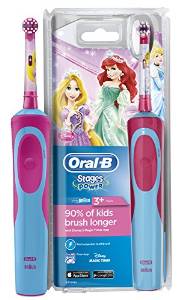
UnknownLIKE this reviewer, many parents will have given their children electric toothbrushes for Christmas, hoping that the sensors that buzz after two minutes will keep them brushing longer than their flimsy elbow grease. Both generations may, however, be ignorant of the fact that in that time the toothbrushes produce more than 62,000 strokes; that the power to generate such motion comes from tiny magnets using three rare metals, neodymium, dysprosium and boron; and that some of these metals are so coveted that in 2010 they were at the centre of a dangerous rift between China and Japan.

In all, an electric toothbrush is made of 35 metals. The journey they take to children’s gums may involve China, the Democratic Republic of Congo, Chile, Russia, South Korea, Indonesia, Turkey and other countries too. They are rare, says David Abraham in “The Elements of Power”, a thought- provoking book that follows the trail of these elements, not because they are necessarily scarce or hard to extract. It is because they are used in tiny yet essential quantities—like yeast in a pizza.

In terms of amounts consumed, these metals pale compared with base metals such as aluminium and copper. But, as the book argues, they are no less transformative— and possibly just as valuable—as oil and coal. That is a bold claim, but the author backs it up convincingly. Using vivid detail, he injects life and purpose into the story of elements that are so light, strong, heat- resistant and elusive that an American general in the 1950s quipped that they should be called “unobtainium”.

Indium, part of an iPhone’s screen, is an “invisible link…between the phone and your finger”. Just a pinch of niobium, a soft, granite-grey metal mined mostly in Brazil, greatly strengthens a tonne of steel used in bridges and pipelines. Lithium is so light that it has become essential for rechargeable car-batteries. Dysprosium, as well as making an electric toothbrush whirr, helps power wind turbines. Military technology depends on numerous rare metals. Tungsten, for instance, is crucial for armour-piercing bullets. America’s forthcoming F-35 fighter planes are “flying periodic tables”, Mr Abraham writes.

As with oil, those who can secure the resources have access to immense power. The problem, the book laments, is that China, Japan and South Korea are more keenly aware of the strategic importance of rare metals than Western countries, including the United States.

Yet it is not just the rare metals that the book explores. As Mr Abraham follows their extraction, he finds geologists, refiners, traders, smugglers and boffins whose stories add to the intrigue of this shadowy trade. Deals are done in backrooms by likeable mavericks. One, a New Yorker called Noah Lehrman, is described as “likely the only person in history to perform at the Jewish Grateful DeadFest and advise the US Congress on resource more security”.

“The Elements of Power” turns out to be a critic as well as an advocate of the rare-metals trade. One concern is what the author calls the “long tailpipe” of pollution left in the wake of mining and refining, notwithstanding the role of minor metals in creating greener products.

Supplies are also a worry. In 2010 a Chinese trawler rammed Japanese coastguard vessels in waters near islands called the Senkakus in Japanese and the Diaoyu in Chinese (their ownership is disputed by both countries). After the Chinese captain was detained, supplies of rare metals from the mainland to Japan suspiciously dried up. Though China never acknowledged an export ban, the incident caused rare-metal prices to spike, and unsettled manufacturers around the world. Though Japan quickly released the captain, repercussions of the affair pop up through the book.

Mr Abraham would have done well to use more such central narratives—the story, perhaps, of dysprosium, which has one of the most fascinating and fragile supply chains. Yet he persuasively explains the danger of underestimating a business that, by one estimate, generates $4 billion of revenues a year and also plays a critical role in systems worth about $4 trillion. China, which develops more rare metals than any other country, understands the calculus. The West, his book suggests, does not.

The Monday Morning Quote #351

“The bitterness of poor quality lives on

long after the sweetness of good price is forgotten.”

A companion piece for Ruskin’s quote

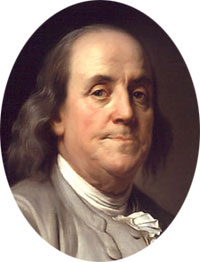
Benjamin Franklin

The word polymath hardly does him justice.

BenjaminFranklin

2016 #18

Hands-on training for complex dental implant procedures.

vss logo-smA challenge faced by dentists is: How to get hands-on training for complex dental implant procedures on cadaver heads?

Quality trainings are few and hard to find because cadaver heads are not easy to organise.   We have created such a training that we are hosting in Coventry, UK, in March 2016 over a long weekend.

Interested? Visit the link below.

http://vssa.co.uk/courses-for-dentists

One of the main reasons for failures in treatment is due to inexperienced assistant. Hence, the faculty welcomes you to bring along a dental nurse who will also be trained alongside.

Regards, VSS Academy

P.S. We can order a limited number of cadaver heads only. So book your place right away to avoid disappointment. We allow for only two dentists per cadaver head for optimal practical hands-on experience.

2016 #17

The joy of the teleconference – not.

Technology is wonderful and has enabled us to improve our communications over the past decade or two, it’s only when it doesn’t function as well as it should or has done in the past that we feel let down and frustrated. My home has “painfully” slow broadband which would have delighted me a decade and a half ago but now frustrates me regularly when Skype or Facetime calls with clients drop mid sentence.

As a BDA Branch Secretary, one of my roles over the past few years has been to organise the twice yearly tele-conferences. I have had a success rate of 66%, trying to blame the teleconference hosts for changing access numbers, passwords and systems for the failures.  The confusion leading to my embarrassment is reflected in this video which will ring bells with everyone who has wrestled with teleconference technology.


2016 #16

Look out your window I can see his light…

In the week of David Bowie’s death there has been much outpouring of grief. Someone said to me on Tuesday, “ever since Diana the British seem to have taken to weeping and mass emotion after the death of someone / anyone famous”. A trifle cynical perhaps Mr B, but I don’t disagree.

Here is the most even-handed obituary that I have read, it’s by Richard Williams and those with a very long memory will remember him as the very first host of the Old Grey Whistle Test even before whispering Bob. Showing my age, I enjoyed Williams’ writing in the Melody Maker in the 70s and he still helps to shape my musical tastes.

I particularly like this piece and that he admits to not liking some of Bowie’s music particularly the Ziggy Stardust period.

For many years I dismissed David Bowie as a shallow opportunist. What was he doing that Andy Warhol and Lou Reed, conceptually and musically, hadn’t done with more wit and originality? I saw him at the Greyhound in Croydon in the summer of 1972, supported by Roxy Music in a pub room that can’t have held more than 200 people. He did the Ziggy Stardust thing, he and the band in full costume, and I didn’t care for it much.

Those particular songs still don’t do anything for me, but time sometimes dissolves prejudices and now I can see that what I took to be shallowness and opportunism were aspects of what we call the pop process: the way things evolve through mimesis and metamorphosis, adapting to their time. And the response to the sudden news of his death leaves no doubt of the profound impact he had on people whose lives were then in the process of being formed.

It continues here.

For me, I loved Ziggy Stardust & subsequent albums, wandered away during the Berlin trilogy due to a busy life but thought Let’s Dance etc was wonderful. A true artist who wasn’t afraid to try different things, to accept that sometimes they didn’t work, to learn from that and then move on.

My favourite lyric come from the song Bewlay Brothers on the album Hunky Dory. I have no idea what it means but I just love the words.

And my brother lays upon the rocks
He could be dead, he could be not, he could be you
He’s chameleon, comedian, Corinthian and caricature
Shooting up pie in the sky

RIP Mr Jones and thanks for all the times I helped the people dance with you.

2016 #15


Don’t Pick Your Business Partners Based on Personal Chemistry

An article in the Harvard Business Review “Don’t Pick Your Business Partners Based on Personal Chemistry” was mostly about getting everything sorted legally and started:

Having a good personal rapport with someone can help you see opportunities for working together, but chemistry is a poor foundation for business deals. Partnerships need to face tough analytical and legal questions before they happen. That may seem like bad relationship manners, but it’s good business practice. Serious business partners will respect your due diligence. Start by evaluating the partner’s resources and capabilities. Legal clauses seldom protect against partners simply not having what you thought they did. Next, explore options with other potential partners. Is the partner you have in mind really your best bet? Once you move forward, protect yourself by building in concrete mechanisms for joint governance. You want to trust your partners, but do so only after properly structuring the relationship. And after the deal is signed, don’t be surprised if your partners pursue their interests and use their leverage. It’s not disloyal. It’s good business.

kolbeLogoAll good sound advice but potential colleagues should take and compare their Kolbe A assessments which will give a good idea of how the two will work together.

Take a look at this posting from 2013:

This is the story of a venture that failed, the business survived but the fallout and bad feeling between the participants persists. It wasn’t a dental practice, it could well have been and, bearing in mind the readership, I will retell the tale as if had been a clinical practice.

Mike and Neil are two practice owners, for several years they have been running their own successful “one-man bands” with varying amounts of staff support. Occasionally Neil provides holiday cover for Mike and has taken some referrals from him for the specific skills that he has developed. They each have support teams; Mike has a part-time but enthusiastic associate, Oliver and works with his partner, Philippa, who is a hygienist.

For the full piece about using Kolbe Wisdom in small businesses the full article is here.

2016 #14

It’s difficult to remember the world before January 9th 2007 – Steve Jobs launches the iPhone.

His opening statements are:

“This is a day I’ve been looking forward to for two and a half years.”

“Every once in a while a revolutionary product comes along that changes everything.”

At the time it seemed like hyperbole – with hindsight it was understatement.

Whatever it was it marked a sea change in commerce and communications.

Watch a master at work.

2016 #13

Tesco v Waitrose v Lidl v Sainsbury

vector-shopping-set_G1HDJkL__LIn his Pendlebury lecture of June 2014, the then recently installed chairman of the GDC William Moyes informed those present that, “Dentists and dental care professionals now have customers, not clients ………or, indeed, patients.”. It was nice of a government appointed non-clinician to share the official view with the profession, now who will tell the patients I wonder? But we have heard it all before, who will ever forget Edwina Currie’s oh so clever speech on similar lines at the LDC dinner when she was at the DoH. He went on to tell the audience about how, “the Council’s first priority for 2014 is to strengthen our fitness to practise regime”. All going smoothly there, Bill.

Elsewhere he told The Times that he thinks that “Consumer pressure for a “Lidl to Waitrose” model of treatment would be more effective than inspections in exposing poor care”. Presumably each practice will get the patients it deserves but that’s marketing for you. I was reminded of both Dr Moyes’ opinions and Alan Coren’s comment that, “he liked Sainsburys because it kept the riff-raff out of Waitrose” when I read Paul Burke’s blog on Saturday. (Paul is a music insider who always links a piece of music to his observations.)

The real difference between Tesco and Waitrose.

“It’s not the food, it’s not the prices, it’s the customers. Waitrose customers tend to be brisk, middle-class and both quick and efficient in the way they live their lives and do their shopping. They’re in and out with a minimum of fuss. The Tesco clientele are rather different. They lumber slowly and gormlessly up and down the aisles – two abreast- like they’re in some sort of trance. Then they just stop at the most inconvenient places to discuss whether they should get the large or medium box of Corn Flakes. I was in Tesco this morning for what seemed like hours. By the time I finally escaped, I was on the brink of a breakdown…”

Not sure what he would think of Lidl and Aldi – presumably their dental patients, yes they are patients Dr Moyes as I am when I experience healthcare, would go in and during their appointment be heard to say to their partner, “Oh, that’s a shame they don’t have the filling that I had last week, they have run out but they tell me they are hoping to get more in next month, or I can try this Bulgarian one if I like”.

I wonder what you and your council at the GDC would make of that.

2016 #12

The Monday Morning Quote #350

“More Startups Die of Indigestion Than Starvation. 

Focus Wins. 

Doing too many things fails.”

Bill Gurley

 dKpQMhKW

2016 #11