The Monday Morning Quote #331 – Poems in August #3

The Road Not Taken

Two roads diverged in a yellow wood,
And sorry I could not travel both
And be one traveler, long I stood
And looked down one as far as I could
To where it bent in the undergrowth;

Then took the other, as just as fair,
And having perhaps the better claim,
Because it was grassy and wanted wear;
Though as for that the passing there
Had worn them really about the same,

And both that morning equally lay
In leaves no step had trodden black.
Oh, I kept the first for another day!
Yet knowing how way leads on to way,
I doubted if I should ever come back.

I shall be telling this with a sigh
Somewhere ages and ages hence:
Two roads diverged in a wood, and I—
I took the one less traveled by,
And that has made all the difference.

By Robert Frost

220px-Jb_modern_frost_2_e

The Monday Morning Quote #330 – Poems in August #2

Do Not Go Gentle Into That Good Night

Do not go gentle into that good night,
Old age should burn and rave at close of day;
Rage, rage against the dying of the light.

Though wise men at their end know dark is right,
Because their words had forked no lightning they
Do not go gentle into that good night.

Good men, the last wave by, crying how bright
Their frail deeds might have danced in a green bay,
Rage, rage against the dying of the light.

Wild men who caught and sang the sun in flight,
And learn, too late, they grieved it on its way,
Do not go gentle into that good night.

Grave men, near death, who see with blinding sight
Blind eyes could blaze like meteors and be gay,
Rage, rage against the dying of the light.

And you, my father, there on that sad height,
Curse, bless, me now with your fierce tears, I pray.
Do not go gentle into that good night.
Rage, rage against the dying of the light.

Dylan Thomas

Dylan-Thomas_2863381c

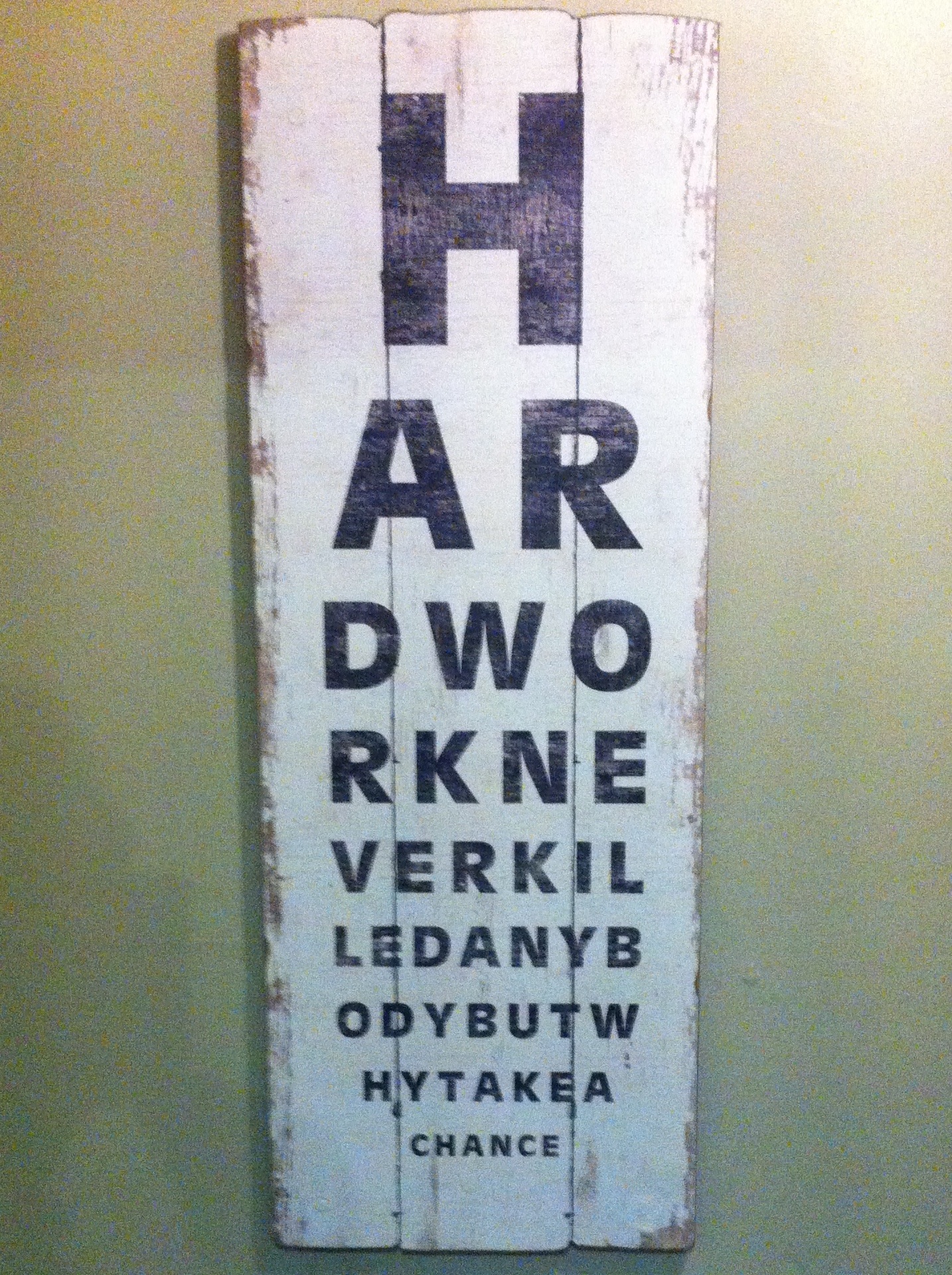
Hard Work….

From the Urban Tap House, Cardiff

IMG_0543

What part of your job do you enjoy the most?

I have come to the (sad) conclusion that many people would rather stay as they are and moan about it than change and improve their situation.

Thank goodness my clients want to improve their lives.

WHAT'S THE WORST THING ABOUT YOURJOB?

A Change in Consent

A good article in the BDJ by Messrs D’Cruz and Kaney from Dental Protection about the change in the law regarding consent following the judgement in Montgomery v Lanarkshire in March 2015.

The link to the full piece is here for BDA members.

I advise any dentist to read it in its entirety but here are some excerpts from the piece:

“…Legally, clinicians, including dentists, must now take reasonable care to ensure that patients are aware of any material risks involved in proposed treatment and of reasonable alternatives. This case now brings the law in relation to the disclosure of risks when obtaining consent to treatment in line with the guidance issued by regulatory bodies, that is, the GMC and GDC…”

“…What the judges in Montgomery said was that the extent of information given to a patient about the risks of a proposed treatment is not to be determined by the clinician or what other clinicians in the same situation would do. Rather the test is what the particular patient sitting in front of the clinician wants to know. Patients must be told of material risks. The test of materiality is whether, in the circumstances of the particular case, a reasonable person in the patient’s position would be likely to attach significance to the risk, or the clinician is or should reasonably be aware that the particular patient would be likely to attach significance to it…”

“…The requirement is that a dentist, in respect of consent, should tell the patient everything they want to know as well as everything the dentist thinks they might need to know…”

“Conclusion
The Montgomery case clarifies that clinicians must recognise a patient’s legal and ethical right to autonomy and informed choice and sweeps away any notion that doctor (or dentist) knows best. Patients must be fully informed about the risks to them that any procedure carries and be permitted to decide whether to proceed at all or whether they wish to pursue alternative options or no treatment at all.
It is for the profession now to determine, clinical area by clinical area, what the risks that ought to be disclosed are and then it is for the individual clinician to decide what emphasis they need to place on those risks to the particular patient they have in their dental chair.
The moral of the story for dentists is that it is prudent to get to know your patients so that you can discuss with them risks that any patient would want to know, plus any risks that you would consider would be relevant to the particular patient concerned. In order to be able to satisfy the latter requirement, patients need to be asked if there is anything of particular relevance to them that they would want to know. The clinician’s advice must be both ‘fact sensitive and sensitive also to the characteristics of the patient.'”

My take:

  • Know yourself.
  • Know your patient.
  • Communicate effectively.

Some things don’t change

The Monday Morning Quote #329 – Poems in August #1

I wanna be the leader
Can I be the leader?
Can I? I can?
Promise? Promise?
Yippee, I’m the leader
I’m the leader.

OK what shall we do?

Roger McGough

mcgough-roger_1601074c

Another government attempt at confidential data snatching from the NHS?

My first thought was ‘here we go again’, but as the Dave ‘n’ Gid partnership seems intent on selling as much as they can, especially if it will ease the way to privatisation, I believe this might be a more sinister move.

(The images are my addition.)

From Anthony Gold Solicitors via Lexology.com

The Prime Minister has indicated that he wishes for most patients to have access to a GP in the evening and at weekends by the end of the year.

As part of the investigation into this proposal, the government has asked the IT companies involved in provision of GP records, appointments and administration for a large amount of data.

0313-electronic-med-records-630x420Some of the data is highly confidential and has the potential to allow for identification of the patient.

In particular it is suggested that the requested information includes the number of appointments, the date of birth of  the person attending, the reason for the consultation and, it is suggested, part postcodes. From this information, if provided, the patient should be identifiable in most cases. In any event the plan appears to include a provision for encrypting information with the ability to de-encrypt it at a later date. Whilst that may or may not make sending the information secure, it still allows for identification of individual patients.

There are several issues about this suggested information provision.

Firstly the government had to delay the previously suggested plans for data provision from GPs in the face of significant concern about anonymity and confidentiality. This was the scheme which is still due to be put in place at some date in the future, whereby GPs would provide similar and even more detailed information about patients.

Secondly the general public has not been consulted on these proposals or indeed why such information is required.

Thirdly as the IT companies have made clear, it is not their role to  provide information of this kind. That is the decision of GP and patient. Their job is simply to process any information and to provide systems by which GPs can undertake their work.

Leaving aside whether GPs  and their patients would agree to this or any other proposal, the question that needs to be addressed is why is the government so interested in confidential medical data?

The last proposals which were temporarily shelved in 2014 seemed to be as much about serving the interests of the insurance and pharmaceutical industries as forming a database for independent medical research to inform the medical profession. This latest suggestion appears to be more about identifying patients using the service and whether their appointments are “appropriate”.

There is no doubt that the provision of a 24 hour proper GP service which doesn’t involve queuing in the local hospital for hours on end after waiting for hours for the on call team to decide that they cannot do what is needed, would be a bonus. Looking through my cases where clients have become ill at the weekends, it is clear that there are more delays in receiving appropriate treatment at that time and some of those delays lead to clinical negligence claims.  

However, using this or indeed any other issue as a basis for identifying patients and accessing confidential information is not appropriate. Whatever the reason for the interest in data snatching, whether commercial or administrative, it should cause concern.  There are clearly ways of  calculating the need for 24 hour care without accessing confidential information about individuals who use the NHS. Patients are entitled to know their medical history is protected.

There are also other ways of determining whether more claims arise from weekend care. After all the bulk of the claims are dealt with by just three organisations; the NHSLA, the MDU and the MPS.

This proposal may get no further than the previous ones. However, it does appear that the government has designs on  finding out what is in your records whether you want them to or not.  Whether that is to find out how much you cost the NHS, whether your insurer would be concerned or some other reason, frankly what is in your records is no one else’s business. We should fight to keep it that way.



The Monday Morning Quote #328

“Simplify everything.

Abandoning the non-essentials leaves more room for you to attract.”

Thomas Leonard

thomas-leonards-quotes-1

The Monday Morning Quote #327

“The illiterate of the 21st Century will not be those who cannot read or write,

but those who cannot learn, unlearn, and relearn.”

Alvin Toffler, futurist

latercera_ola_afiche

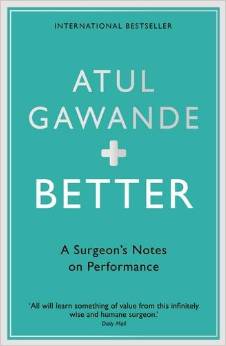
The Weekend Read – Better by Atul Gawande

Unknown If Atul Gawande is anything like as good a surgeon as he is a writer and thinker then his patients are in good hands.

Subtitled, “A Surgeons Notes on Performance” the author looks at medicine in a variety of locations from battlefields in Iraq, through courtrooms to maternity suites and specialities including treating polio outbreaks and cystic fibrosis.

His premise is that we should be looking to do things better and his preoccupation is what makes the difference between getting it right 99.95% rather than “just” 99.5% of the time. The eleven essays are grouped under three headings, “Diligence”, “Doing Right” and “Ingenuity” and as usual with Gawande’s writing pose significant questions not least of which is the opener, “what does it take to be good at something in which failure is so easy, so effortless?”

He makes one very significant point in that most of us will turn out to be average – it has to be like that – but what can we do about it? His answer is that settling for it is not acceptable and we must seek to improve individually in order that the collective also improves – to do that we must look long and hard at our own performance and take whatever action is required to get better.

An excellent read.

Available from Amazon here.