“Which” kicks (NHS) Dentists – so what’s new?…and what to do.

Following on from another Consumer’s Association report.

Dentistry is an easy target for any journalist that wants to have a go at a profession. Let’s face it, from Marathon Man through The Little Shop of Horrors via Lemming of the BDA and Robert Lindsay’s misanthropic, cynical and assistant sacking GDP Ben, dentists tend not to be portrayed as heroic or even that admirable. Add to that they are “associated” with healthcare, historically wield unpleasant instruments of repair and they also dealt with money so are perceived as “money” orientated. Just put “I hate dentists” into Google.

So when a Mangold or a Vine from Panorama or any wannabe sensationalist writer in other media is looking for a story then “teeth” is an obvious way to go.

Is it any different now? Well, the attacks are similar, encouraging the “oo in’t it awful” but the context has changed. I have written about this at some length in the past.

Well yes it is different because the landscape has changed. The Consumers Association did do the recent “mystery shopper” work, I don’t doubt their results, they do have a current campaign about dental charges which has over 19,000 signatures (although some way short of the desired 25,000).

The discredited (but still in post) chair of the GDC does want dentist to be like supermarkets.

The Dental Law Partnership (other ambulance chasers are available) are encouraging complaints. Why? Because there is plenty about which to complain. If dentist didn’t make themselves easy targets they would move on to greener pastures.

  • There has to be clarity in everything that you do, which means that..
  • You need to be squeaky clean about all your communications whether verbal or written, which means that..
  • All team members have to be trained in communication skills and rehearsed, which means that..
  • You have to invest in your team, which means that..
  • If you are looking to “sell” work that isn’t available on the NHS – and please make sure that it isn’t and the patient is in no doubt about it – your well trained team will be able to do that for you, which means that..
  • You will be able to reduce your dependence on an NHS that is running out of money, that measures output not quality of care, that is dangling the carrot of a better contract in 2018 (at the earliest), which means that..
  • You will be able to concentrate on the important things: the relationship with your patients, helping them to improve their dental health so they become people who want all your services, and a practice where you aren’t living in fear of the GDC, CQC, DoH and their works and pomps.

Sounds simplistic? As the research shows, people don’t like dentists in general but do like their own.

People do want to know, like and trust their dentist and team.

They do want to do business with you.

And they do want to send their friends.

The culture has changed, the landscape has altered, the principles remain the same.

It’s up to you to take the initiative.


‘NHS dentists’ not offering NHS appointments – says Which Magazine

Following their report into Dental prices and the ensuing campaign Which magazine has done more research into availability of NHS dentistry. I feel it’s about time that everyone involved with NHS dentistry embraced (to use the buzzword) candour. A whole dose of honesty is needed all round, from government through the profession everyone must be able to agree what’s available (and what isn’t) and under what terms patients are being seen. It will take effort from the DoH – something that has been sadly lacking for the past 25 years and has only got worse since 2006 under the regime of the last CDO, Dr Cockcroft.

Here’s the press release.

‘NHS dentists’ not offering NHS appointments
We ask the Competition and Markets Authority to step in and ensure dentists comply with existing rules, as our new research reveals a third of dentists who say they’re accepting new patients actually don’t, and those that do have lengthy waits.
Our undercover researchers called 500 dental surgeries advertising on the Government’s official website, NHS Choices, as accepting new NHS patients to see if they could book an appointment.

We found the information on NHS Choices is often inaccurate as three in ten (31%) practices turned down our researchers because they didn’t have availability. Of those that did offer us an appointment, 29% couldn’t see us within two weeks, with one surgery saying we could book but we’d be facing a wait of eight to nine months.

We also found practices making people jump through unnecessary hoops before booking an appointment, like visiting the surgery to fill out forms. Some were even asked to pay deposits, and in one case we were told this was non-refundable if we missed the appointment, but neither of these practices is permitted under Government legislation.

Long waiting lists for new patients were also an issue, and we saw one practice that had a list 13 pages long and another that predicted a wait of two years. Some practices also suggested our researchers pay privately to see a dentist, despite our fieldworkers specifically asking for an NHS appointment.

We repeated our research near the beginning of the new financial year to see if the information would improve when dentists got their new budgets, but we actually found an even worse picture. Nearly four in ten (37%) surgeries wouldn’t give us an NHS appointment and around a third (36%) couldn’t see us within a fortnight.

This lack of clarity around availability for NHS appointments is part of a wider issue of poor information and communication in dentistry that Which? has exposed. Our ‘Clean Up Dental Costs’ campaign previously found evidence of dentists not being clear about the cost of treatment or what treatment patients are entitled to on the NHS, which could lead to people paying more than they need to.

These are all issues which the Office of Fair Trading identified in its dentistry report in 2012, yet three years on the sector has failed to deliver on the recommendations made. We are calling on the Competition and Markets Authority to step in and ensure the dental sector complies with existing rules and improves the way treatment options, prices, and appointment availability are communicated to patients.

Which? executive director, Richard Lloyd, said:

“We found it’s frustratingly difficult to get an NHS appointment with a dentist as information about availability doesn’t reflect reality. This is a kick in the teeth for patients and yet more evidence of poor communication from the dental sector.

“We want the Competition and Markets Authority to step in and ensure that dentists put the existing rules into practice so that people can easily find out where they can get NHS dentistry.”

In a separate survey of consumers, we found four in ten (39%) people would use NHS Choices to find a new dentist, highlighting how important it is that the website is kept up to date. It also revealed that 45% of patients who tried to book an appointment with a new NHS dentist in the last year found it difficult and one in five (19%) new patients went without dental treatment because they couldn’t find an NHS dentist.

Which? has some top tips to help you find an NHS dentist:

1.    There’s no need to register with a dentist as you would with a GP, as you’re not bound to a catchment area. Simply find a practice that’s convenient to you – whether near home or work.
2.    Get recommendations from friends or family to help you choose a reputable surgery.
3.    If you can’t find an NHS dentist, contact your local NHS England Area Team, which should be able to tell you about available dentists in your area.
4.    Before you book an appointment, double-check whether you’re booking NHS or privately and how much the treatment will cost.
5.    Be clear about NHS pricing before you see the dentist. Prices should be displayed in the surgery so ask if you don’t see them.

Notes to editors:
To see a copy of the full investigation, please email robyn.margetts@which.co.uk
1.    Previous Which? research published in January 2015 found:
–      Half (51%) of people who visited a dentist in the last six months didn’t see a price list and one in five (22%) weren’t clear about costs ahead of treatment.
–      A third (31%) of people who pay for dental treatment say costs have put them off having treatment.
–      One in five (19%) NHS patients who pay said they paid more than once charge for one course of NHS treatment over the last two years, when they shouldn’t have.
–      In a separate mystery shopping investigation, half (12) of the 25 visits to a dentist were rated poor or very poor for explaining the difference between NHS and private options and eight poor or very poor for explaining prices.

2.    Our ‘Clean Up Dental Costs’ campaign is calling on the CMA to step in and make sure the sector is doing its job so dentists comply with existing rules. This means that:
·         all dentists make information on prices clearly available.
·         dentists explain treatment options, and make sure their patients know if their treatment is NHS.
·         patients get accurate information about NHS services in their area.

3.     Over 19,000 people have supported our campaign since it launched in January.

4.    The Office of Fair Trading carried out a market study in 2012, which recommended the General Dental Council and NHS England enforce the displaying of price lists and provision of treatment plans, with the Care Quality Commission inspecting compliance. The OFT also recommended that dentists be given the ability to update their information on NHS Choices, and suggested that NHS dentists who are unable to take on new NHS patients be required to refer patients to NHS Choices. Which? believes more needs to be done to ensure these rules are enforced.

5.    Methodology for mystery shopping:
Part one – In March 2015, Which? fieldworkers contacted a representative sample of 500 dental surgeries across England. The dental practice provider profiles on NHS Choices were reviewed, and where they included a link to the practice’s own website these were reviewed too. In addition to checking the accuracy of information on NHS Choices, the fieldworkers also looked at this information on providers’ own websites to look for the availability of NHS appointments. All practices contacted were, at the time of calling, showing on the NHS Choices website that they were accepting new NHS patients. All practices were contacted by telephone during opening hours and fieldworkers asked the practices about availability of NHS appointments. Data were weighted to be exactly representative of all NHS dentists in England by NHS Area Team.

Part two – In May 2015, the fieldwork among 500 dentist surgeries in England was repeated. The sample included the same dentists from phase 1, unless they were no longer offering NHS availability on NHS Choices in which case a new dentist from the same NHS area team was used instead. Part two included some additional questions and data collection from part one.

6.    Methodology for consumer survey: Populus, on behalf of Which?, interviewed a representative sample of 2063 UK adults online between 3rd and 4th June 2015. Data were weighted to be demographically representative of all UK adults.

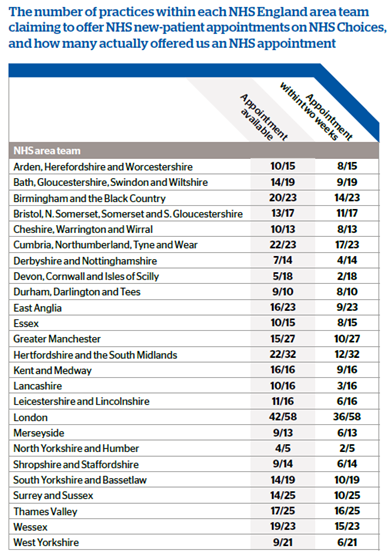
7.    Regional breakdown:
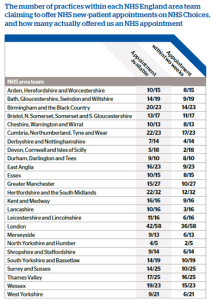
image


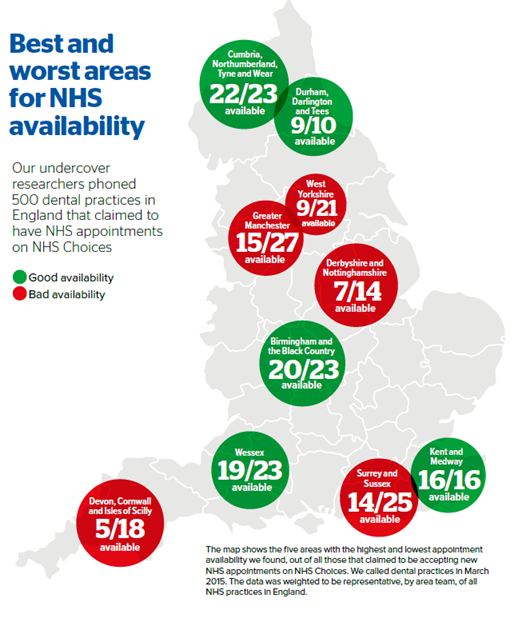
8.    Best and worst areas for NHS availability:

image 2

The Monday Morning Quote #322

“Do you know the difference between education and experience?

Education is when you read the fine print; experience is what you get when you don’t.

Pete Seeger, activist/musician

pete-seeger

Barry Cockcroft joins IDH – caption competition…

The ex-Chief Dental Officer of England Barry Cockcroft is to join the UK’s largest corporate chain of dental practices, IDH – so recently cunningly re-branded as “MyDentist”.

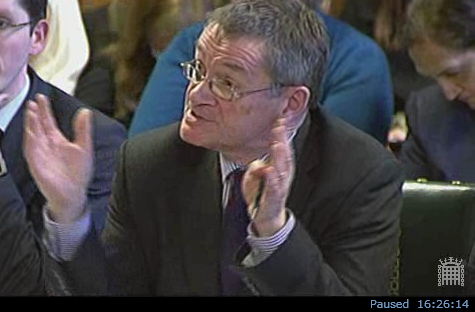
Any suggestions as to what Bazza was saying here?


Screen Shot 2015-02-24 at 21.42.00


The Monday Morning Quote #321

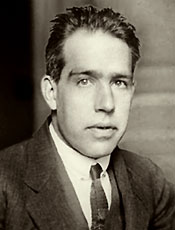
It’s a big week for Physics here at ReesAcres. So here are a couple of quotes from Niels Bohr who won the Nobel prize for Physics in 1922 for his work on understanding atomic structure and quantum theory. He later went on to work on the Manhattan Project having fled his native Denmark in 1943.

“Every great and deep difficulty bears in itself its own solution. It forces us to change our thinking in order to find it.”

“Prediction is very difficult, especially about the future.”

bohr

The Weekend Read – The Second Curve by Charles Handy

I have been a fan of Charles Handy since I read “The Age of Unreason” in 1992 and his “Understanding Organisations” was one of the set texts on my MBA course at the Open University in 1994. He has a real grasp of the human condition, a rare intelligence and the ability to explain his point in a way that both entertains and provides insight.

He is a prolific writer and age has not seemed to slow him nor dull his thought processes – thankfully. This book’s full title is “The Second Curve: Thoughts on Reinventing Society” and it provides plenty to stimulate thought.

The title tof this collection of 16 essays refers to the business model  known as the “S-curve” with which many of my clients will be familiar. It refers to the development of a business which starts with slow growth followed by steady increases until a point where things start to “flatten out” at the top of the curve. This is followed by a dip and either a period of re-growth and the start of another “S” or the slide into failure.

In business the skill is to realise when you are approaching the top of the curve and start to prepare for the next “S” by investing in new products or services. In life what is required is the courage to accept and embrace change – not easy if you have been in one firm or organisation for a couple of decades.

Handy al516Lfz0LfgL._AA160_so returns to one of his main themes, that of the portfolio career where individuals can move from one role to another at several points in their lives. We must accept that change is the only constant and the skills that we may have learnt at university, say, will only be good enough for so long before a period of re-training and adaptation is required. Throw into the mix the fact that people are living longer, staying healthy longer and pension ages are rising then we will all need fresh challenges as time passes.

I changed direction at the age of 52 and sold my successful practice in order to experience some new challenges, I have been as successful in my second career (I’m not counting small part-time business ventures) as I was in the original one but in a totally different way. In both I was fulfilled and well rewarded but my clients’ needs are a pole apart from those of my patients.

These 16 chapters, covering education, capitalism, management and forms of government will make you think about your life, the lives of your children, the world in which we live and how society works. I hope that you pack this for your holiday so that you can have the time to not only read and re-read Handy’s words but also be able to give them the thought that deserve.

You will not be disappointed by the time you invest in The Second Curve.

Available from Amazon here.


The trouble with science

From John Naughton

From an article by the Editor of The Lancet after attending a symposium last week on the reproducibility and reliability of biomedical research organised by the Wellcome Trust.

“The case against science is straightforward: much of the scientific literature, perhaps half, may simply be untrue. Afflicted by studies with small sample sizes, tiny effects, invalid exploratory analyses, and flagrant conflicts of interest, together with an obsession for pursuing fashionable trends of dubious importance, science has taken a turn towards darkness. As one participant put it, “poor methods get results”. The Academy of Medical Sciences, Medical Research Council, and Biotechnology and Biological Sciences Research Council have now put their reputational weight behind an investigation into these questionable research practices. The apparent endemicity of bad research behaviour is alarming. In their quest for telling a compelling story, scientists too often sculpt data to fit their preferred theory of the world. Or they retrofit hypotheses to fit their data. Journal editors deserve their fair share of criticism too. We aid and abet the worst behaviours. Our acquiescence to the impact factor fuels an unhealthy competition to win a place in a select few journals. Our love of “significance” pollutes the literature with many a statistical fairy-tale. We reject important confirmations. Journals are not the only miscreants. Universities are in a perpetual struggle for money and talent, endpoints that foster reductive metrics, such as high-impact publication. National assessment procedures, such as the Research Excellence Framework, incentivise bad practices.”

Is the bubble just getting bigger? “IDH opens wide for £1bn autumn stock market float”

From The Telegraph online 3oth May.

Dentist chain IDH opens wide for £1bn autumn stock market float
Stock market listing of Integrated Dental Holdings will see senior managers at the UK’s biggest dentist chain collect a £150m windfall.

Europe’s biggest dentist chain has revived plans for a £1bn London stock market float after overcoming fears about the outcome of the general election.
A listing of Integrated Dental Holdings (IDH), which has over 600 practices across England, Scotland and Wales, will spell a £150m pay-day for the company’s senior managers, who own a 15.5pc stake in the company.
IDH is currently majority owned by Carlyle, one of the world’s largest private equity firms.
The dentist chain is the largest provider of public dental care in the UK, with around 85pc of revenues generated from NHS patients. However, the latest accounts filed by the group’s parent company, Turnstone Equity, reveals that IDH is gradually increasing sales from its private and specialist dentistry practice.
IDH, which employs over 3,370 dentists and nurses, made £346m of sales from the NHS and £54m from the private sector. Total pre-tax profits were £18.1m.

IDH was founded in 1996 by Luke Johnson, the Pizza Express entrepreneur and Patisserie Valerie owner. He sold the business in 2006 for just over £100m to the private equity arm of Merrill Lynch.
Carlyle then bought a majority stake in IDH and merged it with Pamplona Capital Partners’s rival dentist firm, Associated Dental Practices, in a £600m deal in 2011.
It is understood that Carlyle which owns just under 65pc and Pamplona, which owns around 20pc, has also held conversations with other private equity buyers about a sale, but these failed to reach an agreement on price. Sources said that a listing is now their preferred option and they have told bankers at Goldman Sachs and Credit Suisse to float the business in the autumn.
The group first confirmed that it was considering a stock market listing in June last year.
Float candidates are currently weighing whether to rush through a listing before the summer break or wait until the City returns to work in September.

Cyber security firm Sophos and leisure parks operator CenterParcs are also said to be considering the timing of their billion pound listings. Industry bankers caution that as seen in other examples of RAC, Travelex or Virgin Active, private equity firms looking to exit businesses will also gladly take knock-out offers for their porfolio companies.

Here are some financials from the holding company Turnstone Equity


The Monday Morning Quote #320

The companies that survive longest are the one’s that work out what they uniquely can give to the world
not just growth or money but their excellence,
their respect for others,
or their ability to make people happy.
Some call those things a soul.
6484aa784d5d17108e263&960

The Monday Morning Quote #319

“Wherewithal is crucial.

Ambition or talent flounder without strategy and application.”

Greta Scacchi quoted in the FT 17th April 2015.

greta2-scacchi_1424004c