Minimally Invasive Dentistry Course in Devon

From Steven Blackhall at Prestige Dental.

Minimal Invasive Dentistry (MID) –

The Next Generation of Dentistry.

Presented by: Dr Kirkwood Young, MFGDP and Dr James Pegg BDS DPDS

Venue: The Royal Dartmouth Yacht Club. Priory St, Kingswear, Dartmouth, Devon.

Dear Colleague,

Due to demand in this very popular topic the Penrith, Cumbria MID course is oversubscribed and we have had requests from Practitioners to run a course in the South… So the next course is to be held at The Royal Dartmouth Yacht Club on 19th June. This fantastic course and venue will book up quickly so please act quickly. Why not make a weekend of it in the beautiful English Reviera.

Presented by: Dr Kirkwood Young who is considered to be the UK’s leading MID practitioner and Dr James Pegg a GDP incorporating MID in his everyday dentistry.

Lecture 1. Dr Kirkwood Young.” Minimal Invasive Dentistry (MID) – The Next Generation of Dentistry”.

Dr Young will present to you all of the very latest developments, technology and techniques within caries management and Minimal Invasive procedures.

The learning journey for the day will introduce you to the principles of Minimum Invasive Dentistry with both evidence based lectures and hands on practical skills opportunity, showing MID in practice, not just theory.

Lecture 2. Dr James Pegg.” Stunning Aesthetic Dentistry with MID principles in everyday dentistry”.

Dr Pegg is a general dental practitioner who has implemented techniques taught on the course and will give an overview of the benefits he has experienced in everyday practice life. Including case presentations with stunning aesthetic dentistry results, achieved with MID principles in everyday dentistry. James will provide you with hints and tips to achieve the very best results from his experiences with MID.

Afternoon Session. Hands-on workshops.

During the afternoon sessions delegates will have the opportunity to put into practice what they have learnt during the lectures through hands-on workshops. The course is restricted to 25 delegates to ensure that everyone can benefit from the hands on experience. During the hands – on session delegates will be split into small groups to maximize on the opportunity to gain practical skill experience.

The delegate price is just £125.00 for Dentists and £50.00 for DCP’s. We would encourage Dentists to bring their team members as MID is a team effort. 6 hours CPD is available for the day.

If you would like to participate please return the slip below or contact: Course Co-ordinator, Nikki Pettit on email: njpettit@hotmail.co.uk to confirm your booking and make payment. We recommend either phoning or emailing your details to avoid disappointment. Please do not email confidential card details.

————————————————————————————————————————————————————————————————–

Name :                                                     GDC number:

Address:

Telephone:                                               email:

Please reserve ______ place(s) for me on the MID course in Dartmouth on 19th June 2015

Signature:

Please find enclosed my cheque for £125.00 (Dentist) for full payment (non-refundable)

Please find enclosed my cheque for £50.00 (DCP’s) for full payment (non-refundable)

Please charge my credit card: Type of card:                       Name on card:

Card number:                                                                           Expiry date:                     Security code:

Please return the attached or contact:

Nikki Petitt, Young’s Healthcare, 23-25 Market Place, Snaith, Goole, North Humberside, DN14 9HE.

Tel: 01405 861600. Email: njpettit@hotmail.co.uk
 

The Monday Morning Quote #318

“Be not afraid of going slowly; be only afraid of standing still.”

Chinese Proverb

B.B. KIng – RIP

Shame to lose such a great man, he lived on a bus for large amounts of his working life, made many farewell tours and was still playing more than 100 nights a year in his late 80s.

What differentiated him was his ability to make his music swing when he played – with a lot of Bluesmen (Kings Albert and Freddie) you could sit and get off on their playing but with BB you felt that you wanted to get up and dance. I saw him play on a “farewell” tour 9 years ago at the NEC – he did not disappoint.

Did he ever play and sing at the same time I wonder?


The Monday Morning Quote #317

“Follow effective action with quiet reflection.

From the quiet reflection will come even more effective action.”

Peter F Drucker

Drucker-portrait-bkt_1014

The Monday Morning Quote #316

martin_wolf-844x1024

Written by Martin Wolf via John Naughton.

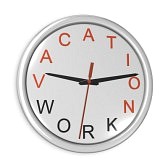
Perhaps you should only book exams and small fillings on your first day back?

9988524-vacation-time-concept-wall-clock-isolated-on-the-white-backgroundOr not take a holiday at all?

From The Harvard Business Review.

Find Out Whether Your Surgeon Has Been on Vacation

It’s well known that in workplaces with routine tasks, workers’ productivity falls if they take too long a hiatus from their jobs, and apparently there is a similar effect for surgeons. In a study of 188 surgeons who performed coronary bypass operations, Jason M. Hockenberry of Emory University and Lorens A. Helmchen of George Mason University found that for a given surgeon, each additional day away from the operating room subsequently raised patients’ mortality within one day of the procedure by 7.4%, perhaps because after time away from the job, surgeons are less likely to recognize and address life-threatening complications.

The nature of surgeon human capital depreciation.

David Starkey’s diary: Why don’t we celebrate the triumphs of private dentistry?

From The Spectator

To the dentist. And for an extraction. I hadn’t had a tooth out in decades. But the twinges when I bit on a nut warned me that my problem molar — much abused by a badly fitted bridge in the 1970s — had finally given way. My usual dentist confirmed as much with a poke and an X-ray. Then came the surprise. ‘I’m going to hand you over now,’ he said. Having a tooth out has ceased to be a hazard of life to be borne and grinned at. Instead it’s become dental surgery. And it requires a specialist. Mine was a man with a mission. ‘My job is to make sure you feel no pain,’ he said. And he proceeded, with skill, charm and patience, to do just that. The result was that the extraction, rather than the grinding wrench I remembered, was almost an anticlimax. But it wasn’t only the medicine that struck; it was also the efficiency and customer care: my notes (back to the faulty bridge of 1973) were to hand; I was given clear instructions about post-operative care; my specialist even rang me at the end of the working day to check there had been no complications. I was almost profuse in my gratitude.

As I put the phone down, I reflected on the gap — almost unbridgeable — between what I’d experienced and the school dentist (a kindly old soul, despite his terrifying equipment) of my childhood. Dentistry was, of course, like all other forms of medical care, part of the original NHS. But it escaped relatively quickly. Would the extraordinary progress I’d just experienced have been possible if it hadn’t? At any rate, it proves that the privatisation of an important part of healthcare isn’t the end of the world as we know it. Why, in all the endless debates about the NHS, don’t the Tories trumpet the triumphs of privatised dentistry?

But of course popular attitudes are just as important. Thanks to endless handsome, toothsome celebrities, people will pay for dentistry because they see it not as a question of health, for which they will shell out grudgingly if at all, but as one of cosmetics. Impossibly white, impossibly regular teeth have become a sign of beauty. And there is no limit to what people will pay to make themselves beautiful. Quite the opposite, in fact: as the price of perfumes, colognes and assorted snake-oil unguents demonstrates, when beauty’s at stake the rule is the more expensive the better. So now it is with teeth.

Here surely there is a lesson for our health policy, however it is funded and organised. We have got nowhere by presenting lifestyle diseases of obesity and so on as a health crisis. Health is a necessity; boring and, thanks to the NHS, someone else’s responsibility. But make it a question of beauty; work with the grain of celebrity culture and not against it; enlist people’s vanity and not their reason, and doctor’s surgeries might become as well run as my dentist’s, and the nation’s waistline will be in as good nick as its teeth.

The Monday Morning Quote #315

“False friendship, like the ivy, decays and ruins the walls it embraces;

but true friendship gives new life and animation to the object it supports.”

Richard Burton

BURTON_Richard_phD-e1406537249248

NASDAL figures for 2013-14

An interesting analysis from the financial year 2013-14 from NASDAL via Alan Suggett and his team at UNW Business Unit. I’ll be interested to see 2014-15.

The 2014 NASDAL benchmarking survey of practice Profit & Loss information was published last month.

A report of the findings appears later in this UNW Dental Bulletin.

Each year the UNW Dental team extends the NASDAL survey results by recalculating average practice profits to include the cost of the work carried out by practice principals (ie as if they were working as associates in their practice), in order to calculate a true practice “business” profit (ie where the market rate for carrying out all dental work is offset against profits.

Historically, on this measurement basis, average NHS practice profits per principal have been far in excess of those earned in private practices.

However, the gap is closing!
Average profits per principal in an NHS practice were £29,458, and in Mixed practices £16,173.

Private dental practice profits creep ahead of NHS practices in NASDAL survey

A strong performance from private dental practices in the financial year 2013-14 has led to them record- ing higher profits than their NHS counterparts in the latest benchmarking statistics from the National Association of Specialist Dental Accountants and Lawyers (NASDAL).

It’s the first time in a decade that private practice has overtaken NHS practice although there were early positive signs of a recovery in the previous financial year. The profit differential is small with an average NHS practice making a profit of £129,000 compared to £131,000 in a private practice.

Overall the picture for dental practices is improving, Income and profits are up across the board with all types of practice seeing increased profit and relatively static costs. Fee income is up by £7k in a typical NHS practice and by £21k in a typical private practice.

Private practices suffered in the years following the 2008 slump but have gradually picked up. This is thought to be partly due to private practices having greater control over their income than NHS practices, and hence having a greater ability to recover from poor trading results in the recession. The survey shows that the average profit per principal in an NHS practice was £129k whilst in private practices it was £130k.

In 2013/14, the average fee income generated by a dentist of a private practice was £248,000 compared to £180,000 for a dentist of an NHS practice. It should be borne in mind that these are figures are dramatically reduced when costs and expenses are extracted. Meanwhile, practice expenses have remained relatively unchanged, equating to 65% of fee income for a NHS practice compared to 68% for a private practices.

Calculated annually, the statistics are gathered from a sample of practices across the UK to provide average ‘state-of-the-nation’ figures. They are used by NASDAL accountants – who work for 27% of the dental profession – to benchmark their clients’ earnings and expenditure and to help them run their practices more profitably.

A variety of key components had remained unchanged: UDA rates are almost identical as well as business structures with 58% of the profession being sole traders and the rest either partnerships or Limited companies. The number of incorporations increased by only 3%. Earnings for associates have gone up by just a small amount, with around an average £700 per individual.


The Monday Morning Quote #314

First they came…

First they came for the Socialists, and I did not speak out—
Because I was not a Socialist.
Then they came for the Trade Unionists, and I did not speak out—
Because I was not a Trade Unionist.
Then they came for the Jews, and I did not speak out—
Because I was not a Jew.
Then they came for me—and there was no one left to speak for me.

Martin Niemöller

220px-Martin_Niemöller_(1952)