Mouth Cancer Action Month

The report can be accessed here

Oh the places I will go – Part 2 – The world at my feet – in pieces.

1st January 1991.

The world at my feet – in bits. 

A lot can happen in 28 months. After the rapid success of the first practice. Hubris set in and in October 1989, flush with arrogance, I opened on a second site. This time I spent (borrowed) big time. Growth was slower, I was spread thinner and interest rates went through the roof. 

My first wife had fled and started divorce proceedings. What property we owned was in negative equity. The bank, for some reason of their own which I have never understood, forced me to close the first (profitable) practice, leaving me with a long lease to maintain. I spent two consecutive Christmas and New Year holidays and every weekend doing on call sessions to generate income of any sort. Plus there was a new NHS contract to grapple with.

I couldn’t understand how I was working so hard yet seemingly getting nowhere. Dentists were successful weren’t they? I was certainly making money but not keeping any. It all seemed to disappear before I could get it. The bank were constantly snapping at my heels telling me what I already knew – that I was in debt. Bank managers came and went, each one less approachable and sympathetic than the last. 

A recession was apparent and interest rates had recently come DOWN to 14% after 12 months at 15%. With no money, no house and a huge pile of debt I had no choice but to succeed. 

My pride dented, but determined to succeed, I set about taking my business as seriously as I took my clinical practice.


Oh the places I will go Part 1 – The world at my feet

8th September 1988.

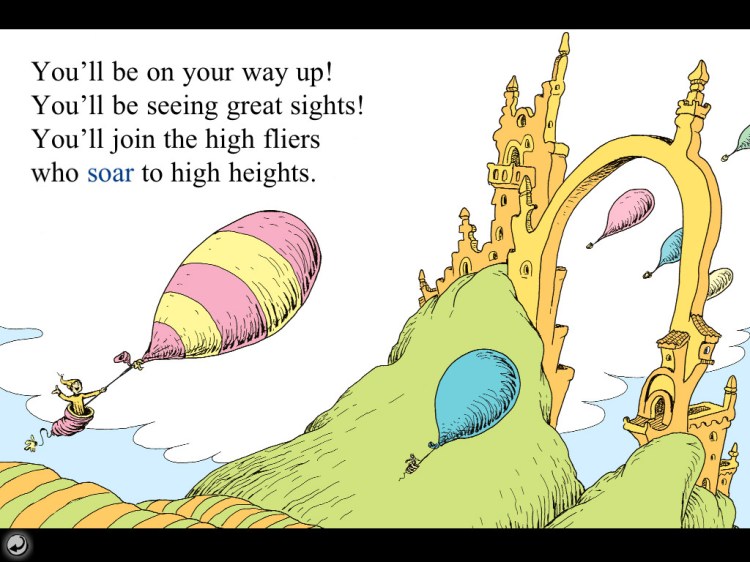
Oh the places I will go!

This was it. My first patient in my own practice. An adult, a female, she arrived with her mother. Neither of them could remember her date of birth. She insisted that no dentist had ever taken a medical history before or taken X-rays or looked at her gums or done an extra-oral examination.

That first patient felt like hard work. I had no idea how hard it was going to be. My little “cold squat” with the great big sign, in a converted shop on the A38, 2 miles south of Gloucester City. An £8000 loan from my father, a load of second hand equipment and a sofa bed in the backroom where my wife and I slept.

There was no shortage of ambition, excitement and fear. 

The weekly schedule began on Monday morning as an Oral Surgery Clinical Assistant, Pilgrim Hospital, Boston Lincs,. Monday afternoon, all day Tuesday and Wednesday associate in Peterborough. Wednesday evening the 130 mile drive to Gloucester. Thursday, Friday and Saturday morning in my own place. Then back home in Stamford to do the washing and sleep before starting the game over again.

It had taken so long to come to fruition that I had been unable to plan very much, as deadline after deadline slipped by my resolve wobbled but never disappeared. By the time it started it was almost an anti-climax. The second week in one of my two turbines died, a Kavo, almost new or so I had been told. I ordered an NSK, the cheapest one I could find. £80. It ran and ran and ran for nearly two decades, easy to repair, a wonderful workhorse it paid for itself probably a thousand times over.

After 5 weeks I went down to 2 days as an associate, by Christmas I had a close to full-time practice. It looked as if 1989 was going to be a great year, the prospects were good, the future looked bright.

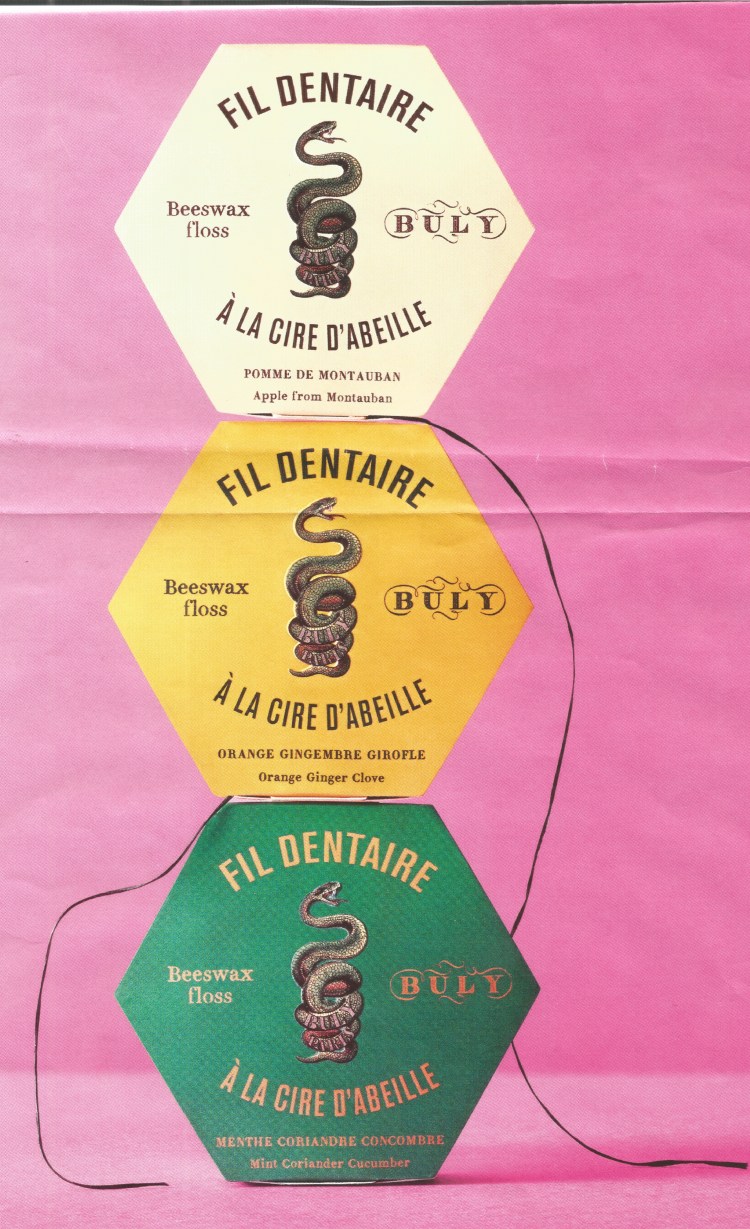
There’s Floss and There’s Gourmet Floss


If you’re looking for something different for your patients as stocking fillers this Christmas, some interesting flavours of Floss.

They do toothbrushes too, Silk, Badger, Horsehair & a “rinky dinky” little Tongue scraper.

(from the “How To Spend It” section of the Weekend FT)

Take a look online here.

The Monday Morning Quote #578

“A ship in harbour is safe, but that is not what ships are built for.”

Anon – for S&J, happy voyages.

What to learn from aircraft??

Earl Weiner

Among them:

  • Every device creates its own opportunity for human error.
  • Exotic devices create exotic problems.
  • Digital devices tune out small errors while creating opportunities for large errors.
  • Invention is the mother of necessity.
  • Some problems have no solution.
  • It takes an airplane to bring out the worst in a pilot.
  • Whenever you solve a problem, you usually create one. You can only hope that the one you created is less critical than the one you eliminated.
  • You can never be too rich or too thin (according to the Duchess of Windsor) or too careful about what you put into a digital flight-guidance system (Wiener).

Wiener pointed out that the effect of automation is to reduce the cockpit workload when the workload is low and to increase it when the workload is high. Nadine Sarter, an industrial engineer at the University of Michigan, and one of the pre-eminent researchers in the field, made the same point to me in a different way: “Look, as automation level goes up, the help provided goes up, workload is lowered, and all the expected benefits are achieved. But then if the automation in some way fails, there is a significant price to pay. We need to think about whether there is a level where you get considerable benefits from the automation but if something goes wrong the pilot can still handle it.”

Success?

Thanks to Roz Savage for pointing me in the direction of Colin Beavan who asks powerful questions and has made me examine the way I live my life.


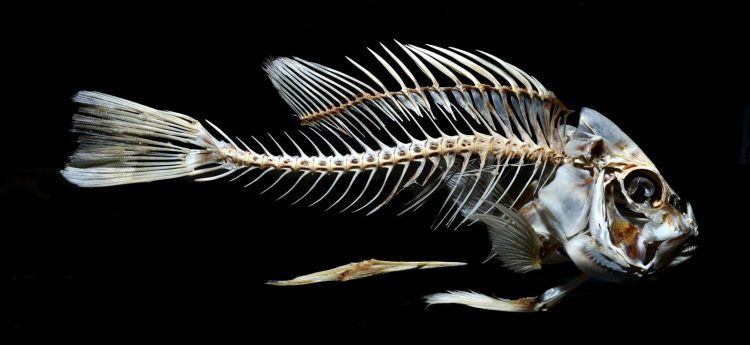
The Fish Rots From The Head

“il pesce marcisce dalla testa” – The Fish Rots From The Head

The final quarter of 2018 saw me speaking throughout the UK on “Leadership and Management”. In preparation I examined the characteristics of both, the differences between them and where they overlap. This exercise meant that I had to take stock of some of the theories that I had espoused and taught over the past 20 years. 

Whilst our knowledge evolves, certain core principle stay the same and one of these comes with the snappy phrase, “The fish rots from the head”; allegedly derived from the Italian, “il pesce marcisce dalla testa”.

What this means is the leadership is the root cause of any organisation’s failure. If the culture of your business is broken, only the leadership can repair it. If the leadership doesn’t establish and maintain a healthy culture then a vacuum is created within which an unhealthy culture will grow and the rot will spread.

I see this happening in many dental businesses. Although the business was healthy at one point, change has meant that the leader has taken their eye off the ball. Often they have believed that by “delegating” work to a practice manager they don’t need to put their energy into leading. What has really happened is abdication not healthy delegation.

Every business large or small must have clear leadership from the top with clarity, guidance and adherence to core values. Without regular examination and renewal, stagnation and disease will occur. The resulting drop off in health means that changes have to be made. 

It is only the leadership that can eliminate disease, remove any necrotic tissue and then make the changes to ensure that the standards it sets are maintained in the future. Unfortunately all too often the cure and remedial treatment is more painful than was needed if business health had been maintained.

(first published in Dentistry.co.uk 22nd January 2019

The Monday Morning Quote #577

You know what (that) strategy is?

1. Decide what you want.

2. Compare that to where you are.

3. Write down the steps that you need to take on a piece of paper to get you from where you are to where you want to be.

4. Do the work.

Anon

The Monday Morning Quote #576

“When one burns one’s bridges, what a very nice fire it makes.”

– Dylan Thomas