What do you tell (medical) students about the future?

Nice piece on UK medicine, those who will work in it and their readiness – or not. I knew little of what I was entering in 1978. How will they see things in 25 years I wonder?

Full piece here: reestheskin.so/?p=2010

More about the author here.

What do you tell students about the future?

I was gossiping with a bunch of fourth year students the other day about what medicine might look in a few years, and how possible changes will affect their lives and careers. Big topic, with few certainties. One of the clear messages was that they felt that nobody really critically talks about these issues to them. Instead, there appears to be lots of what might be called soft propaganda: how there is a shortage of GPs, and how important it is for them to serve by becoming these GPs; how the UK model is self-evidently superior to that available in the rest of the world; or denial of the observation that people voting with their feet (as in migrating) is one of the key ways human societies advance. Despite the ‘global health’ movement, they seem to know little about how health care is organised in different countries, especially those just across the channel. And they seemed interested to know more, so I suspect the fault is ours, not theirs. Little is done (it seems to me) to move beyond the tired stereotypes of US medicine (show your credit card or you will be declined emergency care etc) on the one hand, and the NHS ‘free’ but ‘world class‘ health care on the other (world-class, along with ‘holistic’ is the canary in the mine for bullshit).

Such views are of course lacking in depth. Much of mainland Europe provides lessons for how to provide good health care and maintain solidarity across social strata. Anybody who knows a little about health care in England (think, Circle and dermatology; and NHS dentistry) knows that it is likely that for much of their careers many of our students might not be employed by the NHS, but by private for profit corporations, and that the exercise of monopoly power by government is stronger now than ever. The main political parties in England want to privatise health care, and seem to believe that corporate culture plays no role in delivery of ‘any service’: Virgin, United Health Care, it is all just the same, or so New labour believed. Waitrose, or Walmart: it doesn’t matter! Just look at Steve Ballmer and Steve Jobs: clones aren’t they? When independent regulation has been lost, and most health care is delivered by the same organisation that controls training in ever more microscopic ways, economics 101 will make predictions about what will happen to salaries and working conditions and —here is the crunch — how providers will manipulate customers / clients / patients. Indeed, gossip to many doctors in any hospital and you can make guesses as to what awaits many of these young people. For some for them, Australia seems closer than it did to me.

We need to educate our students to look to the world, not their own backyards, something that Scotland was once very proud of. I have just shown a US visitor the plaques on the wall of the old Edinburgh Medical School in Teviot Place, commemorating the contributions our students made to both medicine and society (ies) across the world. Not one of them, a ‘widget’, I wager.

The Monday Morning Quote #334

“A business that looks orderly says to your customer that your people know what they’re doing.”

Michael E. Gerber,

The E-Myth Revisited

michael-gerber-3

Never thought I would write about “The Chosen One.”

I thought that Jose Mourinho had been put on this earth to provide Hugh Dennis with material since Dennis is no longer able to do his Saville inspired “Showaddywaddy”.

Instead he has given a chance to share an opinion on employment law from Gateley plc in the wake of a falling out with the Chelsea club doctor. Lessons for all business owners and employees here. I doubt that it will bother the man who can’t decide on how he wants to be known.

BUDAPEST, HUNGARY - AUGUST 10, 2014: Jose Mourinho, manager of Chelsea during Ferencvaros vs. Chelsea stadium opening football match at Groupama Arena on August 10, 2014 in Budapest, Hungary.
BUDAPEST, HUNGARY – AUGUST 10, 2014: Jose Mourinho, manager of Chelsea during Ferencvaros vs. Chelsea stadium opening football match at Groupama Arena on August 10, 2014 in Budapest, Hungary.

One football news story that has refused to go away this week is that involving the public rebuke given by Chelsea manager Jose Mourinho to club doctor Eva Carneiro followed by a demotion by removing her match day duties. The manager’s actions have been widely condemned by both football and medical experts.

No matter what mistake the employee has made, everyone in HR knows that shouting at an employee in front of others is not the right course of action.

The issue should be dealt with in private. It might be that it is a conduct issue which needs to be dealt with in accordance with the disciplinary policy, or it might be that a performance management process should be followed. Of course it might also be that just a quiet word is needed to let the employee know that they have done something wrong.

Of course we do not know the full details of what went on at Stamford Bridge however, in general what are the potential consequences when a manager does lose his temper and lets loose on an employee? Can a demotion be challenged when there has been no apparent process?

Constructive dismissal has been mentioned in some press reports. This is where an employee is treated as being dismissed in circumstances where they have resigned as a consequence of the employer’s conduct.

In any constructive dismissal claim the first hurdle is to show that the employer’s conduct amounted to a fundamental breach of the contract. An employee who has been shouted in front of other employees is likely to establish that this amounts to a breach of the implied term to maintain mutual trust and confidence. The removal of key duties amounting to a demotion without any formal capability process would be likely to add to this breach.

The next question in whether this conduct played some part in the employee’s decision to resign?
The employer’s conduct does not have to be the sole reason for the resignation but it must have been one of the reasons. An employee who resigned citing the manager’s behaviour and the

impact of any demotion would be likely to be able to establish that this conduct was the real reason for quitting their job.

The third question, which tends to cause the most litigation, is whether the employee has left it too late to resign?
Whatever the employer’s conduct the employee who continues to work without complaint will be seen as eventually affirming the contract and waiving any breach. So, for example, if the Chelsea doctor continues to work with the team and follows the manager’s instructions not to sit on the bench at matches, it might not be very long before she will have lost any right to make a claim of constructive dismissal.

However, in a recent case that came before the Employment Appeal Tribunal [1] it was highlighted that before an employee is taken to have affirmed the contract the consequences for that person should be taken into account. The individual will be under pressure and faced with having to make a serious decision and it would be unreasonable not to allow them some thinking time before taking the step of leaving and putting themselves out of work.

[1] Frempong v Howard Frank Ltd 31 July EAT

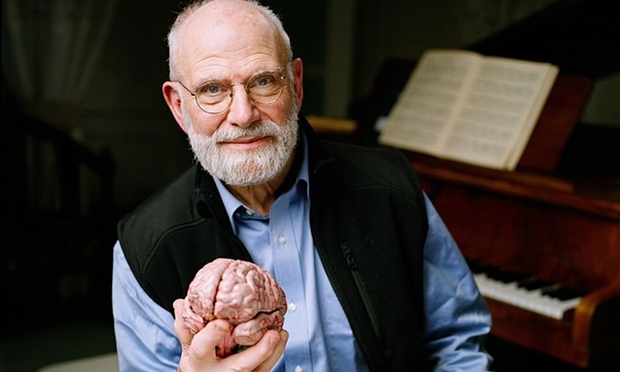
Oliver Sacks – R.I.P.

1279

The neurologist Oliver Sacks has died in New York. There is a full obituary in The Guardian here.

I read the piece (below) in the New York Times earlier this year after listening to a review of his autobiography. Like most of us I would like to think that I could be so eloquent about our approaching demise – like most of us I know that I almost certainly could not be.

My Own Life
Oliver Sacks on Learning He Has Terminal Cancer

A MONTH ago, I felt that I was in good health, even robust health. At 81, I still swim a mile a day. But my luck has run out — a few weeks ago I learned that I have multiple metastases in the liver. Nine years ago it was discovered that I had a rare tumor of the eye, an ocular melanoma. The radiation and lasering to remove the tumor ultimately left me blind in that eye. But though ocular melanomas metastasize in perhaps 50 percent of cases, given the particulars of my own case, the likelihood was much smaller. I am among the unlucky ones.

I feel grateful that I have been granted nine years of good health and productivity since the original diagnosis, but now I am face to face with dying. The cancer occupies a third of my liver, and though its advance may be slowed, this particular sort of cancer cannot be halted.

It is up to me now to choose how to live out the months that remain to me. I have to live in the richest, deepest, most productive way I can. In this I am encouraged by the words of one of my favorite philosophers, David Hume, who, upon learning that he was mortally ill at age 65, wrote a short autobiography in a single day in April of 1776. He titled it “My Own Life.”

“I now reckon upon a speedy dissolution,” he wrote. “I have suffered very little pain from my disorder; and what is more strange, have, notwithstanding the great decline of my person, never suffered a moment’s abatement of my spirits. I possess the same ardour as ever in study, and the same gaiety in company.”

I have been lucky enough to live past 80, and the 15 years allotted to me beyond Hume’s three score and five have been equally rich in work and love. In that time, I have published five books and completed an autobiography (rather longer than Hume’s few pages) to be published this spring; I have several other books nearly finished.

Hume continued, “I am … a man of mild dispositions, of command of temper, of an open, social, and cheerful humour, capable of attachment, but little susceptible of enmity, and of great moderation in all my passions.”

Here I depart from Hume. While I have enjoyed loving relationships and friendships and have no real enmities, I cannot say (nor would anyone who knows me say) that I am a man of mild dispositions. On the contrary, I am a man of vehement disposition, with violent enthusiasms, and extreme immoderation in all my passions.

And yet, one line from Hume’s essay strikes me as especially true: “It is difficult,” he wrote, “to be more detached from life than I am at present.”

Over the last few days, I have been able to see my life as from a great altitude, as a sort of landscape, and with a deepening sense of the connection of all its parts. This does not mean I am finished with life.

On the contrary, I feel intensely alive, and I want and hope in the time that remains to deepen my friendships, to say farewell to those I love, to write more, to travel if I have the strength, to achieve new levels of understanding and insight.

This will involve audacity, clarity and plain speaking; trying to straighten my accounts with the world. But there will be time, too, for some fun (and even some silliness, as well).

I feel a sudden clear focus and perspective. There is no time for anything inessential. I must focus on myself, my work and my friends. I shall no longer look at “NewsHour” every night. I shall no longer pay any attention to politics or arguments about global warming.

This is not indifference but detachment — I still care deeply about the Middle East, about global warming, about growing inequality, but these are no longer my business; they belong to the future. I rejoice when I meet gifted young people — even the one who biopsied and diagnosed my metastases. I feel the future is in good hands.

I have been increasingly conscious, for the last 10 years or so, of deaths among my contemporaries. My generation is on the way out, and each death I have felt as an abruption, a tearing away of part of myself. There will be no one like us when we are gone, but then there is no one like anyone else, ever. When people die, they cannot be replaced. They leave holes that cannot be filled, for it is the fate — the genetic and neural fate — of every human being to be a unique individual, to find his own path, to live his own life, to die his own death.

I cannot pretend I am without fear. But my predominant feeling is one of gratitude. I have loved and been loved; I have been given much and I have given something in return; I have read and traveled and thought and written. I have had an intercourse with the world, the special intercourse of writers and readers.

Above all, I have been a sentient being, a thinking animal, on this beautiful planet, and that in itself has been an enormous privilege and adventure.

Correction: February 26, 2015
Because of an editing error, Oliver Sacks’s Op-Ed essay last Thursday misstated the proportion of cases in which the rare eye cancer he has — ocular melanoma — metastasizes. It is around 50 percent, not 2 percent, or “only in very rare cases.” When Dr. Sacks wrote, “I am among the unlucky 2 percent,” he was referring to the particulars of his case. (The likelihood of the cancer’s metastasizing is based on factors like the size and molecular features of the tumor, the patient’s age and the amount of time since the original diagnosis.)

Oliver Sacks, a professor of neurology at the New York University School of Medicine, is the author of many books, including “Awakenings” and “The Man Who Mistook His Wife for a Hat.”


The Monday Morning Quote #333 – Poems in August #5

If

If you can keep your head when all about you
Are losing theirs and blaming it on you,
If you can trust yourself when all men doubt you,
But make allowance for their doubting too;
If you can wait and not be tired by waiting,
Or being lied about, don’t deal in lies,
Or being hated, don’t give way to hating,
And yet don’t look too good, nor talk too wise:

If you can dream—and not make dreams your master;
If you can think—and not make thoughts your aim;
If you can meet with Triumph and Disaster
And treat those two impostors just the same;
If you can bear to hear the truth you’ve spoken
Twisted by knaves to make a trap for fools,
Or watch the things you gave your life to, broken,
And stoop and build ’em up with worn-out tools:

If you can make one heap of all your winnings
And risk it on one turn of pitch-and-toss,
And lose, and start again at your beginnings
And never breathe a word about your loss;
If you can force your heart and nerve and sinew
To serve your turn long after they are gone,
And so hold on when there is nothing in you
Except the Will which says to them: ‘Hold on!’

If you can talk with crowds and keep your virtue,
Or walk with Kings—nor lose the common touch,
If neither foes nor loving friends can hurt you,
If all men count with you, but none too much;
If you can fill the unforgiving minute
With sixty seconds’ worth of distance run,
Yours is the Earth and everything that’s in it,
And—which is more—you’ll be a Man, my son!

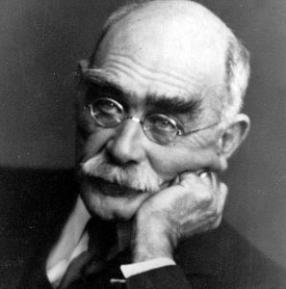
Rudyard Kipling

RudyardKipling_NewBioImage

Want to get a handle on Occlusion?

Want to get a handle on occlusion?

The British Society for Occlusal studies has been at the forefront of the teaching of occlusion to dentists in the UK for a quarter of a century. Their three day course to be held in Birmingham is one that I thoroughly recommend.

Details are available from the website www.bsos.org.uk

5132-BSOS-Seminar-Selner-v3


5132-BSOS-Seminar-Selner-v3 2


Are your customers avoiding you?

imagesI like, and sometimes even admire, the advertising industry, at its very top end it is entertaining and memorable. Most of it is not, it’s mundane, repetitive and unimaginative. I thoroughly enjoyed John Hegarty’s book and think that he and a lot of his colleagues are very bright, creative thinkers. I have read about David Ogilvy and how he took the US by storm, but he had great talent and would have been a success in any walk of life except, perhaps, as an Amish farmer which he tried, it didn’t work out. I even know about John Wannamaker who coined the phrase, “Half the money I spend on advertising is wasted; the trouble is I don’t know which half.”

But – here’s the thing. I hate being “advertised at”, I mute the TV commercials if I am watching something live. If I ever take part in surveys asking, for instance, about cars that I might consider buying and I am asked if I have been aware of adverts on radio or TV for the new (insert a brand or “marque” here), I almost always say no, then they run the ad and I’ll think “Oh is that what it was for?”

Facebook advertising drives me mad, the oh so clever algorithms that want to show me dentists, dental whitening, dental implants, dental business coaches (!) and so on. Then came the ads from Amazon showing me the last book that I bought, what’s that if not being really stupid with clever systems? Now I have forgotten that I ever had it and was amazed when I logged on through someone else’s machine recently.

This piece from UK business insider points out that web pages load far slower than they ought because of advertising, as someone who has very low bandwidth in my office and suffers like everyone else when travelling (a recent gold star for Edinburgh trams by the way) I am aware of the return to ‘dial-up’ speeds.

So like 14 million other people I have installed Adblock. I’m a member of that demographic that is defined as a “silver surfer” and I know plenty of people who have been delighted to use the internet as it was intended. So am I not the “target” audience? Well, I was introduced to adblocking by my son who is a 22 year old Physics graduate (incidentally he refuses to be tied to either Mac or Windows and only uses open-source software where possible). I gather most of his contemporaries also use an adblocker.

And the advertising industry is worried and asking themselves questions – Campaign.

I have just added a plug in called Ghostery to my browsers – it’s interesting to see what’s watching you. John Naughton as always writes about this and other technical things far better, here’s his column from the weekend where he poses the question about the future of web ads.

So – if you’re a dentist who is just about to spend an unspecified amount of money for Google adwords in the hope that you will appeal to your more discerning potential patients be aware that whilst Google is doing what it can to keep up with the blockers, a significant number of us just see advertising for what it is. You need to work with someone who understands the market, the people, the process and, of course, the pricing – the very good, experienced people won’t be cheap and you will have to recoup that outlay somehow.

images-1
Oh really?


The Monday Morning Quote #332 – Poems in August #4

Happy The Man

Happy the man, and happy he alone,
He who can call today his own:
He who, secure within, can say,
Tomorrow do thy worst, for I have lived today.

Be fair or foul, or rain or shine
The joys I have possessed, in spite of fate, are mine.
Not Heaven itself, upon the past has power,
But what has been, has been, and I have had my hour.

John Dryden (1631 – 1700)

290px-John_Dryden_by_John_Michael_Wright,_1668_(detail),_National_Portrait_Gallery,_London

The Weekend Read – Triggers by Marshall Goldsmith

TRIGGERS

One of the biggest challenges that we all face is change. Marshall Goldsmith is one of the world’s leading executive coaches and he hasn’t got there by failing to help his clients succeed. To do so he has to be able to walk the talk in his own life and this book reflects how his approach can help each of us to succeed.

Every night, Goldsmith forces himself to do something that most of us would find very difficult. He speaks to a friend on the phone and ask him the same 22 questions. They all start with the phrase, “Did I do my best (today) to…?” The endings can be strategic, philosophical, professional, physical or personal. He has done this for years, revising the questions as his priorities have evolved. Not only does he answer he rates his efforts on a scale from 1 to 10.

Goldsmith’s stated mission is “to help people become the person they want to be, not tell them who that person is.” One of the fundamental tenets of my coach training taught me that the client is naturally creative, resourceful and whole. So I hope that my coaching is never directive and my simple mantra “to improve the condition of my clients” is in line with his.

The author’s first book, “What got you here, won’t get you there” dealt with identifying interpersonal skills that hold you back from being a success, this book takes things further into personal habits.

The 22 chapters are divided into 4 sections:

  • “Why don’t we become the person we want to be?”,
  • “Try”,
  • “More structure please” and
  • “No regrets”.

In the first section Marshall examines the truths of behavioural change and the role of “Triggers” he then goes on to look at the role of questions, being one’s own coach and the mantra “AIWATT” (am I willing at this time?).

Part 3 deals with developing the right structure for our individual success and then he wraps up with a short section on the circle of engagement and the need for change.

A trigger he defines as any stimulus that reshapes our thoughts or actions and can be of both beneficial and detrimental.

I first came across the book as an audio download and then followed up with the paperback. In the same way that, “What got you here, won’t get you there” had a profound effect on helping many to change their behaviours so “Triggers” will provide a great refinement and will reinforce and expand our seeking to make lasting, positive change.

If you’re struggling with your day to day progress then give this a read and carry through the actions and exercises that he suggests – it will change you and your results.

A Doctor’s Sword

Susan & I went to the multiplex cinema in Bantry last night to see the documentary film “A Doctor’s Sword”.

The late Pete McCarthy wrote that, “you should never pass a bar with your name on it” and his travelog “McCarthy’s Bar” features a (photoshopped) photograph of MacCarthy’s bar in Castletownbere on the Beara peninsula. This film is the remarkable story of a young man who was born in the bar and where a Japanese sword serves to tell his story.

Aidan MacCarthy was born on March 19th 2013, one of a family of 10 he was educated at Clongowes Wood, Presentation College and University College Cork where he graduated in medicine in 1938. There were few opportunities for new medical graduates in Ireland at the time so he travelled to the UK and found work and gained experience as a locum in England and Wales. After a night drinking in Soho with a couple of other Cork graduates they enrol with the RAF in early 1939.

After the outbreak of war Aidan was sent to France and then came back to England as part of the evacuation of Dunkirk. His next postings were to a number of airfields and at one of these his actions in saving men from a burning aircraft earned him the George Cross.

In 1942 he was sent to help the war effort in the Far East only to arrive after the fall of Singapore and be finally captured in Java. He spent the next 3 and a half years as a prisoner of war in camps in Java where he used his medical skills with the minimal equipment and medication available to ease the condition of his fellow prisoners.

In common with most who served time under the Japanese he rarely spoke of the privations, the arbitrary executions, beatings, starvation and disease that they endured.

As the course of the war changed he was sent to Japan on board a destroyer; torpedoed close to Nagasaki he was amongst 38 of the 980 PoWs who survived and were brought ashore by a whaling vessel. In August 1945 he and his fellow prisoners took shelter when they heard the air raid sirens when they emerged the city had been destroyed by the second atomic bomb.

Giving what help they could to the survivors of the blast, the prisoners took shelter in caves in the hills but were recaptured and transported some 28 miles away and held again until the Japanese surrender a couple of weeks later. Aidan was the senior officer in the camp and ensured discipline. He sheltered and protected the camp commandant from those prisoners who wanted to punish him. The commandant gave MacCarthy his sword, an act of huge significance to a Japanese officer.

On his eventual return to County Cork Aidan weighed 7 stone, half of what he had weighed at the outbreak of war. He continued to serve in the RAF, reaching the post of air commodore, and then worked as a GP in London until he was 80, he died in Northwood on 11th October 1995.

His biography “A Doctor’s War” was first published in 1979.

The film documents the journey that his daughter, Nicola, made to visit the places in Japan where her father had been held and to find the family of the commandant who gave him the sword. His other daughter Adrienne who runs the family bar completes the story. The ink drawings and animation illustrate graphically some of the events through which Aidan lived.

At the end of an RTE documentary about his life he is asked to what he attributes his survival through those days and replies, “my Irish Catholic heritage, my family background and lots and lots of luck.”

A wonderful film, that moves and inspires, about an amazing man – or perhaps an ordinary man who did extraordinary things because the circumstances demanded it of him.