We learn little or nothing from our successes.
They mainly confirm our mistakes,
while our failures,
on the other hand, are priceless experiences
in that they not only open up the way to a deeper truth,
but force us to change our views and methods.
A Collection of Smart, Friendly Individuals Does Not Constitute a Productive Team
www.dentalbusinesscoach.co.uk/services/building-the-perfect-team
From Kolbe connection
Today’s environment of rapidly accelerating change continuously gives birth to new markets, new solutions, and new opportunities. Consequently, business structures everywhere have become decentralized and more fluid as managers are discovering the critical importance of highly responsive and productive “teams.” Today, the work force at a large organization typically comprises teams that assemble and dissolve in response to specific needs. And when it comes to developing leaders for an organization, a business owner is less inclined to look for a lone superhero who will lead the way to profitability, and more inclined to find “team builders” who can achieve results within a changing business landscape.
So, what’s the best way to build a highly productive team? Do you search for individuals with specific skills and a certain level of intelligence? Or should you look for people with complementary personalities and similar life experiences?
According to a recent article in The Economist, “Teams work best if their members have a strong common culture.”1 Fair enough. But if that is all there is to assembling a productive team, then why do so many teams with a common culture fail to achieve desired results?
Think about it – whether we’re talking about business, sports, or other activities, we’ve all known of (or even been part of) a cohesive group of skilled, intelligent individuals that still could not achieve anything close to the potential of the combined talents of its members.
On the other hand, many teams function very well in spite of the fact that they do not include the most talented or even the most intelligent individuals available. Additionally, some highly successful teams (in sports and in business) have included individuals who do not even like each other.
In truth, “common culture” has little to do with team building. Assembling people who like each other and who have similar personalities may be a good recipe for a social club – but it’s not the way to build a highly productive team.
The most important factor in team building lies in how each member of the team will take action – in other words, their conative MOs, or natural way of problem solving. A team of highly skilled, highly intelligent, and friendly individuals will have a very low chance of success if it suffers from a lack of conative diversity (i.e., “cloning”). For example, a team of smart players all of whom are detailed, thorough and specific (initiating Fact Finders) may consider themselves to be very compatible with one another. However, in the absence of anyone who simplifies, finds shortcuts or creates a sense of urgency, the team will likely collect truckloads of data but never accomplish a darned thing.
On the other hand, a team of change agents experimenting and improvising options (initiating Quick Starts) might create (and even execute) several innovative strategies within just a few days, but never achieve their objectives because no one has gathered sufficient background data to justify their solutions. Additionally, since the team includes no one who was designing systems and bringing closure to open initiatives and ensuring that proper procedures were followed, the team might produce more problems than solutions.
To build a highly productive team, a manager (or a coach) should look for individuals with different conative strengths – people who will bring out the most in their teammates. That means finding people who “initiate” and people who “counteract” in each of the four Acion Modes® (Fact Finder, Follow Thru, Quick Start, and Implementor). And don’t forget the importance of finding individuals who will “ReAct” and pull the team together!
During “March Madness,” the best college basketball teams from all over the country put their reputations on the line and compete in a single-elimination tournament. For a few teams, individual talents come together in beautiful harmony. These teams are often said to be “playing over their heads.” However, such descriptions don’t come close to capturing the poetry of five different players meshing on the court. When a coach knows the individual strengths of each player and then deftly mixes and matches these talents as the game progresses, and the players accept that their individual talents are magnified when they play in concert with one another, that’s when synergy is achieved, and usually a new national champion is born.
What’s true for teams on the basketball court is also true for teams in the office: The talent, personality, and intelligence of the individual members are important factors; however, in the end, those teams with the right balance of conative strengths will stand the best chance of victory!
www.dentalbusinesscoach.co.uk/services/building-the-perfect-team
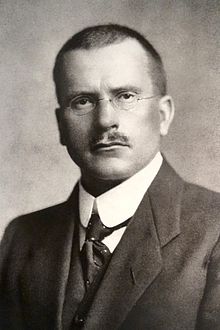
The Monday Morning Quote #362
“Each of us … constructs and lives a ‘narrative’ and is defined by this narrative.”
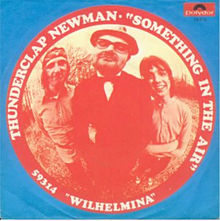
Call out the instigators. Because there’s something in the air. RIP Thunderclap.
My school friend Bill Llewellyn’s dad would sometimes collect him from school. Occasionally I would cadge a lift too – it swapped the two buses from to Rumney to central Cardiff and on to Whitchurch for a shortish walk.
One in May 1969, shortly before O’levels, during one of those trips “Something in the Air” by Thunderclap Newman came on the radio – it immediately grabbed my attention and has remained one of my favourite “play it louds” during the intervening years – it never fails to lift me (Wilhelmena was a great B-side). Written by Speedy Keene (died 2002) and featuring guitarist Jimmy McCulloch (died 1979) the track was produced by Pete Townshend, who also played bass under the pseudonym Bijou Drains. The final member was piano player Andy “Thunderclap” Newman – he died on March 30th.
Any excuse to hear this again from the magnificent opening chords, to the handclaps over the instrumental break through to the orchestra on the final bars. Better appreciation here.
Just listen.
Ten Year Anniversary of Child Protection and The Dental Team
I was pleasantly surprised to bump into my old friend Richard Welbury at the BDA conference 10 years ago, I hadn’t realised at the time what a milestone he and his colleagues were making. Richard was the first person I knew who shared the facts around oral signs of child abuse, his memorable talks produced a determination from everyone who heard them to do everything they could to ensure that children would stay safe. Their work is worth remembering and continues.
From The British Society of Paediatric Dentistry via Dentinal Tubules
A decade ago, dental neglect in children was a neglected issue. But this is no longer the case thanks to the guidance Child Protection and the Dental Team (CPDT) which was launched at the BDA conference in 2006 by the then Health Minister Rosie Winterton.
The document and its associated website (http://www.cpdt.org.uk/index.aspx) came about after Jenny Harris, a paediatric dentist in Rotherham, wrote to the Chief Dental Officer, Raman Bedi, to raise her concerns. This was in the aftermath of the death of Victoria Climbié in 2000 and Lord Laming’s Inquiry report in 2003.
Said Jenny: “I asked myself: If a child like Victoria walked into my surgery, would I recognize her. Would I know what to do and would I have done it? For months I checked the dental press but there was nothing new to educate us about child protection.”
Jenny had already set up a dental neglect working group in Rotherham. Her job was to define best practice so that children in her area would not slip through the net. But she still felt the dental profession needed expert national guidance.
After receiving her letter Professor Bedi met Jenny and invited her to chair an expert group to produce an educational resource. She was given a generous budget but just a year to complete the project.
The input of Jenny’s paediatric colleagues proved invaluable. She sent out a questionnaire (1) to BSPD members who were asked about their knowledge and experience of safeguarding as well as to share examples of good practice. This research is being repeated for the 10th anniversary to see how much has changed.
In the decade since its launch, CPDT has been highly influential. In 2008, a survey of GDPs (2) showed that dentists had taken on board the new guidance and it was influencing knowledge, training and policies in the practice.
And there has been extensive involvement with other bodies, both in and outside dentistry. Jenny has become:
• BSPD’s representative on the NSPCC’s Health Liaison Committee – she presented a paper on dental neglect in children as recently as September 2015
• A contributor to the development of a NICE clinical guideline: When to suspect child maltreatment
• Lead author of the first BSPD policy document on dental neglect in children
• Initiator of a working group bringing BSPD together with the Royal College of Paediatrics and Child Health (RCPCH), the NSPCC and the Advanced Life Support Group (ALSG) to adapt standardized child protection training – a recognition and response course – for the paediatric dentistry specialty trainees
The May anniversary is also an opportunity to celebrate the valuable contribution of the rest of the expert group: Professor Richard Welbury, an early champion of child protection in dentistry, Peter Sidebotham, a leading community paediatrician, Ranee Townsend, a CDS clinical director, Martyn Green, a dentist and vocational trainer in Devon, Janet Goodwin, a dental nurse representative and Chris Franklin, postgraduate Dean.
Now working as a community-based consultant in paediatric dentistry in Sheffield, hardly a week goes by without someone somewhere in the world contacting Jenny for information or advice and she helps where she can. Child protection and the dental team has already been translated into Croatian and Greek, with work on Spanish and Arabic versions now in the hands of enthusiastic teams of paediatric dentists.
Jenny believes there is still some way to go: “We have got better at recognizing signs of child maltreatment and at referring it but it does make a huge extra workload for clinicians and that hasn’t yet been recognized.” Jenny also believes the dental profession needs to have someone in every region who is identified as being responsible for safeguarding children leadership. Currently too much is down to the goodwill and enthusiasm of individuals.
Said Jenny: “I am grateful to BSPD Council for encouraging me to forge links and raise awareness of dental health among other professions involved in safeguarding. There is much more interest in children’s teeth than when we started a decade ago.”
(1) http://www.nature.com/bdj/journal/v206/n8/full/sj.bdj.2009.307.html and http://www.nature.com/bdj/journal/v206/n9/full/sj.bdj.2009.356.html
(2) http://www.nature.com/bdj/journal/v210/n2/full/sj.bdj.2011.3.html
Note to editors:
For more information, contact Caroline Holland on 020 8679 9595/07974 731396
Meet the dog who brings joy to dental visits.
In the dim and distant pre-CQC and thought police days of dental practice ownership we used to take our yellow Labrador, Freddie, to work. Freddie was a charming dog, gentle, friendly and very well behaved. He used to sleep in a back room of the practice but would occasionally get into reception where he was greeted with delight by any patients. Some patients used to ask after him and if he was there would give him a cuddle.
This of course was before the CQC deemed that it would probably kill us all if such a thing happened (guide dogs excepted as they are no doubt bacteria, virus and fungus free). The other thing wrong with this is that our child patients didn’t hate dentistry when done the Rees way.
Thanks to Mostyn for sharing this.
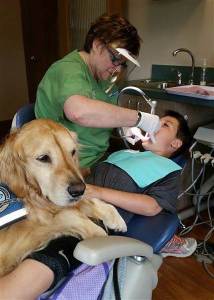
Among the things kids hate most, visiting the dentist ranks near the top. Unless they’re going to Pediatric Dentistry of Northbrook, Illinois.
That practice, which includes doctors Thomas Resnick and Paul Egger, has found a way to help young patients relax and — dare we say it — even enjoy teeth cleanings. Their secret: a 6-year-old golden retriever named JoJo.
As a trained comfort dog, JoJo calms patients in the hot seat. She sits on their laps, tenderly rests her face on their bodies, and patiently distracts them from anything unpleasant happening in their mouths.
JoJo’s first foray into dentistry came after her handler, Lynne Ryan, came up with the idea of using a comfort dog to help young patients through stressful procedures. “Working at a pediatric practice can have its challenges,” says Ryan, who has also served as a dental assistant at the practice for over two decades.
GDC v BDA – contd (for UK readers only)
Press release
5 April 2016
BDA: ‘new era’ at GDC comes with £½ million cleaning bill
The British Dental Association (BDA) has issued an open letter to General Dental Council chair Bill Moyes, in response to his recent comment piece: A new era of dental regulation.
The article, published in The Probe in March, contained numerous misrepresentations on the PSA’s whistleblowing inquiry and un-evidenced assertions about the rise of patient complaints.
The BDA has now published figures from a recent Freedom of Information request to the GDC indicating it spent over £¼ million on legal costs during the whistleblowing enquiry. Factoring in the added costs of staffing changes this amounted to a total outlay of over £½ million.
The FOI has also identified £250,000 bill to leading international PR firms, for a wide range of services beyond, including prepping the chair and former Chief Executive for their appearance in front of the Health Select Committee in March 2015.
Mick Armstrong, Chair of the BDA said:
“This profession wants nothing more than an effective and efficient regulator, but that journey will only begin when the GDC can show it is capable of confronting some hard truths. Sadly this recent article revealed its leadership is unwilling to even start down that road.
“The Chair has gone to great lengths to absolve the current Council from the sins of the past. A glance at any calendar shows that the bid is futile, as the PSA inquiry into the handling of the whistleblowing issue fell into the time of the current Council. To suggest that the current Council had nothing to do with this inquiry but simply oversaw the rectification of the problem is a stunning misrepresentation. Given the Council’s own deliberations in public, these feelings may also not be shared by the other Council members.
“Bill Moyes has again demonstrated he would rather spend registrants’ fees on firefighting than acknowledge any error on his part. This half million pound price tag for avoidable legal costs and tokenistic staffing changes is particularly galling, and flies in the face of stated commitments to openness and transparency with the PSA on whistleblowing. The GDC chair clearly wants this profession to believe he has clean hands – and this it seems is the cleaning bill.
“The GDC Chair’s conduct seems less like a new era for regulation, and more business as usual.”
The Monday Morning Quote #361
“Suppose you had the revolution you are talking and dreaming about.
Suppose your side had won, and you had the kind of society that you wanted.
How would you live, you personally, in that society?
Start living that way now!”
SOCIAL MEDIA ADDICTION – THE SIGNS AND CURE by Alan Stevens
Alan Stevens is the media coach – his weekly Ezine is essential reading for anyone with an interest in speaking or the media, this is from Friday April 1st. Is this you?
SOCIAL MEDIA ADDICTION – THE SIGNS AND CURE
“It’s not an addiction, I can stop anytime I want. I just need to check Facebook before I – er – just in case. Someone may have posted something I need to respond to. I’d better check my Twitter feed too, and take a quick look at my channel views on YouTube. Hang on, I may have some LinkedIn connection requests. I’d better just keep an eye on my Instagram too. Oh and my Klout score, and maybe my blog comments. I’ll be with you in two seconds”
Ever heard anything like that? Ever said anything like that? It’s social media addiction. It’s not helping your business to allow social media to dominate your time. A few years ago, I was given a fantastic piece of advice. it was to turn off the alert I received whenever an email pinged in. Up until that point, I would stop whatever I was doing to check the incoming message. It was hugely disruptive. Now I check email three times a day, and I get much more work done.
I find the same discipline works for social media. There’s no need to be checking tweets every five minutes. Blog comments can be responded to once a day. It’s about finding a way to fit social media into your working day, not fitting your work around social media.
There are exceptions, of course. If I’m two-screening while watching Question Time, I’m using social media in real time. If I’m in a Twitter chat, I give it most of my attention. That’s my choice, and it’s not my norm. It’s much better to control social media than to allow it to control you.
“This information was written by Alan Stevens, and originally appeared in “The MediaCoach”, his free weekly ezine, available at www.mediacoach.co.uk.”
The Weekend Read – Legacy by James Kerr
Published three years before the All Blacks won their second Rugby Union World Cup Final this is a fascinating book about the culture of a great team. The lessons are applicable to every team whether they be in sport or business.
It starts when things were not going so well for New Zealand, in 2004 they had just been beaten by South Africa and finished last in the annual Tri-Nations tournament. Too many players drank too much and there was a malaise and attitude that wasn’t good enough for a team with a great history to flourish in the new professional era. Graham Henry had just been appointed coach and on the long flight home across the Pacific his assistant Wayne Smith wrote him a note saying, “we must fix this thing”.
On the pitch the changes and improvements were obvious. Away from the performances, fundamental changes were taking place. Rooted in the culture (that word again) of the All Blacks are certain qualities and beliefs that needed to be re-discovered, recognised, acknowledged and developed. The author describes the dressing room after the All Blacks have beaten Wales in Dunedin in June 2010. When the hero worshippers, the journalists, the coaches have left, the team toasts their captain Richie McCaw and they in their turn leave the room. Except for two senior players who pick up brushes and sweep the floor. The purpose of this exercise is to prove that the All Blacks tidy up after themselves, that they have personal and collective discipline.
- Sweeping the sheds.
- Doing it properly.
- So no one else has to.
- Because no one looks after the All Blacks.
- The All Blacks look after themselves.
The chapter names include:
- Character
- Adapt
- Purpose
- Responsibility
- Pressure
- Authenticity
- Sacrifice and
- Language.
This book is crammed with great lessons. In my opinion it is unique in its breadth and depth with examples that will provoke you to make changes for the better in your life and organisation.
Three quotes:
- “For the Strength of the Pack is the Wolf and the Strength of the Wolf is the Pack.”
- “No Dickheads”
- “Champions do Extra”
The All Black ethos is summed up in one action by their centre three quarter and outstanding sportsman (a champion at rugby league and boxing) Sonny Bill Williams at the end of the World Cup final at Twickenham last year. A 14 year old fan was tackled by security staff when he ran on to the field (I can identify with his action and enthusiasm, I used to do the same at the same age at Cardiff Arms Park, to get close to my heroes), Sonny Bill seeing what happened went and protected the youngster and then gave his winners medal to the lad.