“The only thing you have power over is to get good at what you do.
That’s all there is; there ain’t no more!”

via Box of Crayons
The blog of Alun Rees, The Dental Business Coach
“The only thing you have power over is to get good at what you do.
That’s all there is; there ain’t no more!”
via Box of Crayons
A piece of my childhood disappeared…
Every summer my mother, my brother and I went to Dublin to stay with my mother’s parents. We flew from Rhoose airport with Aer Lingus on one of their Focker Friendships. Then, like now, the flight used to take just under an hour though air travel was far less than the routine that is has become.
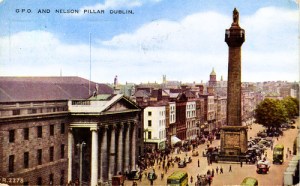 Amongst the highlights of the stay in Drumcondra. a suburb a couple of miles to the north of the Capital were a trip to the zoo in Phoenix Park or a chance to climb the 168 steps of Nelson’s Pillar in O’Connell Street. The view of the city centre and the countryside beyond from the wire cage at the top was spectacular.
In 1966 everything changed. Nelson and his plinth had survived unscathed during the fighting and bombardment of the adjacent  GPO during the Easter Rising nearly a century ago; but on this day, March 8th, an IRA off shoot placed a bomb on the pillar which detonated just after 1.30 in the morning. The charge destroyed Nelson’s statue and most of the pillar, the army finished the job a week later.
So there would be no more 3d climbs to the top.
In fact there were to be no more trips to my grandparents as both of them passed away that year.
The start of the end of my childhood.
Orthodontics can be a hidden art and it’s often perceived by non-orthodontists as a secret language. Most undergraduates know a something about it, but not much, similar to knowing a few key phrases. “good morning”, “where is the bus stop?” and “two beers please”. That’s where it ends. After graduation it used to be kept (mostly) to the confines of those who had been through, what the New Scientist once called, “the years of crawling subservience under the gaze of the white coated moguls that control our great teaching hospitals”. Then, when deemed to be fluent in the language, the specialists with their M.Orths, headed off to their own planet in the Orthodontic universe to fiercely guard their patch and occasionally share a few simple phrases of ortho speak with their referring dentists.
Times have changed and with the relentless march of a thousand aligner systems everyone has a phrase book – or at least they think they do. Or could it be that they have the dodgy Hungarian Phrase Books?
I am not looking to fan the flames of the GDP v Specialist debate, there’s way too much of that about, rather to present Professor O’Brien’s last two blog posts for your consideration because I think they are both worth a read. I find him to be readable, thought provoking and that sometimes rare thing someone constantly questions what he does and WHY he does it.
First up:
A thinking about Orthodontics blogpost. In its entirety.
This is a short blog post to read just before the weekend, or just after if you are in Australia! I have just attended a major symposium in the UK and I was asked to give a major lecture. The preparation of this took some thought. During the meeting I listened to some great presentations and this got me thinking about orthodontics. I have been working as an academic orthodontist and research since 1986, spent a large amount of time researching clinical matters, I have trained too many people for me to remember and spoken at many major orthodontic conferences. But what do I know about orthodontics? Here is a list of my academic knowledge and opinion.
This is a precursor to a more thoughtful blog post that I am going to post next week, so here we go. You may not agree with me..
That’s about it, does anyone want to add to the list?
Now here’s the second one:
Evidence based orthodontics is not as straightforward as it seems…
Should we practice evidence-based orthodontics?
This is a basic point and a good place to start. It has been pointed out to me several times that orthodontics is different to other part of dentistry because it is more of an art than a science. Furthermore, it is difficult for us to do harm because the harms that we may cause are usually minor, for example, decalcification and root resorption. It is, therefore, not necessary for us to practice evidence based care.
I must disagree with this sentiment. This is because we need to practice ethically by ensuring that our treatment is based on evidence, when it is available. We also need to inform our patients of all the potential risks and benefits of treatment. To this end we should be particularly careful of making statements that are not based on good research evidence. I can think of the following examples, the proposed benefits of non-extraction treatment, methods of speeding up treatment and orthodontics that is provided to reduce sleep disordered breathing in children.
“Humankind seems to teeter between hubris and paranoia: the hubris of our ever-growing power contrasts with the paranoia that we’re permanently and increasingly under threat.
At the zenith we realise we have to come down again…we know that we have more than we deserve or can defend, so we become nervous.
Somebody, something is going to take it all from us: that is the dread of the wealthy.
Paranoia leads to defensiveness, and we all end up in the trenches facing each other across the mud.”

 From Pennington Manches LLP via Lexology
How landmark Montgomery ruling may influence aesthetic practice
The Montgomery v Lanarkshire case has been seen as a landmark case for consent. The wording in this case may well have an implication for Treatment Coordinators. I am aware that most practices use treatment coordinators well, they are highly trained and good ethical communicators. However some are not and they are used to save time in getting appropriate consent and if they are not qualified DCPs (or perhaps even if they are) could well be viewed as “sales advisers”.
Don’t shoot the messenger, I know it’s about “surgery” but I think this applies across the board for any procedure or process that could be deemed to be cosmetic.
Here’s the opening paragraph.
Although a decision to undergo cosmetic surgery is rarely taken lightly, Penningtons Manches often hears from clients who with hindsight feel that they were not advised fully prior to their procedure. Investigations may establish that the consenting process has not been as thorough as it needed to have been. Patients may believe that they understand the pros and cons of any planned procedure and that they have ‘consented’ purely because they have signed a consent form. This is not necessarily so. It has been well established for some time that consent should not be obtained by just any doctor, regardless of grade or specialty, let alone by a sales adviser, but by a doctor of appropriate seniority and experience to understand the procedure, its risks and benefits. Ideally consent should be obtained sufficiently in advance of the procedure and certainly more than 24 hours beforehand.
The full article is here:
A fascinating book about an intriguing and important study. Reviewed in The Guardian.
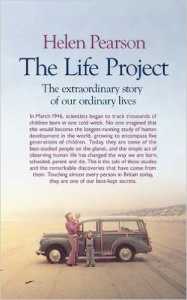 In March 1946, scientists recorded the birth of almost every British baby born in one, cold week. They have been following thousands of them ever since, in what has become the longest running major study of human development in the world. These people – who turn 70 over the next two weeks − are some of the best studied people on the planet. And the analysis of them was so successful that researchers repeated the exercise, starting to follow thousands of babies born in 1958, 1970, the early 1990s and at the turn of the millennium. Altogether, more than 70,000 people across five generations have been enrolled in these “birth cohort” studies. No other country in the world is tracking generations of people in quite this way: the studies have become the envy of scientists around the world, a jewel in the crown of British science, and yet, beyond the circle of dedicated researchers who run them, remarkably few people know that they even exist.
A fascinating review of an even more intriguing book about the changes that have taken place in UK society over the past 70 years. The book looks at social, health, education, the effects of ageing and a great deal more. To sum up the first four decades:
The book looks at social, health, education, the effects of ageing and a great deal more. To sum up the first four decades:
40’s Birth – it is quite clear how poor conditions for mothers and babies were in the pre-NHS days, “the babies in the lowest class were 70% more likely to be born dead than those in the most prosperous”.
60’s School – and the results led to the introduction of comprehensive education – the jury is still out.
70’s Smoking – one huge change in my adult life has been the awareness of the danger and the subsequent decline of smoking.
80’s – Obesity – it seems that obesity is not a new phenomenon and started with all cohorts at the same time – whilst we watched.
…..and so it continues as the members of the cohort enter their 70s.
A wonderful research project – if just for the wide ranging topics they examined, and the storage of all the physical data. Whoever had the idea for this study should go down in social history.
The cynic in me wondered about how much easier it would be to do this research today but that it would probably only be done in order to sell the results.*
…and for once the comments following the book review are worth reading.
The book is available here.
*PS I also reflected on all the data that used to be stored by The Dental Practice Board and then analysed by epidemiologists and other researchers, this habit was swept aside by the philistines in 2006 – stand up the CDO.
I make no apology for the length of the article linked to this blog post. A month after it was posted in the LRB nothing has fundamentally changed, it’s just that the media feeding frenzy has moved on to Brexit.

Antidiuretic hormone, also known as vasopressin, is released when levels of water in the blood become too low – when you’re dehydrated. It tells the kidneys to reabsorb water back into the bloodstream. For a while this keeps you going: it was working overtime in my system when I found myself ten hours into a Saturday shift at the hospital, without a drink or a break since my breakfast cup of tea at home. It wasn’t a shift crammed with life or death emergencies: I had a clinic in A&E reviewing patients with minor injuries, two ward rounds and a never-ending list of jobs to do. Each time I crossed one off I’d receive a bleep on my pager: another sick patient to review, scans to order, bloods to take, prescriptions and discharge letters to write. At weekends, junior doctors cover care across the whole hospital. I’d been assigned three wards. I managed to make it to the canteen, and a first mouthful of beans, before the familiar jangling started again. I went to the nearest phone to dial in: a prescription of intravenous paracetamol needed changing to oral. I added it to my list and went back to eat. A few more mouthfuls and it went off again. There was no answer when I dialled back: apparently the 15 seconds it took me to reach the phone was too long and the caller had rushed off. I added the number to my list. I’d call them back.
Four days later I’m working my ninth day in a row. On normal weekdays I’m only responsible for the forty or so patients under the care of my usual team. Usually I would split this with another first year foundation (FY1) doctor, but he’s on holiday so it’s down to me. From 4 p.m. until 9 p.m. I’m on call looking after patients from four different surgical teams. About half an hour before I should finish I’m bleeped to examine a patient who has just arrived on the ward and is due to go for surgery the next day: a teenage girl with a brain tumour. Until she has surgery we won’t know if it’s cancerous or benign. She and her mum look nervous. We talk about her older brother who’s just had a baby daughter, her favourite subjects at school (art and drama) and what she wants to do when she grows up (be a dancer). Before surgery she needs blood tests so I go to find a tourniquet, needles, bottles and gauze. It’s a ward that I don’t usually work on, and every ward keeps its equipment in a different place. On top of this, the printer for the blood bottle labels isn’t working. It takes me nearly an hour, including a trip to another ward, to get everything ready. The patient tells me how difficult – and painful – it was the last time someone took her blood. I tell her how important the tests are and how quick I will be, but now I’m getting nervous too. My first attempt is fruitless and she’s not keen to let me try again, but eventually I persuade her. This time I find a better vein, a little deeper but more bouncy, and get it straightaway. She stops crying to tell me it wasn’t actually that bad. When I leave work, nearly two hours late, the lights have been stolen from my bike, which I’d left in front of the hospital, so I cycle home in the dark. At least it’s not raining. I never find out what happened to the girl.
It continues here
 March 1st is the feast day of St. David, Dewi Sant, patron saint of Wales. He was born in 500 and died in 589. His mother is reputed to have been a niece of King Arthur who was seduced or raped by his father and later became a nun. During David’s birth, by the sea near St David’s, her fingers left marks where she grasped the rocks and as David was born a bolt of lightning from heaven struck the rock and split it in two.
It is known that he was baptised Saint Elvis of Munster, no doubt a great influencer of the boys from Craggy Island.
It is said that St David’s last words were, “Be joyful, keep your faith and do the little things in life”.
He was buried in St David’s but in 1284, following Edward I’s conquest of Wales, the English king took David’s head and arms and displayed them in London.
…and every two years, or more, his followers come seeking revenge.
“Consult not your fears but your hopes and your dreams.
Think not about your frustrations, but about your unfulfilled potential.
Concern yourself not with what you tried and failed, but with what it is still possible for you to do.”
via Philip Humbert

I had a great day with the dentists from Edinburgh Dental Studio on Monday. This story was told to me by one of principal Graeme Smart’s associates.
She and her partner are looking to buy a house at the moment and had been looking on a particular estate agent’s website at properties in their price range and the locality they sought.
Having found just such a place they rang to book an appointment to view the house only to be told, “we can’t make an appointment for you to view over the phone. We’re a modern estate agent you can only book on-line.”
I do wonder if the client realises what the benefits of using such a “modern estate agent” are to their potential purchasers?
Good luck with the house hunting Phoebe.
 The Incisal Edge