Holiday Reading

A few titles that you may fancy for the departure lounge or sun bed.

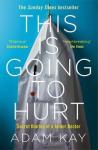
  • “This is Going to Hurt : Secret Diaries of a Junior Doctor” by Adam Kay. More HERE.

Very few books make me laugh and cry on the same page. If you’re finding your job challenging this may give you some perspective – or make you find a new career.

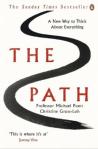
  • “The Path : A New Way to Think About Everything” by Professor Michael Puett. More HERE

A book on ancient Chinese philosophy by a Harvard Professor may not sound like everyone’s taste but a holiday is often a good time for reflection. This is very readable and provocative.

  • Stand out of our light : Freedom and Resistance in the Attention Economy” by James William. More HERE

You will never see your mobile device n the same way again. Who controls your attention?

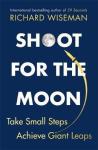
  • “Shoot for the moon : Achieve the Impossible with the Apollo Mindset” by Richard Wiseman. More HERE

Challenged in getting things achieved in your life? Try Wiseman’s advice and adopt the approach of the teams that put men on the moon – and brought them back – half a century ago.

  • “The Self-Worth Safari : Valuing Your Life and Work” by John Niland. More HERE

There is a crisis of confidence in many dentists, John Niland’s book makes a timely read for anyone having second thoughts and doubts about what they are doing with their professional life.

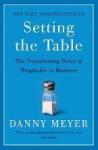
  • “Setting the Table : The Transforming Power of Hospitality in Business” by Dany Meyer. More HERE

A book that I wish I had read before I started my first and second practices but will inspire you to improve everything you do for your patients, customers or clients.

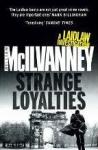
  • “Laidlaw. The Papers of Tony Veitch. Strange Loyalties” by William McIlvanney. More HERE, HERE, & HERE

To call McIlvanney’s trilogy featuring Glasgow police inspector Jack Laidlaw “gritty” does grit a disservice. Stories of human behaviour, both bad and good, but mostly bad, with thoroughly believable characters. As Ian Rankin said, “Without Laidlaw there would have been no Rebus”. Tartan Noir started here.



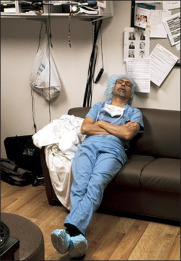
Burnout – Physicians

From The Lancet 13 July 2019.

Hui Wang, a 32-year-old Chinese ophthalmologist, experienced sudden cardiac death on June 30, after working with fever for 6 days in Beijing. Hui was the father of a 1-year-old girl, and married to a doctor, who donated Hui’s corneas to two patients after his death…

According to a viewpoint published in the Chinese Medical Journal, reports on sudden deaths among Chinese physicians sharply escalated from 2008 to 2015, and most of the deaths, resulting from heavy work load, were male surgeons and anaesthesiologists in tertiary hospitals in large cities…

Physician burnout, defined as a work-related syndrome involving emotional exhaustion, depersonalisation, and a sense of reduced personal accomplishment, is not only a serious concern in China but also has reached global epidemic levels. Evidence shows that burnout affects more than half of practising physicians in the USA and is rising…

Physician burnout, defined as a work-related syndrome involving emotional exhaustion, depersonalisation, and a sense of reduced personal accomplishment, is not only a serious concern in China but also has reached global epidemic levels…

Evidence shows that burnout affects more than half of practising physicians in the USA and is rising. The 2018 Survey of America’s Physicians Practice Patterns and Perspectives reported that 78% of physicians had burnout, an increase of 4% since 2016. Furthermore, 80% of doctors in a British Medical Association 2019 survey were at high or very high risk of burnout, with junior doctors most at risk, followed by general practitioner partners. Increasingly, physician burnout has been recognised as a public health crisis in many high-income countries because it not only affects physicians’ personal lives and work satisfaction but also creates severe pressure on the whole health-care system—particularly threatening patients’ care and safety.

The 11th Revision of ICD (ICD-11) in May, 2019, provided a more detailed definition of burnout, characterising it as a syndrome of three dimensions—feelings of energy depletion or exhaustion, increased mental distance from one’s job or feelings of cynicism or negativism about one’s job, and reduced professional efficacy…

Addressing physician burnout on an individual level will not be enough, and meaningful steps to address the crisis and its fundamental causes must be taken at systemic and institutional levels with concerted efforts from all relevant stakeholders. Tackling physician burnout requires placing the problem within different contexts of workplace culture, specialties, and gender. Physician wellbeing has long been under-recognised in LMICs, and physicians’ sudden death and suicide due to overwork—the consequences of extreme burnout—have not been uncommon in many Asian countries. With rapid development of medical sciences, it is time to use medical advances to benefit the health and wellbeing of all people, including physicians themselves…

Not quite as easy as it looks is it?

Portsmouth

Colosseum Dental Press release via “Curious PR” 16th March 2018: LINK

“One of the pillars of Colosseum’s recipe for success in the UK will be embedding each practice as a “good neighbour” in its local community….each practice will retain its connection as an integral part of its community.”

454 days later

GDPUK report, 13th June 2019: LINK

“Portsmouth is once more in the news, with the closure of three dental practices leaving ‘thousands without access to NHS treatment’. Colosseum Dental Group, which is owned by an investment company based in Switzerland, is closing the practices next month…

According to a report in The Times, up to 20,000 residents of Portsmouth will be without a dentist when a chain of practices closes its doors next month. With no surgeries accepting adult NHS patients, the nearest practices are in Gosport, which is a ferry-ride away, or Havant, a half-hour drive away.”

Blackpool

Blackpool’s Centre for Dentistry to close by end of August due to ‘high costs’ LINK

“…We understand that travel to Preston may not be for everybody, but it’s just half an hour down the road.…”

….The company also plans to close its Cardiff surgery by the end of August, and merge its two London practices into one.

When I visited Sainsbury’s store in Cardiff a couple of days ago the practice was still promoting itself and its “deals”. There was no mention that there would be no continuity of the membership plan or that the closest SFD practice is nearly 40 miles away on the other side of the Severn Bridge.

At least the London practices are in the same city and both north of the river.

SFD’s spokesperson said, “The costs of staying in Blackpool are very high. The rates in Sainsbury’s are much more expensive than they would be on the high street.”

You have to wonder what their projections were like in the first place; we’re all optimistic when drawing up business plans – if we weren’t nobody would ever raise any finance at all.

This is just the tip of the iceberg with several larger groups or “corporates” clearly unable to make the figures work and therefore closing or off-loading practices over the past 2 – 3 years.

I take no joy in seeing this happen. I once had to close one of my practices due to pressure from the bank. At that time I didn’t have the strength, fortitude and experience that I have now. They (the bank) clearly had no understanding of the business of dentistry, the potential professional consequences and little patience with, or confidence in, their client. The fact that the businesses had already turned the corner meant nothing. 

The experience was hard but enables me to help my clients better these days. The worst thing was leaving some patients, who were unable to move to the other site, in the lurch.

Ultimately it is the patients that suffer, followed closely by any laid off team members and the reputation of the profession. In my case it could possibly have led to bankruptcy which would have left me permanently scarred. With corporates? Who knows?

One of the mantras for success is, “Same Place, Same Face”, when that trust goes so does the customer.

But that’s the market for you.


Secure or Not?

Secure or Not?

Wi Fi that is, I tend to be the innocent when travelling and will log in to whatever wi-fi is available. I always presumed that using a hotel wifi would be relatively secure but, as usual, I was wrong. An article in the Guardian warns that,”free hotel wifi is a hacker’s dream”. LINK

Do read the article if you are interested in having your paranoia turned up to 11; decide whether you are a sheep or a goat and act accordingly. Sheep are sweet, trusting folk who think well of their fellow humans. Goats have nasty suspicious minds. I would like to think that I am a sheep by nature but a goat by experience as I  do use a VPN on all my devices. Lately the BBC has decided that when I am using the VPN I am clearly trying to view iPlayer from “abroad” which makes me wonder if the status of Wales has changed over the past month – so I switch it off sometimes.

That made me wonder about cafes, shops, railway stations, people’s homes and, naturally enough, Dental Practices. My mother used to warn me about interactions in any sort of public place but I always thought it was people I could see from whom I was at a risk. Wrong again, same principle different problem, mother’s advice evolves for the Digital Age.

There’s another article of interest HERE.


Working with a (Dental) spouse.

Knowing your spouse’s MO can help the relationship thrive at work and at home.

Increasingly in Dentistry spouses / life partners are working together. Some of these working relationships thrive whilst others produce tensions between the partners which can lead to stress outside the workplace. If you don’t get on at work then that is likely to overlap into the home.

When I explain to partners about the Kolbe A assessment and the effects that different *MO’s (Modus Operandi) can have on a relationship there is usually a moment of clarity and comprehension. Knowing how any colleague or team member will instinctively take action is of great value. Being able to use the knowledge to enhance a personal relationship can be inestimable.

(* M.O. refers to an individual’s Modus Operandi and consists of a numerical representation of one’s instinctive way of taking action as measured across the four Kolbe Action Modes®.)

Sometimes there is a close similarity between the partners results, they take action in the same way, they tend to agree on many things. This can lead to problems because all the bases are not covered. In other cases (mine for instance) Kolbe A results are very different but are close to mirror images, and my wife and I compensate for each other. It’s no surprise that our working relationship was successful long before our personal one emerged. 

Cathy Kolbe has written about same MO Marriages HERE.

To find out more about how knowing and understanding your Kolbe A can transform your working life and that of your team take a look HERE.

To discover how I can help you to build your perfect team HERE.

The Monday Morning Quote #561

“Repetition is the mother of skill.”

Tony Robbins

Sorry seems to be the hardest word.

I’m writing this on the 19.12 from Reading to Swansea – delivering me (hopefully) at ReesAcres Cymru en route. I have just enjoyed a excellent day at the Henley Regatta, many thank to my hosts. As ever my PA coordinated flights, trains and hotels for me, bless you. I was booked on the 10.30 from Reading, due to alight at the first stop, Twyford, to change for Henley. 

GWR are generally an excellent rail provider (to use the contemporary biz speak). I won’t mention the third world toilets on my current train – what is it about train lavs. that make them so difficult to keep functioning? I’m sure Brunel would have sorted them out had he lived beyond the tender age of 53.

Back to Reading, the train was delayed until 10.40 – no problem I thought.

It’s a journey I have made a couple of times before and was surprised that I was able to spend so long reading the complimentary newspaper before we came to a halt at….Slough. We had passed through Twyford, Maidenhead, Taplow and Burnham, all fine places in their own way but not when you are viewing them from the unintended inside of a rail carriage.

As you can imagine I wasn’t on my own, there were probably 50-60 others making the same journey. When we alighted at Slough we wondered what had happened and asked the GWR guard on the platform.

After ensuring the train left safely to continue its journey to Ealing Broadway he retreated to his customer service bunker to investigate. It turned out that the train was 10 minutes late leaving Reading and so, in order to make up time, they decided to omit the four scheduled halts at Twyford, Maidenhead, Taplow and Burnham. Presumably the “no stops” have less of a weighting in their corporate KPIs than late arrivals.

We duly crossed over the tracks to the other platform and caught the next train back in the other direction, hoping that no reason arose to leave out our scheduled stops. It didn’t.

I understand that s**t happens and decisions must be made to catch up with schedules. I understand that even the best of railways have problems – and GWR are pretty good as UK railways go. 

What I don’t understand is why nobody had the good manners to apologise to us for what had happened. To carry on with the in carriage visual display that “the next stop is Twyford” even when we were parked at Slough. For nobody to bother to make an announcement that “we are sorry for the cock up and if you cross to platform 5 you can continue your journey”.

As it was we were all p’d off with the lack of communication and apologies. 

When something goes wrong – apologise. It diffuses the situation. It helps right the wrong. It leaves less of a bad taste.

The 5 A’s For Addressing Mistakes

Mistakes are going to happen in any and every business or organisation. It’s how you deal with them that counts.

In his invaluable book “Setting The Table“, Danny Meyer says, “The Road to Success Is Paved with Mistakes Well Handled”

He suggests there are “Five A’s for Effectively Addressing Mistakes”

  • Awareness. If you’re not aware – you’re nowhere.

  • Acknowledgement. Say how you are going to sort it out immediately.

  • Apology. Say that you are sorry – and mean it. Alibis are no use, nor are excuses.

  • Action. Say what you will do to make amends.

  • Additional generosity. Go above and beyond what the patient expects.

Mis-en-place. Do your prep work.

Mis-en-place is a French culinary term which means putting in place or everything in its place. It refers to the set up required before cooking, and is often used in professional kitchens to refer to organising and arranging the ingredients that a cook will require for the menu items that are expected to be prepared during a shift.

It transfers well to Dentistry (and many other fields), as a dentist I tried to ensure that my surgery was “closed down” for the night with everything ready to start the next morning. All instruments were autoclaved, notes, X-rays, letters and lab work were all to hand and had been checked. The paperwork from the day before was either completed or was in its rightful place.

It means that everyone knows what materials, instruments and other resources are required before starting a case; one of my clients tells me that his nurse must often leave the surgery because something else is needed. When the “something elses” are repeated day in, day out there is something going on. Time to learn about mis-en-place. Not to embrace this means that you will operate at the speed of the slowest team member – not a recipe (excuse the pun) for success.

The lead for this must come from the top, if you’re a mess your business will be a mess, if you get behind with paperwork, so will everyone else, if you roll in late and unprepared, then don’t be surprised if your team and colleagues do the same.

It means that if the first patient has an appointment at 8.00am you and your team are ready, poised and smiling at 7.55.

Anything else means you’re not taking things seriously.


Summertime and the living ain’t always easy.

The current Newsletter from The Dental Business Coach is available to view here:

Here’s a section:

“Sophisticated Procrastination”


Most people know what they ought to do to succeed but can usually find something to stop them. Frequently they are guilty of getting in their own way. The reasons can be challenging to discover from depleted self-worth, having no idea of what success looks like for them through to not acknowledging that they are in the wrong place.

Although they have the problem and it is their’s alone, they are likely to want to blame something, anything, else. The practice, the principal, the patients, the position, the NHS, the associates.

Often this becomes a form of “sophisticated procrastination” which includes all sorts of excuses. Telling your teacher that the dog ate your homework may be acceptable when you are 10, using an equally lame excuse as an adult makes no difference because it’s only yourself that you’re trying to fool.

One of my roles in life is to hold up a mirror to people, businesses and teams to help them see themselves with greater clarity. Contact me to find out more here.