“Don’t ask what the world needs.
Ask what makes you come alive, and go do it.
Because what the world needs is people who have come alive.”

The blog of Alun Rees, The Dental Business Coach
“Don’t ask what the world needs.
Ask what makes you come alive, and go do it.
Because what the world needs is people who have come alive.”
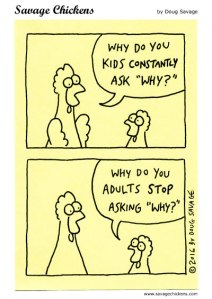
I love Dog Savage’s “Savage Chickens” cartoons. I saw this one on the day after Simon Tucker’s excellent presentation at The BDA Western Counties Young Dentists Conference where he referenced Simon Sinek’s “Start With Why”.
This came at the end of a week where I had insisted/suggested that three of my clients watch Sinek’s presentation.
Makes sense to share it here then, you shouldn’t ignore synchronicity.
 My friend and student contemporary Professor Richard Welbury was the first person to present the full horror of child abuse and neglect to me. It is good to see that the British Society for Paediatric Dentistry is getting behind the NSPCC’s “It’s time” campaign.
The full article was on Dentinal Tubules.
Here it is with a link to the NSPCC site.
NSPCC’S ‘IT’S TIME’ CAMPAIGN SUPPORTED BY BSPD
A campaign launched by the NSPCC calling for better mental health support for abused and neglected children and young people is supported by BSPD. Jenny Harris, a specialist paediatric dentist who has done so much to raise awareness of child protection issues among the dental profession was at the launch.
The aim of the “It’s Time” campaign is to help abused or neglected young people access the support they need to recover from the trauma they have experienced. Minister of State for Community and Social Care, Alistair Burt MP, launched the campaign at the Houses of Parliament this month (February 10th 2016).
He introduced an NSPCC young ambassador who told guests at the launch why the campaign was so important. His call for “constant support, not just crisis support” silenced his audience as he told of young people who resorted to self-harm or threats of suicide before they could get help.
Jenny said afterwards: “At the launch I met more NSPCC young ambassadors with direct experience of these issues. They told us that children and young people who have been victims of abuse or neglect currently face long waiting lists for counselling or mental health services.”
“This is the most compelling campaign I remember,” she said. “It seems we have come so far – to get better at recognising signs of abuse and neglect and refer children for help – yet it is scandalous to hear that those same children can’t get the support they then need to rebuild their lives.”
“I want the very best outcome for any of my patients who are affected by this so that’s why I am happy to support the NSPCC’s ‘It’s Time’ campaign.”
To find out how to support the campaign, go to: https://www.nspcc.org.uk/fighting-for-childhood/campaigns/its-time/
An article in The Economist, “Shades of grey” (it doesn’t say how many) examines the lot of today’s pensioners with their predecessors and, possibly, their successors.
A few highlights:
Nor are “pensioners” idle.
What has this to do with dentistry?
This group is the so called heavy metal generation. Many, if not most of them, have kept their teeth and want to keep their teeth. Because of the ravages of caries in their younger years and also perhaps because many dentists were reactive rather than proactive (ask me what I mean by that if you can’t work it out) they need and want high quality dental care.
Yet it’s market sector that doesn’t seem to be popular with many dentists. I can’t work out why. Perhaps it’s a generational thing with many young dentists being told that they should be selling whitening, short term ortho and quick fixes they don’t consider that this group are worth considering.
It’s not easy dentistry much of the time, and probably does not suit UDA accumulation. Knowledge, experience, a certain amount of gravitas and good communication skills are at a premium. Often the patients have medical and physical considerations but the rewards can be great, the patients grateful and most have established networks for referrals.
Why not shift your focus to be truly inclusive? This could be a golden age for treating the silver-haired.
Fast-tracking GP cancer referrals through the two-week wait pathway has overloaded clinics and caused delays in diagnosis of head and neck cancers, a group of surgeons have warned.
The article is here – the comments make interesting reading, but leaves me wondering what the person at the coal face of primary care supposed to do.
Experts from the British Association of Oral and Maxillofacial Surgeons (BAOMS) said the recently updated NICE guidelines – which lowered the risk threshold for referral – had ‘tipped the balance’ too far in favour of GP referrals for investigations, and called for an ‘urgent review’ of the referral criteria.
NICE denied the claims, arguing that its guidelines are supported by the latest evidence, while GP leaders said an increase in the number of referrals was ‘unavoidable’ under current guidelines supplied to GPs.
It comes as a study in the British Journal of Oral and Maxillofacial Surgery showed that the proportion of people who end up with a diagnosis of head and neck cancer has fallen markedly over the years since the introduction of the two-week wait pathway in 2008 – from around 11% to just 7%.
Although more cancers are being diagnosed via the two-week wait, as more people are referred, the experts said that half of cancers are still diagnosed through ‘conventional’ pathways, and that overall, the increasing number of people in the system was delaying the diagnosis and treatment of those patients who really need to be seen.
David Mitchell, a consultant oral and maxillofacial surgeon at Mid-Yorkshire Hospitals and editor of the journal, said: ‘An urgent review is needed now to stop this target-driven system delaying the treatment of patients who actually have mouth cancer.’
Former BAOMS president and consultant surgeon at Sunderland NHS Foundation Trust, Mr Ian Martin, told Pulse there ‘has been a big increase in referrals where there isn’t cancer’ and that ‘this latest change to the guidelines has tipped the balance too far’.
He added: ‘You have to question whether this is the right approach because it has the potential to actually, paradoxically, mean those who actually have cancer are going to be treated more slowly.’
Mr Martin said there ‘already huge pressure in the system, the 62-day treatment targets are already being missed in a lot of places’ and that ‘resources have to be diverted to dealing with people, who are understandably worried because they have been sent in on the two-week wait pathway… rather than getting on and treating those who do actually have cancer.’
Professor Willie Hamilton, clinical chair on the guidelines, said the BAOMS had presented ‘no evidence’ that the guidelines had introduced a delay for patients and defended the referral criteria.
He said: ‘The simple truth is that with patients and symptoms it is impossible to investigate “smarter”, giving surgeons their desired high conversion rate. We have to investigate “more” (but within reason).’
He added that the review showed ‘more patients are being seen, and the “new” patients are at slightly lower risk, but overall more patients are being diagnosed’.
Dr Andrew Green, chair of the GPC’s clinical and prescribing subcommittee, said: ‘Individual generalists will come across a new specialist case so rarely that it must be accepted that there will be a large non-conversion rate. This is not due to a deficiency in the guidance or in the knowledge of the referrer, but is an unavoidable consequence of policies designed to avoid diagnostic delay.’
From The Slight Edge a new book by Jeff Olsen in which he talks about how to gain, you’ve guessed it, The Slight Edge by using incremental actions and daily gains rather than world shattering leaps or a quick fix. Worth printing and sticking on your wall – where you can see it.
We use euphemisms, metaphors, similes and other figures of speech to help us to be understood. Whether we are in sales, in the explanation of treatment plans or when trying to help others with complex ideas or principles they are a great assistance to us and those with whom we interact.
Unfortunately they are also used to disguise the truth, to hide the reality to help some to be economical with the actualité.
Here’s one that is regularly used in airports:
Statement:
Anywhereshire International Airport apologises to passengers for any inconvenience caused during the current alterations.
We’re working to improve your travelling experience in the future.
Translation:
We’re putting in more shops.
A rare clinical topic but with a business twist – the patient wants stability and clear direction as to how that will be maintained, if it doesn’t work they’re unhappy and you are duty bound to repeat the treatment without a fee.
I spent time as an Orthodontic clinical assistant in Gloucestershire Royal, I worked, happily, as a locum in an Ortho practice and I also found myself at one time the partner in an Orthodontic practice – a long story.
During all of this there were certain things that were not clear, and never became clear, and on which, people had dogmatic and, often, opposing opinions.
The main one of these was retention. During my years as a generalist with a particular emphasis and interest in treating children one of the difficult questions I faced from the 16-21 group was, “I had my braces off x years ago but my teeth have all moved again, what can I do?” of course I heard that as, “what will you do?”
I know this was widespread and “redoing the front 6” has formed the basis of the boom in short term orthodontics. Disappointed patients, especially when they were first treated on the NHS and now are asked to pay, isn’t great for the image of dentistry. The possibility of a second failure due to relapse is even worse and possibly adds to the rise in orthodontic claims and complaints.
But what is best? Fixed retainers, Hawleys, Essix – frankly I was never sure and am still not. My “purely as a layman” advice these days is, “ah yes your dentist has fitted a fixed retainer, that’s good but personally I think you should keep wearing your plastic retainers at least once a week for ever.”
So I was interested in Kevin O’Briens orthodontic blog, “What do we know about orthodontic retention? A new Cochrane Review tells us something?”
Here’s a link to the post.
I’m not sure that I’m so keen on his own conclusion.
This is a Cochrane review and the findings are of high quality. One of their conclusions was that most of the studies they included were of high risk of bias. However, one of the concerns that I have with the Cochrane risk of bias assessment is that it is very unforgiving and when I looked at the reason for the classification of some of the studies, I felt that this was rather harsh. As a result, it is important to evaluate the risk of bias tables in these reviews and come to your own decisions on whether findings are going to influence your practice.
So, how does this review influence my practice. In previous postings I have emphasised that when we evaluate a study we need to look closely at the treatment effect. I have looked closely at the differences that they calculated for this review and all these are very small. As a result, I cannot help feeling that when we look at the effectiveness of the different regimes they all seem to “work”. It is also important to point out that the most important factor in retention is patient co-operation and I presume that the trials included this as an outcome, but I could not find any detailed information.
My next step was to look at patient preferences and acceptability The analysis showed that patients tended to prefer bonded retainers. So at this point I am beginning to think that bonded retainers are the best? But I really do not like them because of hassle with failures. I was, therefore, surprised to see that they reported low failure rates.
I was in a dilemma and I wondered how I could practice evidence based orthodontic retention. But I got round this by considering that evidence based care is built around a combination of scientific evidence, clinical experience and patient opinion. If we factor this in, I can conclude the following:
– The research evidence shows that it all works.
– My clinical experience of bonded retainers is not good, I get too many debonds.
– Patients like thermoplastic retainers and they can be worn part time.
As a result, I am going to stick with thermoplastic retainers which are worn at night only.
Or…have I dodged the issue?
The US election campaign and subsequent coronation will grind on for another 10 months and appears from here to be more show biz than content. This time round Donald Trump has given us something to wonder about, marvel at or just shake our heads over.
In Ireland the general election was called last week, the election posters appeared overnight on telegraph poles, lamp posts and street signs the length and breadth of the land all bearing a candidate’s mug shot like nothing more than a nationwide hunt for a gang of serial killers.
Thank goodness for The Peoples’ Republic of Cork and their take on election promises and cliches.
I WILL DELIVER
If he is elected to Dáil Éireann he will deliver for the people of Cork and will deliver it on time. He can prove this because he once worked as a pizza delivery driver and when most customers’ got their food it was at the very least luke warm.
I WILL SPEAK UP FOR CORK
On one condition: he will speak up for Cork when speaking to the local media only. When it comes to a minister in his party announcing a another €20 billion upgrade to the M50 motorway around The Pale he will be only too glad to stand in the background of the press shots and nod approvingly. Any spare change for Cork there, lads? Thought not.
THAT’S NOT WHAT D’PEEPLE ARE SAYING TO ME ON THE DOORSTEPS
The opinion poll that says he has as much chance of being elected as the Father Mathew statue is completely wrong because he says the reaction he is getting on the doorsteps is completely different and he is very confident of topping the poll. Sorry, they’re all lying to you, bud.
I WILL FIGHT FOR JOBS
Even though he will be almost completely powerless and his party not in government he wants to make it clear that he will gladly fight anybody if it means even one extra job for Cork. And by fight, he wants it known that he will joyfully take off his top in the middle of Daunt Square at 2.30am and go at it with some langball from the IDA – even if that means spilling his curry chips all over the ground. That’s how committed he is. He’s amazing really, isn’t he?
I AM HONEST
At this point in his career he has yet to be given a brown envelope or have a big extension put on to his house in exchange for political favours so it is important to note the use of present tense here. His declaration that he is a man of integrity is by no means a guarantee of his future standards. A politician’s honesty is like a tax clearance certificate – it is only a statement about the present.
I WILL BE WORKING FOR YOU
That’s quite impressive because we’ve never met, you’ve never met us and we’ve never heard of you. But look, we appreciate the offer and there’s a load of soggy leaves blocking a drain around the side of the house – as you say you work for us, would you mind tending to it please?
I WILL FIGHT FOR CORK AIRPORT
This is always a good opportunity for government election candidates to drop in some off-the-shelf mind numbing clichés like “we intend to work with the stakeholders” and “set ambitious targets with our strategic partners”. It’s important to create a bland and boring statement so people don’t realise that
you have as much influence in adding new routes out of Cork as Rory the seal who lives under the Shandon Bridge. And to be fair Rory is pulling his fair share of tourists.
I WILL RESTORE LAW AND ORDER IN CORK
For opposition candidates on Leeside it is very unhelpful that Cork is one of the safest counties to live in and that violent crime is very low. But statistics can be sidestepped by shouting that robberies, murders and assaults are all “getting out of hand” and sentencing “needs to be seriously looked at”. He’ll build loads more prisons, double the number of Gardaí, give them machine guns, put CCTV on every street and put electronic tags on everyone called Majella and Darren.
LET’S STOP THE OBESITY EPIDEMIC
He says all the right things but the wobbly flesh dangling from the bottom of his chin that flops around when he moves his head and the big belly wobbling out through his blazer speaks a lot louder than the phrases his party whip handed him to learn off before the interview.
I WILL FIX THE DUMPING PROBLEM IN YOUR AREA
He will never ever suggest that the people who have mounds of litter blowing up against their front doors and all around their estates should perhaps, put down the remote control and the chicken suppers and waddle outside to clean it up themselves. He’ll sheepishly agree with them it’s a disgrace that the council only clean it three times a week and should be “doing more”.
VOTE FOR STABILITY
The condition of your grandmother on the trolley in CUH is stable. Your dole payment is stable. The walls of the hotel room you and your family live in are stable. Why would you want things to change?
WORK ON THE EVENT CENTRE MUST BEGIN SOON
Oh dear God, spare us.
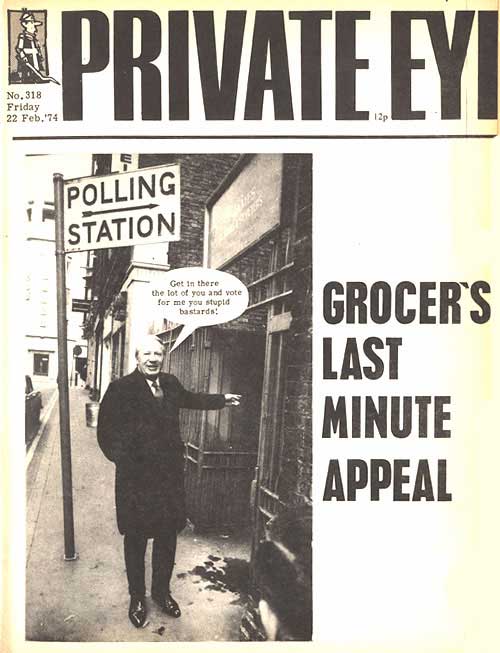
What they really mean…
 The Incisal Edge