ASMR – Autonomous Sensory Meridian Response and Dentistry?

Something different on a Sunday.

Wikipedia tells me that “ASMR is a neologism for a perceptual phenomenon characterized as a distinct, pleasurable tingling sensation in the head, scalp, back, or peripheral regions of the body in response to visual, auditory, tactile, olfactory, or cognitive stimuli. The nature and classification of the ASMR phenomenon is controversial,[1] with much anecdotal evidence of the phenomenon but little or no scientific explanation or verified data.” Read more here.

What attracted my attention was this article in the Guardian “Videos that give YouTube Viewers Head Orgasms.” Pop on your headphones and have a listen.

Now think about how you might apply the technique for your patients. This apparently is the “Dentist Role Play Appointment – ASMR Most Requested Role Play”

2016 #10

Don Henley – Cass County

81NJe2GlE5L._SL1400_I thought that during 2016 I would share more of my musical likes & (perhaps) dislikes. You can also look at The Daily Vinyl & Student Disco Tracks on Pinterest to see more of my more historical stuff.

The most recent Don Henley album, Cass County, was released in September 2015. It’s very country but no less an album for that. Bought on recommendation, and I can’t recall whose, it  surprised and pleased me from the opening track when I had one of those “that’s a familiar voice, I can’t quite place it” moments – it turned out to be Mick Jagger sharing the vocals with Don and Miranda Lambert. The rest of the album is excellent, great song writing and performances of an equally high standard throughout, if you enjoy the Eagles you’ll love the album especially Take a Picture of This, who knows it may even open your eyes to the good things of country music.

One track, “Praying for Rain”, struck a chord with me this morning (Saturday Jan 9th 2016). I felt like I was wading through the lawn when I was walking the dogs around Rees Acres. After two months of storms and heavy rainfall the land around us is saturated. Don is singing about the opposite effects of climate change and the droughts in California.

From the opening stanza:

Something’s different, something’s changed
And I don’t know what
Even the old folks can’t recall
When it’s ever been this hot and dry

Through the killer lyrics of the third verse:

I ain’t no wise man, But I’m no fool
I believe that Mother Nature, Has taken us to school
Maybe we just took too much, Or put too little back
It isn’t knowledge, It’s humility we lack

Spot on.

Enjoy.


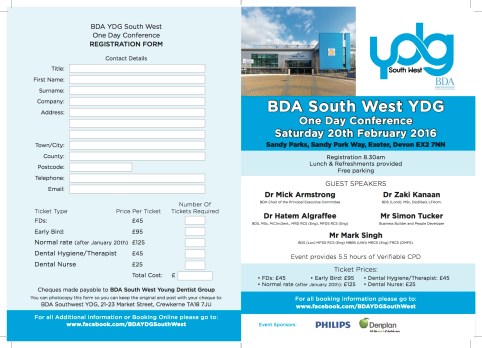
South West Young Dentist Group – One Day Conference

Wearing my Western Counties BDA President’s hat I’d like to bring your attention to the second YDG Conference. This year the venue has moved down the M5 from Bristol to Sandy Park, Exeter home of the Exeter Chiefs Rugby Club and a recent World Cup Venue. Date Saturday 20th February 2016.

There’s a good line up of speakers and the organising committee under the chairmanship of Ahmad Nounu are working hard to ensure it’s as successful as last year.

Here’s a link to their Facebook Page


YDG JPEG 1

YDG JPEG 2

2016 #8

Tolerate Nothing – The Current Ezine

Sign Shows Year Two Thousand And Sixteen

I don’t know about you but this week I have been overwhelmed by  “Happy New Year” emails, many of which appear as authentic as a DFS discount and are thinly disguised sales letters, I realise that it’s a busy time of year, my clients seem to have hit the ground running and so I’m going to keep this short.

Seven days into the New Year and how is it going? Are the resolutions and plans you made starting to stall or are you treading boldly into a brave new 2016?

Most New Year Resolutions don’t make it through January for whatever reason and, no, this isn’t a lecture on goal setting. Rather, it’s one on flipping the resolution habit and getting you to look at what you’re tolerating. I was introduced to the works of the late Thomas Leonard (ta cb) through his book The Portable Coach. The book says that it gives “28 Surefire Strategies for Business and Personal Success”. Great claims, great book.

Thomas’s step number 15 is to “Tolerate Nothing”, because as he says, “when you put up with something, it costs you and unnecessary costs are unattractive”.

He defined tolerations as things that bug us, sap our energy and could be eliminated. Most of us spend our lives carrying our tolerations around and some of us feel it’s a burden we must bear, a price to pay and something we can’t change. Wrong.

I believe that tolerations are, as the author puts it so well, “holes in your personal success cup draining away your contentment and good fortune”.

Sometimes being selfish is a necessity in order to be able to give of yourself fully. So whether it’s the team member who has pushed their luck just that bit too far, too often, your price list that’s already two years behind its review or making that quantum leap away from reliance on the NHS, it’s time to deal with the tolerations that are holding you back.

Action –  take some time and:

  1. Accept that putting up with things is good for no one.
  2. List 10 things that you are tolerating at work or at home.
  3. Do what it takes to eliminate them.
  4. Repeat 1, 2 & 3.
That’s it. Good luck with the list, I’ll be back on January 20th.
2016 #7

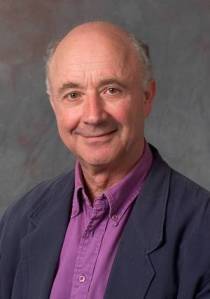
Aubrey Sheiham RIP

Photo_-_SheihamI was aware that Dr Sheiham’s views produced vitriolic opposition from a lot of people, for a lot of whom I had little respect. I did meet him, briefly, whilst I was doing my first job at The London Hospital in Whitechapel where he seemed to be held in high esteem. His first contentious paper was published during my student days in 1977 but his name really came to my attention when I started working in general practice in 1981. He was viewed by my principals as someone who wanted to take the bread from their mouths and whose views were seeking to undermine their means of making a living. One of these individuals had shared with me his way of making money from dentistry which were progressively large fillings followed by root canal treatment and crowns. I wouldn’t have chosen that route for my family or myself so I was pretty sure I didn’t share his views on Sheiham either. His paper had been published in the Lancet which my  brother, who was just about to publish his first research paper, assured me would not publish dodgy research.

Dentistry, like many walks of life, has never liked people who question the status quo, the respect for Dr Sheiham from his peers and research colleagues is clear in this piece from Cochrane UK.

The fact that he started in periodontology alongside one of my heroes the late Bernie Keiser only increases my respect. There was a cohort of “awkward squad” perio people that I was fortunate enough to encounter during the days when I was realising that there was a lot more to dentistry than amlagam and acrylic, turbines and forceps. So many of them died young too, Bernie, John Zamet, Marsh Midda and more recently Graham Smart.

One obituary was published in the Guardian:

No dentistry means unhealthy teeth; therefore more dentistry means healthier teeth. There may be some truth to the first part, but the epidemiologist Aubrey Sheiham, who has died aged 79, questioned the second – and got into a heap of trouble for doing so. In 1977 he published a paper in the Lancet reviewing the evidence for the six-monthly dental check-up. He concluded that it may well do more harm than good. Continues here.

Another in the Lancet

2016 #6

The Greatest Breakthrough Since Lunchtime #20 – Hair, Home Scanners and Sensitivity.

Research
Research

For the history of this “TGBSL” series read here

Three pieces of varying age:

1) Dental caries susceptibility linked to… your hair?

A new study shows a link between hair keratin and enamel strength. A new National Institute of Health study has found not only that enamel structure can influence an individual’s predisposition to caries, but also that keratin can affect enamel structure.

2) Your patients can make like a dentist with a home scanner.

If you have patients who like toys then this could be for them. Anything that encourages them to look in their moths can’t be a bad thing can it? From C/NET.

3) The claim – a new biocompatible material that potentially rebuilds worn enamel, reduces tooth sensitivity and is much longer-lasting than current treatments.

Durable biomaterial potentially reduces tooth sensitivity. Make up your own mind. Anything that can sort out sensitivity has got to be a good thing.


2016 #5


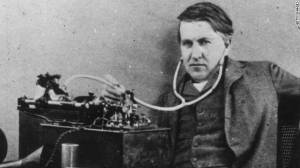
The Monday Morning Quote #349

“Opportunity is missed by most people because it is dressed in overalls and looks like work.” 

Thomas Edison

 111006062700-paul-israel-edison-story-top

2016 #4

Blog for GDPUK – “Davids and Goliaths of Dentistry”

I have been a member of GDPUK since being inspired by Tony Jacobs’ presentation at the BDA Conference in Harrogate in the early “noughties”. It’s a great resource. In addition to the discussions and banter on the Main Forum there are a number of bloggers who add to and stimulate debates and provide updates on product, technical and business issues. There’s also a contemporary news feed.

The website is here: GDPUK

Here are my thoughts on the “Davids and Goliaths of Dentistry”:
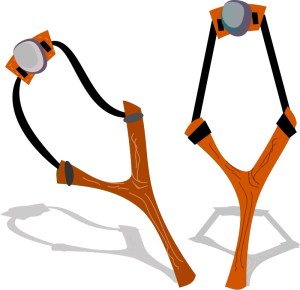
estilingue-800pxThis post was stimulated by my re-reading Malcolm Gladwell’s book “David & Goliath”. In it he examines the underdog in several circumstances and how they have managed to overcome the odds to become victorious.

Initially I was looking to draw analogies between the “corporate” large and chain practices and the small, independent practice. My idea was to show that a good little ‘un can beat a big ‘un every time. The idea grew on me so I have expanded the remit.

Quite often when I listen to owners of small dental practices I am reminded of the children’s ‘swing song’ that starts, “Nobody loves us, everybody hates us, think I’ll go and eat worms”. Certainly when one looks at the plethora of legislation, political interference and change in consumer expectations one can understand this attitude. Yet it is those changes or rather the practices’ response to them that can make success more likely.

Let’s look at the David and Goliath of the title. David was smaller, poorly equipped and had no experience of battle. Goliath on the other hand was battle hardened and massive in terms of bot physical size and equipment. But we know the result, one slingshot brought the giant to defeat.

Perhaps with these two protagonists we saw a hint of the first guerrilla war. History shows that a larger organisation doesn’t approve of small groups. Michael Collins and his flying columns had learned lessons from TE Lawrence (of Arabia) whose methods, although successful, were frowned upon by the British authorities.

The Davids of Dentistry are used to being the smaller person, indeed one of the reasons for successful small practices is that the owner will put in hours outside the “9 to 5” for repairs, maintenance and upkeep. These hours are never allocated in year end accounts. The successful Davids are light on their feet, flexible and adaptable, they know their terrain and where they can operate to best advantage.

The Goliaths have capital, resources and are “business savvy”, whatever that means. They can absorb wasted efforts, tolerate inefficiencies of staff and materials and, above all, can take a long view.

The negative for the Davids is that they can get stuck in a rut of reacting to circumstances and their campaigns are short term. Financial survival is usually at the top of their agenda meaning that they tend not to consider a long term strategy. In order to survive they need, in the words of Alastor Moody, constant vigilance, this becomes wearisome with time and contributes to their eventual burn out.

On the downside for Goliaths is their rigidity and lack of conventionality as their bean counter driven businesses seek to impose an external model onto a personal service. A surfeit of management levels and often unsympathetic HR practices mean that their teams operate at less than optimum efficiency.
The important thing for Davids has been to avoid the  temptation to take on the Goliaths at their own game and terrain because they will surely lose. With market changes it becomes more and more difficult in the post Shipman world for David to remain profitable. The battlefield has morphed too, the big armies of Goliath have taken a lot of the easy low ground of the NHS contracts and can use their clout and experience to bid for more.

Davids must choose their battles, battlegrounds and to time their campaigns with care. They need to learn not only from Goliaths’ mistakes but also from their successes and ensure that they are strong where their opponents are weak. In addition they must look at all the Davids in other professions and industries for inspiration.

Can Goliath learn? Of course he can. To my knowledge nobody has devised a franchise operation in Dentistry that reflects the unique elements of the profession, rewards the franchisee and gives them a sense of freedom. Not yet but with imagination it could work if done properly.

The pattern of post-war Britain has been about smaller companies being absorbed by larger ones. Is it possible for the independents to stay small and free of involvement? Perhaps the model for freedom is one of small managed groups of practices? Here much of the tiresome “grunt” work is centralised. It is this work that, in my experience, ultimately leads to owners losing their resilience, their final fatigue and despair. This sees with them reluctantly selling to  a Goliath or to another increasingly cash-strapped David to perpetuate the battle. This group model leaves the clinicians and customer facing team members to do what they are good at with support coming from dedicated and probably off site back office.

All wars eventually end with talks and compromise. The challenge for the different Davids is to find someone with whom you can share a philosophy of business and agree a way forward to keep your places on the battlefield of dentistry. This way the strengths, efficiencies and independence of you Davids can be continued.

2016 #3

A life worth remembering

This is the time of year for looking forward, perhaps taking stock and learning from the past but not dwelling on mistakes.

I was preparing to use this weekend blog to list my “achievements” of 2015, books read, films and plays seen, miles travelled, flights taken (& missed), hotels away from home and yadda, yadda, yadda. People do this either in blog or social media so perhaps I should join the gang? There’s a fine line between marketing, blatant self promotion and seeing your own life through rose-tinted spectacles – not that there’s anything wrong with donning the specs now and then. It doesn’t come naturally to me and I tend to hide my lamp under a bushel, and whilst I do agree that, “the unexamined life is not worth living” I’ll let my actions speak for themselves and stick to doing the examining and reflecting (mostly) on my own, thanks.

The catalyst for my change of mind was reading the summary of the obituaries from The New York Times , one in particular caught my eye and my imagination. This was a report of the death of Nicholas Winton who died in his sleep in hospital at the age of 106. His death was reported on the website of the Rotary Club of Maidenhead where Sir Nicholas, he was knighted in 2003, had lived. Born in London of a German-Jewish family who converted to Christianity, his father was a merchant banker, he was brought up in comfort and attended Stowe School. He worked in banking in Berlin and Paris, learned to speak the local languages then returned to London and became a stockbroker.

He was a skilled fencer and enjoyed alpine sports but on a whim in December 1938 he cancelled a skiing holiday to join a friend in Prague who was helping refugees. Here he found vast camps of Jewish refugees living in dreadful conditions, there were restrictions against their immigrating to the West but the UK was an exception.

This is not the place to list what he manage except to say that using his own money for bribing officials and other legitimate expenses he managed to help 669 children escape certain death by transporting them to the UK.

The point of this tale is that he didn’t tell anybody about it and it was only when his wife found his scrapbooks with the lists of names, photographs and reports in 1998 that it came to light. His first reaction was to tell her to throw them away as they would not be of interest to anyone.

So please click this link to read about a someone who really did something and then got on with his life. I hope it will inspire you.

30obitsyear8-articleLarge

PS My year in summary: I made a lot of mistakes, and turned a few of them into new Terms & Conditions and hopefully a few more into lessons learned. Going with the flow usually seems to work out though. Thanks to photographer Paul Clarke for this summary which I have borrowed. Of course if folks didn’t post things like Paul’s on social media I wouldn’t have read it and repeated!

2016 #2

The Weekend Read – The Monk Who Sold His Ferrari

My intention with the first blog of the year was to describe the New Year Swim in Glandore Harbour in aid of the RNLI. This is a great community event that I have joined in for the past dozen years or so where any hangovers are removed in the chilly water. To see the need for a local boat read this report of a tragedy that might have been averted. This year with a South Easterly wind blowing in excess of 40 miles per hour it would not have been safe. Take a look for yourself:

(Apologies for dodgy audio – I am a novice at playing with video.)

So as an alternative I’ll give a mention to a book that is good to read at this time of year when change and resolutions are in the air – which usually change by January 24th apparently. “The Monk Who Sold His Ferrari” by Robin Sharma.

I am often in two minds about the format of a self-improvement book that takes the form of a novel, but this one tells its simple story well with the two sympathetic main characters. At the risk of being a plot spoiler the tale is of two “high-powered” US lawyers one of whom has acted as a mentor to the other in their profession. The senior of the two, Julian, suffers a heart attack in court, recovers, leaves his job and then disappears for several years to explore Northern India. He reappears and passes on the wisdom he has learned to the junior character, John, who by now is immersed himself in the money driven business of legal practice.

Of course we tend to put ourselves in John’s place and want to learn the lessons that will lead us to a better life. Well several million people have bought this book and quite a few have gone as far as reading it. I have several friends who are working their way through the exercises during January and I have taken the opportunity to re-read it. I bought and first read it in April 2005 when I was in the final stages of selling my practice, at that time I think I was so stressed out that the lessons passed me by.

It’s a great little book with plenty in it to make you stop and consider your own position in the world, what it is that you are seeking and whether you are on the right path to realise your ambitions. Julian’s lessons will help you to:

  • Develop joyful thoughts.
  • Follow your life’s mission.
  • Cultivate self-discipline and act courageously.
  • Value time as your most important commodity.
  • Nourish your relationships.
  • Live fully, one day at a time.

What’s not to learn?

Robin Sharma is a great teacher and his website, downloads and blogposts, will I’m sure interest you.

 The Monk Who Sold His Ferrari is available from The Book Depository.

2016 #1